How to Deep Clean a Burnt Oven Interior Without Toxic Chemical Fumes
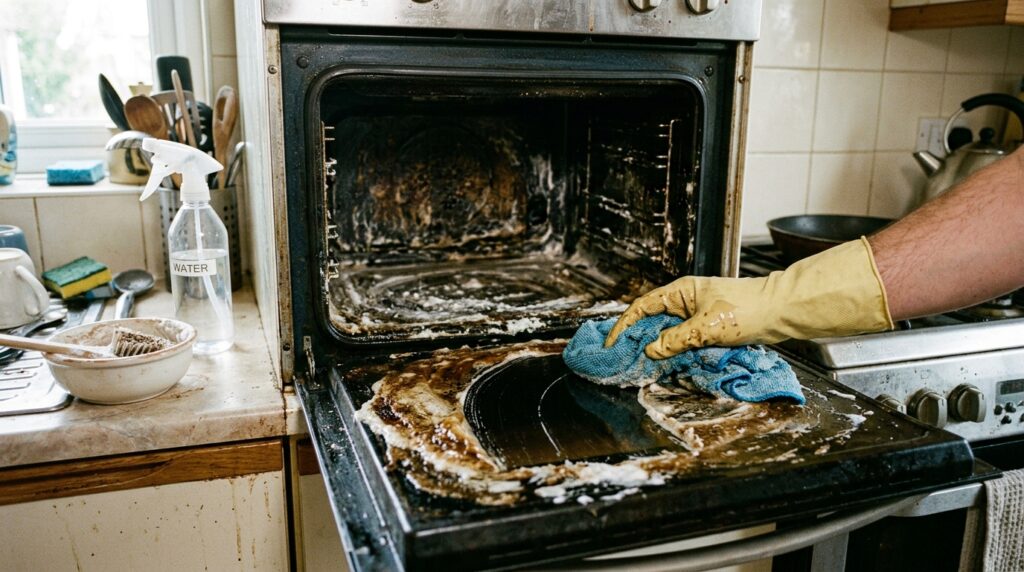
Commercial aerosol oven cleaners rely on concentrated sodium hydroxide (lye, pH 13-14) which releases corrosive, choking fumes, corrodes aluminum trims, and can trigger asthma attacks. Conversely, the oven’s built-in pyrolytic self-clean cycle runs elements at 900°F (480°C) for four hours, often burning out electronic control boards and melting thermal fuses. This field protocol uses a low-hazard alkaline saponification paste combined with low-temperature steam condensation to dissolve baked-on brown polymerized lipids safely.
Required Equipment & Chemistry
- Sodium Bicarbonate (Baking Soda): 250 grams.
- Concentrated Degreasing Dish Soap: 30 mL.
- Water: 60 mL to create active paste.
- Heat-Proof Glass Casserole Dish: 1 unit for steam condensation phase.
- Cellulose Scouring Sponge: 1 unit.
- Heavy Cotton Shop Towels: 3 units.
Step-by-Step Non-Toxic Saponification Protocol
Remove Racks & Strip Bulk Debris
Pull out all chrome oven racks, thermometer probes, and pans. Use a dry paper towel to sweep out loose charred crumbs from the bottom floor of the oven cavity.
Formulate & Paint the Saponification Paste
In a ceramic bowl, mix 250 grams of baking soda, 30 mL of dish soap, and 60 mL of water until you achieve the consistency of smooth frosting. Using a sponge or pastry brush, coat the entire interior enamel surfaces (walls, floor, ceiling, and glass door) with a 2mm layer. Avoid coating bare heating element electrical terminals or pilot light orifices. Let the paste dwell for 8 to 12 hours (overnight).
Thermal Vapor Condensation Boost
The next morning, do not wipe off the dried paste yet. Fill an oven-safe glass baking dish with 2 cups of boiling water. Place it on the bottom floor, close the oven door, and turn the oven to Bake at 200°F (95°C) for 20 minutes. The hot steam condenses onto the dried alkaline paste, softening the hardened crust and converting sticky triglycerides into water-soluble sodium salts (saponification).
Wipe Down & Neutralize
Turn off the oven and let it cool until warm to the touch (approx. 10 minutes). Wearing rubber gloves, wipe away the dissolved brown sludge with damp shop towels. The charred grease will slide off effortlessly onto your rag, revealing brilliant black enamel underneath. Finish by misting with a 50/50 water-vinegar spray to neutralize any powdery white residual baking soda, and buff dry.
Frequently Asked Questions
Why avoid the oven self-cleaning cycle?
Appliance repair technicians consistently report that pyrolytic self-clean cycles cause the highest rate of catastrophic component failure. The 900°F sustained heat commonly melts hidden thermal cutoff fuses, fries delicate solder traces on the main digital display board, and destroys silicone door gaskets.
Need Complete Emergency Restoration Sequences?
Get instant access to the Home Rescue Bible with 240+ pages of manufacturer error code maps, chemical ratios, and repair shortcuts.
Download Complete Bible ($39) →