How to Dissolve Heavy Limescale and Hard Water Spots on Glass Shower Doors
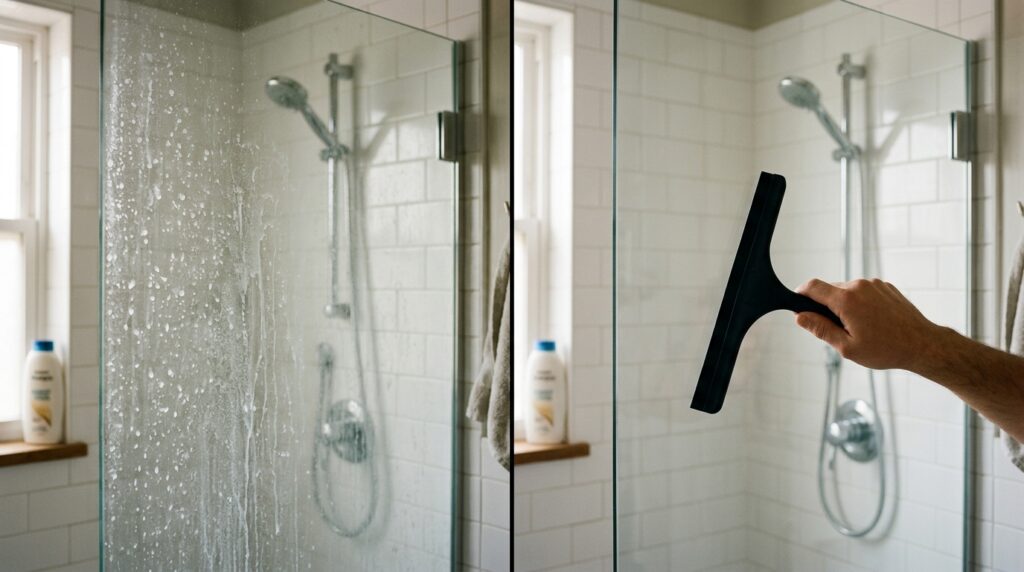
Hard water spots on shower enclosures are composed of calcium carbonate (CaCO3) and magnesium silicate deposits bonded to silicate glass molecules. Over time, warm water, steam, and alkaline fatty acids from soaps create an insoluble, petrified mineral crust. Store-bought sprays often bead up and roll off vertical glass before chemical dissolution can occur. This protocol uses an acidified clinging gel that provides extended contact time to break mineral bonds cleanly.
Required Equipment & Chemistry
- Pure Food-Grade Citric Acid Anhydrous Powder: 50 grams.
- Warm Tap Water: 400 mL.
- Concentrated Liquid Dish Detergent: 15 mL (acts as a wetting agent).
- Plastic Spray Bottle with Foaming Nozzle: 1 unit.
- 10-Inch Silicone Blade Shower Squeegee: 1 unit.
- Waffle-Weave Microfiber Glass Towel: 1 unit.
Step-by-Step Dissolution Protocol
Formulate the Acidic Clinging Spray
Dissolve 50 grams of citric acid powder into 400 mL of warm water inside your spray bottle. Shake vigorously until the solution is clear. Add 15 mL of liquid dish soap and swirl gently. The detergent lowers surface tension and increases viscosity, allowing the acid to cling to vertical glass without running down immediately.
Complete Saturation & Dwell Phase
Mist the shower glass generously from the top down until completely covered in a frothy, clinging sheet of solution. Allow to dwell for 8 to 10 minutes. During this time, the citric acid reacts with calcium carbonate, producing soluble calcium citrate and effervescing carbon dioxide micro-bubbles.
Mechanical Limescale Mobilization
Take a non-scratch white utility sponge and lightly wipe the glass in overlapping crosshatch strokes. You will feel the gritty mineral crust give way to completely smooth, slick glass beneath your fingertips. No aggressive muscle or steel wool is necessary.
Hot Water Rinse & Squeegee Pass
Rinse the door thoroughly using the shower wand with warm water. Immediately pull your silicone squeegee down in straight, overlapping vertical strokes, wiping the rubber blade with a towel between each pass. Finish edges with a waffle-weave microfiber towel for optical clarity.
Frequently Asked Questions
Why does vinegar leave a lingering haze compared to citric acid?
Standard white vinegar is only 5% acetic acid, which has a higher pKa and evaporates rapidly, leaving behind mineral salts before full solubilization. Citric acid is a tri-protic organic acid that binds three metal ions per molecule, dissolving calcified scale three times faster without pungent fumes.
Need Complete Emergency Restoration Sequences?
Get instant access to the Home Rescue Bible with 240+ pages of manufacturer error code maps, chemical ratios, and repair shortcuts.
Download Complete Bible ($39) →