How to Strip Cloudy Haze and Residue from Polyurethane Hardwood Floors
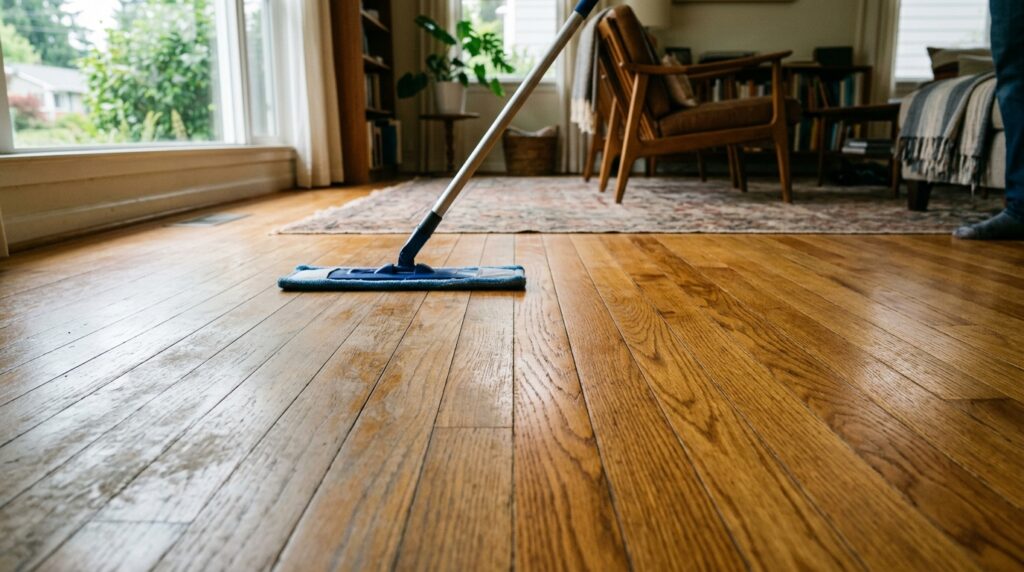
When hardwood floors lose their luster and develop a dull, cloudy haze with visible footprint smudges, homeowners often mistakenly assume the clear finish has worn through. In 90% of residential inspections, the issue is an accumulated film of synthetic acrylic waxes, oil soaps, or residue from commercial “shine restorer” products. These compounds never fully evaporate, creating an electrostatic dust-magnet film over the polyurethane. This protocol strips the haze layer cleanly without damaging the polyurethane.
Required Equipment & Chemistry
- 91% Isopropyl Alcohol: 250 mL (breaks acrylic and lipid residues instantly).
- Distilled Water: 750 mL (prevents mineral water spots).
- Concentrated Liquid Dish Detergent: 5 mL (wetting agent).
- Flat Microfiber Mop with 3 Replacement Pads: 1 unit.
- Trigger Spray Bottle: 1 unit.
Step-by-Step Haze Extraction Protocol
Dry Particulate Removal
Thoroughly vacuum the hardwood floor with a soft horsehair brush attachment to remove all grit and sand particles. Any abrasive dirt left on the floor will scratch the finish when mopping.
Formulate the Flash-Evaporating Solvent
In your spray bottle, combine 250 mL of 91% isopropyl alcohol, 750 mL of distilled water, and 1 teaspoon (5 mL) of liquid dish soap. Swirl gently. The 1:3 alcohol-to-water ratio has high solvency for acrylic polymers while maintaining a flash-evaporation rate that prevents moisture from penetrating between oak plank tongue-and-groove seams.
Sectional Spray & Microfiber Stripping
Work in small 4×4-foot sections. Lightly mist the solution across the floorboards. Using your flat microfiber mop, scrub firmly with the grain of the wood. You will feel initial drag as the wax residue dissolves, followed by smooth gliding. Swap in a fresh, clean microfiber pad every 150 square feet to avoid re-depositing emulsified wax.
Buff to Natural Satin Sheen
Dry the section immediately with a clean, dry microfiber pad to absorb suspended residues before they re-dry. Once complete, inspect at an angle against window light: the cloudy haze, cloudy footprints, and plastic shine will be completely gone, replaced by the deep, rich, natural wood grain.
Frequently Asked Questions
Why did commercial “floor polish” make my floors look worse over time?
Commercial shine sprays deposit temporary acrylic polymer waxes. With each subsequent application, dirt and micro-dust become trapped inside the drying layer, forming a thick, cloudy amber film that scratches easily and dulls natural wood clarity.
Need Complete Emergency Restoration Sequences?
Get instant access to the Home Rescue Bible with 240+ pages of manufacturer error code maps, chemical ratios, and repair shortcuts.
Download Complete Bible ($39) →