How to Remove Hair Dye from Fiberglass Shower Pans and Tubs
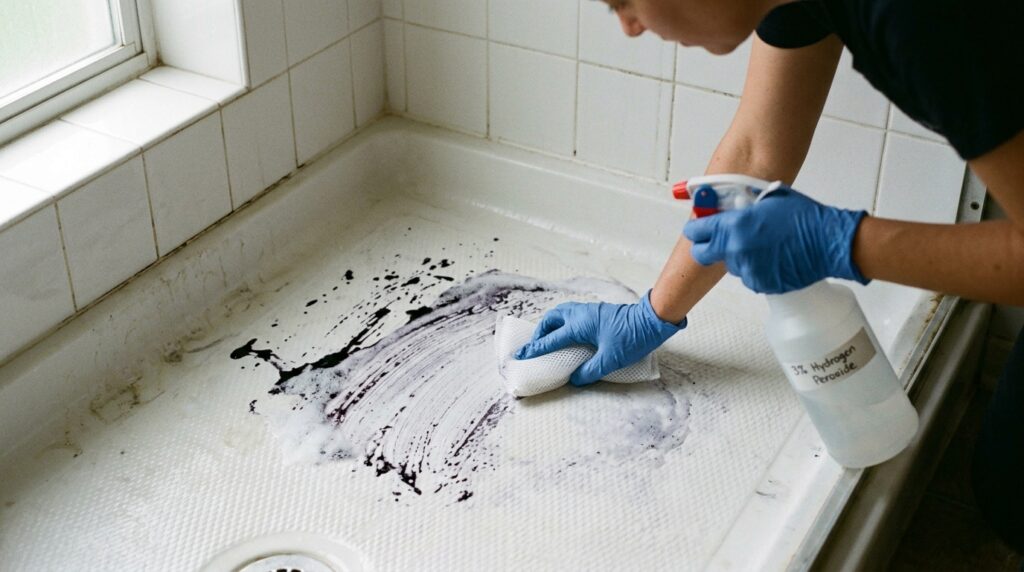
Fiberglass bathtubs and shower pans are finished with a thermoset polyester or vinyl ester gelcoat. Unlike vitreous porcelain or glazed tile, gelcoat is slightly porous and absorbs direct-dye pigments (such as paraphenylenediamine and synthetic azodyes) within minutes of contact. Harsh scouring powders scratch this resin, while chlorine bleach can cause permanent yellow photolytic oxidation. This protocol uses an oxygen-poultice system that oxidizes the dye pigment molecules while leaving the polyester binder intact.
Required Equipment & Chemistry
- 3% Hydrogen Peroxide (USP Grade): 100 mL.
- Pharmaceutical Baking Soda (Sodium Bicarbonate): 100 grams.
- Clear Polyethylene Plastic Wrap (Cling Film): 1 sheet.
- Painter’s Low-Tack Masking Tape: 1 roll.
- Soft Nylon Utility Brush: 1 unit.
Step-by-Step Oxidative Poultice Protocol
Surface Degreasing & Pre-Wetting
Clean the stained area with a drop of blue dish soap and warm water to strip body oils and soap scum from the gelcoat pores. Rinse and pat dry until the surface is damp but free of standing puddles.
Prepare the Micro-Effervescent Poultice
In a plastic bowl, add 100 grams of baking soda and slowly stir in 3% hydrogen peroxide until you form a spreadable cream (resembling thick Greek yogurt). The mild alkalinity of the bicarbonate catalyzes the decomposition of peroxide into active perhydroxyl ions (HO2-), accelerating dye bleaching.
Apply & Occlude with Plastic Film
Spread the poultice 1/4-inch thick over the hair dye stain using a silicone spatula. Immediately cover the paste with clear plastic wrap and tape the edges down with painter’s tape. Occlusion prevents the peroxide from evaporating, forcing the oxidizing solution deep into the micro-texture of the gelcoat for 30 to 45 minutes.
Agitate & Rinse
Peel back the plastic film. Moisten a soft nylon brush with water and work the residual paste in gentle circular motions for 30 seconds. Rinse thoroughly with warm water. The dark synthetic pigments will be completely bleached out with zero scratches or loss of gelcoat sheen.
Frequently Asked Questions
What if the hair dye has been sitting for weeks?
For oxidized, aged dye stains, replace 3% peroxide with 12% food-grade hydrogen peroxide or 40-volume developer cream from a beauty supply store, maintaining the same paste consistency and plastic wrap occlusion method for 60 minutes.
Need Complete Emergency Restoration Sequences?
Get instant access to the Home Rescue Bible with 240+ pages of manufacturer error code maps, chemical ratios, and repair shortcuts.
Download Complete Bible ($39) →