How to Remove Rust Stains from Porcelain Sinks Without Acid Etching
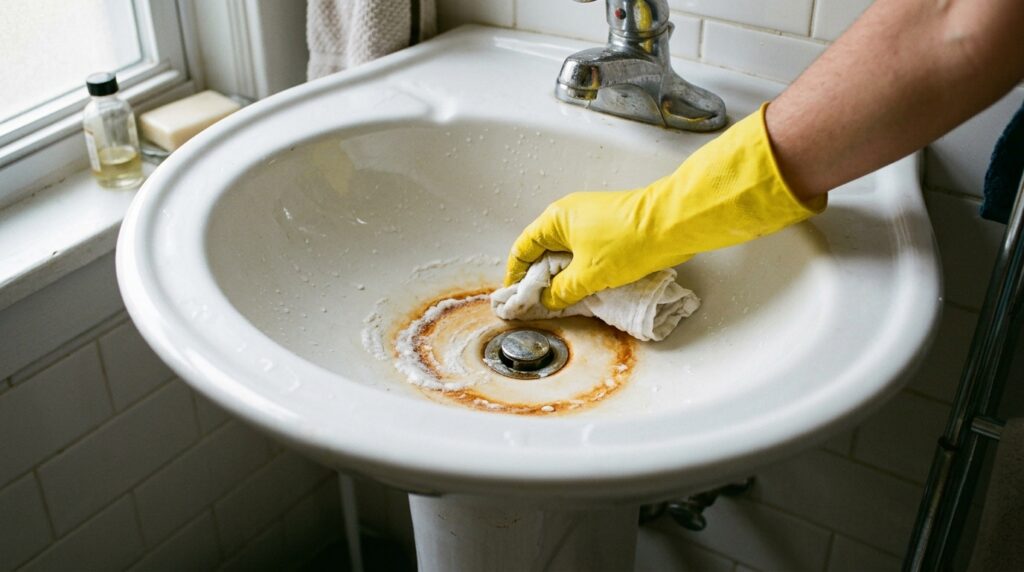
Orange rust stains around porcelain sink drains occur when dissolved ferrous iron (Fe2+) in municipal or well water precipitates as insoluble iron oxide (Fe2O3) upon contact with atmospheric oxygen. Scrubbing with muriatic acid or abrasive scouring pads dissolves the protective vitreous glass glaze, creating microscopic pores that permanently trap future mineral deposits. This protocol uses oxalic acid chelation to bind and mobilize iron ions into water-soluble complexes at neutral pH safety.
Required Equipment & Chemistry
- Oxalic Acid Powder (Bar Keepers Friend Cleanser): 30 grams.
- Distilled Water: 15 mL (tap water contains minerals that neutralize active chelation).
- Non-Scratch White Cellulose Sponge: 1 unit (avoids colored dye transfer).
- 300 GSM Microfiber Towel: 1 unit for final polishing.
- Nitrile Gloves: 1 pair to protect skin from organic acid contact.
Step-by-Step Chelation Protocol
Dry the Basin & Isolate the Chrome Flange
Thoroughly dry the porcelain basin around the drain using a microfiber towel. Pooling tap water dilutes the acid concentration and slows ionic exchange. Apply a thin strip of painter’s tape over chrome-plated drain flanges if your sink has unsealed brass or low-grade electroplating to prevent surface tarnish.
Mix the Active Oxalic Paste
In a small ceramic ramekin, mix 2 tablespoons of oxalic acid powder with roughly 1 tablespoon of distilled water until it reaches the consistency of wet paste. Do not use vinegar or hydrogen peroxide; pure water activates the oxalic crystals without altering the specific pH range required for iron ion sequestration.
Dwell & Mechanical Mass Transfer
Spread the paste directly over the rust ring using the cellulose sponge, creating a 2mm thick layer. Let the paste dwell undisturbed for exactly 3 minutes. As the oxalic acid binds the ferric ions, the rust color shifts from bright reddish-brown to pale grey. Gently work the sponge in small concentric circles with light finger pressure for 45 seconds to lift mobilized particles.
Neutralizing Flush & Hydrophobic Inspection
Rinse the area thoroughly with warm running water for 60 seconds to completely flush residual acid out of the p-trap. Dry the surface with a clean microfiber cloth. Inspect under directional light: the vitreous porcelain should be stark white with zero hazing, grit, or micro-scratching.
Frequently Asked Questions
Why did vinegar and baking soda fail to remove my sink rust?
Vinegar is a dilute 5% acetic acid solution that reacts with sodium bicarbonate to yield water, carbon dioxide, and sodium acetate. The resulting mixture has a near-neutral pH (6.5 to 7.2) with zero chelating affinity for oxidized iron. Oxalic acid specifically binds Fe3+ ions, pulling them into solution where simple acids cannot.
Need Complete Emergency Restoration Sequences?
Get instant access to the Home Rescue Bible with 240+ pages of manufacturer error code maps, chemical ratios, and repair shortcuts.
Download Complete Bible ($39) →