
Quick Answer Hero Box
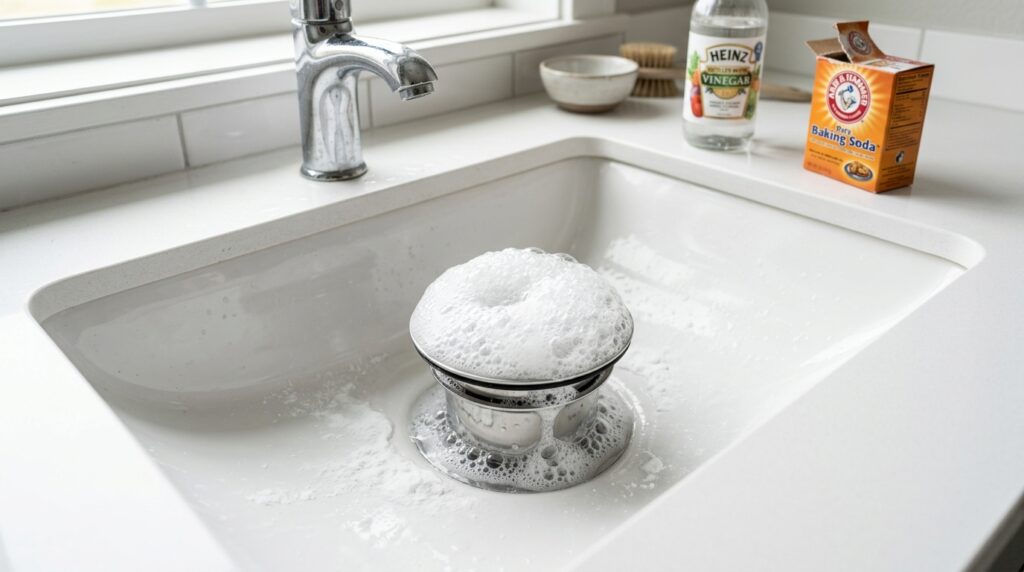
To get rid of drain flies, pour 1/2 cup of baking soda followed by 1/2 cup of white vinegar down the affected drain. Let the mixture fizz and sit for 15 minutes to break down the organic biofilm where the flies breed. Finally, flush the drain with a pot of boiling water. Repeat daily for a week to completely eradicate the infestation.
If you’ve noticed tiny, moth-like insects hovering around your bathroom or kitchen sink, you are likely dealing with drain flies. Understanding how to get rid of drain flies effectively is crucial because these pests breed incredibly fast. The drain flies baking soda vinegar method is one of the most reliable and natural ways to combat this nuisance without resorting to harsh, toxic chemicals.
Drain flies are a NIGHTMARE — tiny moth-like flies that breed in drain gunk. They often seem to appear out of nowhere, multiplying rapidly in the dark, damp, and nutrient-rich environment provided by the biofilm inside your pipes. Whether you call them sewer gnats, moth flies, or filter flies, their presence is not just an annoyance but a clear indicator that your plumbing needs a thorough cleaning.
- What Are Drain Flies (Sewer Gnats, Moth Flies)?
- Why Do Drain Flies Appear?
- The Baking Soda + Vinegar Drain Volcano Method
- The Duct Tape Test: Identifying the Culprit
- Additional Eradication Methods
- Kitchen vs. Bathroom Drain Flies: Are They Different?
- When Drain Flies Mean a Bigger Plumbing Problem
- In-Depth Scientific Analysis: The Lifecycle and Biology of Psychodidae
- The Chemistry of Cleaning: Why Baking Soda and Vinegar Work
- Advanced Troubleshooting: When Standard Methods Fail
- In-Depth Scientific Analysis: The Lifecycle and Biology of Psychodidae
- The Chemistry of Cleaning: Why Baking Soda and Vinegar Work
- Advanced Troubleshooting: When Standard Methods Fail
- In-Depth Scientific Analysis: The Lifecycle and Biology of Psychodidae
- The Chemistry of Cleaning: Why Baking Soda and Vinegar Work
- Advanced Troubleshooting: When Standard Methods Fail
- Author
What Are Drain Flies (Sewer Gnats, Moth Flies)?
Drain flies, scientifically part of the Psychodidae family, are small, fuzzy insects that measure about 1/16 to 1/4 inch in length. They have a distinct moth-like appearance due to the dense hair covering their bodies and wings. Unlike fruit flies or fungus gnats, drain flies are weak flyers. You will typically see them resting on the walls near sinks, bathtubs, or showers. When disturbed, they hop or fly in erratic, short bursts.
Understanding the biology of these tiny flies in your bathroom drain is essential for effective eradication. They do not bite humans, nor do they transmit diseases directly, but they can carry bacteria from the filthy environments where they breed. Their life cycle consists of four stages: egg, larva, pupa, and adult. The entire cycle can be completed in just 8 to 24 days, which explains how a minor issue can quickly escalate into a full-blown infestation. The females lay clusters of 10 to 200 eggs in the gelatinous slime (biofilm) that accumulates on the sides of drains and pipes. These eggs hatch within 48 hours into larvae, which feed on the decaying organic matter.
This rapid reproduction is why simply swatting the adult flies is an exercise in futility. To truly solve the problem, you must attack the source: the breeding ground inside your plumbing.
Why Do Drain Flies Appear?
Drain flies are attracted to stagnant water and the accumulation of organic material. Over time, hair, soap scum, grease, food particles, and other debris build up inside your pipes, forming a slimy layer known as biofilm. This biofilm is the perfect incubator for drain fly eggs and a seemingly endless food source for their larvae.
There are several common reasons why you might suddenly experience a drain fly infestation:
1. Organic Buildup in Drain Pipes: This is the most frequent culprit. The constant flow of organic matter creates a thick layer of sludge that is irresistible to these pests. Kitchen sinks are notorious for grease and food scraps, while bathroom drains accumulate hair and dead skin cells.
2. Standing Water: Rarely used guest bathrooms, basement drains, or overflowing AC drain pans provide the stagnant water these flies need. Without regular flushing, the water in the P-trap can evaporate, allowing sewer gases and flies to enter your home.
3. Broken Seals or Leaky Pipes: A crack in your plumbing or a broken seal around a toilet base can create hidden pockets of moisture and organic decay behind walls or under floors. These hidden breeding sites are often the hardest to eradicate.
🧹 What You Need
- 1/2 cup Baking Soda (Sodium Bicarbonate)
- 1/2 cup White Distilled Vinegar (5% acidity)
- 1 pot Boiling Water (approx. 4-6 cups)
- 1 Stiff Bristle Drain Brush (optional but recommended)
- 1 roll Clear Duct Tape (for testing)
- 1 small bowl Apple Cider Vinegar (for traps)
- 2 drops Liquid Dish Soap
The Baking Soda + Vinegar Drain Volcano Method
The drain flies baking soda vinegar method is a classic, highly effective DIY solution. It relies on a simple chemical reaction between a base (baking soda) and an acid (vinegar). When combined, they rapidly produce carbon dioxide gas and mechanical bubbling action. This fizzing acts like a microscopic scrubbing brush, loosening the sticky biofilm clinging to the pipe walls where the larvae reside.
Step 1: Prep the Drain. Before applying the mixture, run some warm water down the drain for about a minute to moisten the pipes.
Step 2: Add Baking Soda. Carefully pour exactly 1/2 cup of baking soda down the drain. Try to get it as deep into the drain as possible.
Step 3: Add Vinegar. Slowly pour 1/2 cup of white vinegar down the drain. You will immediately hear and see a vigorous fizzing reaction.
Step 4: Let it Sit. Cover the drain with a plug or a cloth to force the expanding gases downwards into the pipe. Leave it to work its magic for at least 15 minutes. During this time, the bubbling action is dislodging the gunk and destroying the eggs.
Step 5: Flush with Boiling Water. After 15 minutes, carefully pour a large pot of boiling water down the drain. The extreme heat will kill any remaining larvae and flush the loosened debris away.
This method is safe for all types of plumbing, unlike caustic chemical cleaners that can damage older pipes. You may need to repeat this process daily for up to a week to break the reproductive cycle entirely.
The Duct Tape Test: Identifying the Culprit
Before you start treating every drain in your house, you need to identify exactly which drains are infested. This is where the simple duct tape test comes in. It’s an easy and foolproof way to confirm the source of your tiny flies in the bathroom drain.
At night, completely dry the area around your sink, shower, and floor drains. Take a piece of clear tape or standard duct tape and place it over the center of the drain, sticky side down. Do not completely seal the drain; leave a small gap for airflow so the flies can still attempt to emerge. In the morning, check the tape. If you see flies stuck to the adhesive, you have found a breeding site. Be sure to test all drains, as these pests are highly mobile and will migrate to find new breeding grounds if their current home is disturbed.
Additional Eradication Methods
While the baking soda and vinegar approach is fantastic, sometimes you need a multi-pronged attack to completely eradicate severe infestations.
The Boiling Water Method: As the simplest first step, pouring a pot of boiling water down the drain once a day for a week can be surprisingly effective. The heat destroys the delicate larvae and dissolves some of the greasy buildup. However, boiling water alone won’t remove thick biofilm.
The Drain Brush + Enzyme Cleaner Combo: For heavy sludge, physical removal is necessary. Insert a stiff bristle drain brush into the pipe and scrub vigorously in an up-and-down motion. Follow this by pouring a high-quality enzymatic cleaner down the drain. Unlike traditional drain cleaners that use acid or lye, enzyme cleaners contain natural bacteria that literally “eat” the organic waste, destroying the biofilm completely. This is much safer than using harsh chemicals in your home.
Using a Drain Snake: If you suspect a partial clog is trapping organic matter, a drain snake or plumbing auger can be used to pull out massive clumps of hair and debris. Removing this mass eliminates the core breeding ground instantly.
Apple Cider Vinegar Trap: While you are treating the drains to kill the larvae, you also need to deal with the adult flies buzzing around. Create a simple trap by filling a small bowl with 1/2 cup of apple cider vinegar and 2 drops of liquid dish soap. The sweet smell of the vinegar attracts the flies, and the dish soap breaks the surface tension of the liquid. When the flies land, they immediately sink and drown.
⚠️ What Not to Do
Avoid these common mistakes when trying to get rid of drain flies:
- DO NOT pour bleach down the drain: Bleach flows too quickly over the biofilm and fails to penetrate it. It will not kill the larvae hidden within the slime.
- DO NOT mix ammonia and bleach: This creates a toxic, potentially lethal gas.
- DO NOT ignore the problem: A few flies will turn into hundreds within a week.
- DO NOT only treat one drain: Drain flies migrate; you must treat all interconnected plumbing simultaneously.
Kitchen vs. Bathroom Drain Flies: Are They Different?
While the species of fly is generally the same, the environment they thrive in differs slightly, requiring tailored approaches.
In the kitchen, drain flies feast on grease, food particles, and organic rot trapped in the garbage disposal or P-trap. The buildup here tends to be oilier. You may need to use boiling water more frequently to melt the congealed fats before applying the baking soda and vinegar.
In the bathroom, the sludge is primarily composed of hair, soap scum, toothpaste, and skin cells. This type of blockage is often denser and more fibrous. Using a physical tool like a drain snake or brush is highly recommended for bathroom sinks and showers to clear the physical tangles before relying on chemical or natural treatments.
When Drain Flies Mean a Bigger Plumbing Problem
If you have meticulously cleaned every drain, used the baking soda and vinegar method daily, set traps, and you are still seeing massive swarms of flies after three weeks, you likely have a more severe underlying issue. Drain flies can indicate serious structural plumbing failures.
Broken Sewer Pipes: A crack in your main sewer line beneath your house can create a massive, hidden pool of raw sewage. This provides an unlimited breeding ground. Flies can emerge from the soil in your crawlspace or through cracks in the foundation.
Septic System Issues: If your septic tank is failing or overflowing, the backup can push organic matter up into the drainage pipes of your home, bringing drain flies with it.
In these scenarios, no amount of DIY cleaning will solve the problem. You must hire a professional plumber to inspect the lines with a camera to identify and repair the structural damage.
For other household pest issues, be sure to check our comprehensive guide on how to eliminate ants effectively.
🛡️ Maintenance & Prevention
To ensure drain flies never return, implement this weekly maintenance routine:
- Weekly Flush: Pour one pot of boiling water down every sink and shower drain in the house once a week.
- Monthly Deep Clean: Perform the 1/2 cup baking soda and 1/2 cup vinegar treatment monthly to keep biofilm at bay.
- Run Unused Sinks: For guest bathrooms or basement sinks, run the water for 60 seconds every two weeks to keep the P-trap full of fresh water.
- Clean the Disposal: Grind citrus peels and ice cubes in your kitchen garbage disposal regularly to scrub the blades and remove lingering odors.
❓ FAQ
How long until drain flies are completely gone?
The lifecycle of a drain fly is 8 to 24 days. Even if you kill all adults and larvae today, hidden eggs may still hatch. It generally takes about 1 to 2 weeks of consistent daily treatment to completely break the cycle and eradicate the infestation.
Can drain flies make you sick?
They do not bite or sting. However, because they breed in raw sewage and decaying matter, they can mechanically transfer bacteria to surfaces in your home, which poses a minor hygiene risk.
Are commercial drain cleaners better than DIY methods?
Chemical drain cleaners like Drano are often ineffective against drain flies because they move too quickly past the biofilm. Commercial enzymatic cleaners are highly effective, but the baking soda and vinegar method is cheaper, eco-friendly, and just as effective for standard infestations.
Do drain flies live in the toilet?
They rarely breed in the toilet bowl itself because the water is flushed too frequently. However, they can breed in a broken wax ring seal at the base of the toilet or in the tank if it contains stagnant, dirty water.
Why do I have drain flies but no clogs?
A drain doesn’t need to be fully clogged to harbor flies. Even a thin layer of biofilm coating the inside of a perfectly flowing pipe provides enough food and habitat for them to breed.
Will bleach kill drain flies?
No, bleach is surprisingly ineffective. It glides over the slime layer without penetrating it, meaning the eggs and larvae protected deep inside the biofilm will survive unharmed.
✅ Bottom Line
Getting rid of drain flies requires targeting their breeding grounds deep inside your plumbing. The natural combination of 1/2 cup baking soda and 1/2 cup vinegar, followed by boiling water, is highly effective at destroying the biofilm they rely on. Consistency is key—repeat the process daily for a week to break their reproductive cycle completely. By implementing regular maintenance, you can keep your drains clear and fly-free permanently.
In-Depth Scientific Analysis: The Lifecycle and Biology of Psychodidae
To master the art of pest control, one must truly understand the enemy. The Psychodidae family, commonly known as drain flies, owl midges, or moth flies, represents a fascinating yet frustrating evolutionary adaptation to human environments. Their existence is intrinsically linked to the micro-ecosystems we inadvertently create within our plumbing networks.
Let us delve deeper into the morphological characteristics that make these insects unique. The adult drain fly is minuscule, typically measuring between 1.5 and 5 millimeters in length. Their bodies and wings are covered in dense, microscopic setae (hairs), which grant them their characteristic fuzzy, moth-like appearance. This hairy exterior is not merely cosmetic; it provides a degree of water resistance, allowing them to survive in highly humid environments where condensation is prevalent.
Their wings are disproportionately large compared to their bodies, yet they lack the powerful flight muscles found in true flies (Muscidae). Consequently, their flight pattern is best described as a clumsy, erratic hop. They rarely travel far from their breeding site, a trait that is highly advantageous for homeowners attempting to locate the source of an infestation.
The reproductive capacity of the drain fly is truly staggering. A single female can deposit anywhere from 30 to over 100 eggs in a single reproductive cycle. These eggs are laid directly onto the surface of the zoogleal film—the complex matrix of bacteria, fungi, and organic detritus that coats the interior walls of drain pipes. This biofilm serves a dual purpose: it acts as a protective incubator shielding the eggs from fluctuations in temperature and water flow, and it provides an immediate, nutrient-dense food source for the emerging larvae.
The larval stage is where the actual damage to the biofilm occurs, ironically aiding in the breakdown of organic matter, though their presence in homes is undesirable. Drain fly larvae are elongated, legless, and typically pale or translucent, measuring up to 9 millimeters in length when fully mature. They possess a hardened head capsule and a specialized breathing tube (siphon) located at their posterior end. This siphon allows them to remain submerged in the semi-liquid muck while still accessing atmospheric oxygen.
For 9 to 15 days, depending on ambient temperature, the larvae feed voraciously on the microorganisms and decaying organic matter within the biofilm. They play a role similar to earthworms in soil, processing waste, but in a domestic setting, their population density quickly becomes a nuisance. Following the larval stage, they enter the pupal stage, which lasts a remarkably short 20 to 40 hours. During this period, they do not feed but undergo complete metamorphosis, emerging as the adult flies we find resting on our bathroom walls.
Understanding this timeline underscores the futility of one-off treatments. A single application of boiling water or the drain flies baking soda vinegar solution may eradicate the adults and many larvae, but the resilient pupae and newly laid eggs often survive. This is why a sustained, daily treatment protocol spanning at least one full week is absolutely critical. It ensures that any emerging adults are eliminated before they can mate and deposit a new generation of eggs, effectively breaking the cycle of continuous re-infestation.
The Chemistry of Cleaning: Why Baking Soda and Vinegar Work
The efficacy of the baking soda and vinegar method is rooted in fundamental acid-base chemistry. Baking soda, or sodium bicarbonate (NaHCO3), is a mild alkali. White distilled vinegar is a dilute solution of acetic acid (CH3COOH), typically at a concentration of 5%. When these two common household compounds are introduced to one another within the confines of a drain pipe, a rapid and vigorous two-step chemical reaction occurs.
First, they undergo a double displacement reaction, producing sodium acetate and carbonic acid. The carbonic acid is highly unstable and immediately decomposes into liquid water and carbon dioxide gas (CO2). This entire process can be summarized by the chemical equation: NaHCO3 + CH3COOH → CH3COONa + H2O + CO2.
It is the rapid evolution of this carbon dioxide gas that provides the mechanical cleaning power. As the gas expands rapidly within the restricted volume of the pipe, it creates a turbulent, foaming action. This effervescence acts as thousands of microscopic scrubbing bubbles, physically dislodging the sticky, gelatinous biofilm from the pipe walls. The larvae, eggs, and pupae nested within this matrix are violently disturbed and detached.
Furthermore, the resulting solution of sodium acetate is mildly alkaline, which helps to saponify (turn into soap) some of the lipid-based (greasy) components of the clog, further weakening the structural integrity of the biofilm. When this chemical assault is followed by a deluge of boiling water, the extreme thermal shock denatures the proteins of any surviving biological material, effectively sterilizing the environment and flushing the loosened debris down the line.
Advanced Troubleshooting: When Standard Methods Fail
In rare instances, homeowners find themselves locked in a seemingly unwinnable battle against drain flies, even after weeks of diligent application of the baking soda and vinegar method, enzymatic cleaners, and boiling water. When standard protocols fail, it is time to shift from basic sanitation to advanced plumbing diagnostics. The persistence of these flies is an infallible indicator of an ongoing, hidden moisture issue providing a steady supply of organic decay.
One of the most insidious sources is a cracked or degraded sewer lateral line beneath the concrete slab of a foundation. Over decades, cast iron pipes can corrode and split, while terra cotta pipes can be compromised by aggressive tree root intrusion. When a line breaks under a house, raw sewage continuously leaks into the surrounding soil, creating a massive, subterranean breeding ground. Drain flies can easily navigate the microscopic cracks in the foundation or follow the exterior of the plumbing penetrations into the living space. Identifying this requires a professional plumber equipped with a high-resolution fiber-optic inspection camera (often referred to as a sewer scope). If a breach is found, the only remedy is significant excavation and pipe replacement, a costly but necessary procedure to restore the sanitary integrity of the home.
Another frequently overlooked breeding ground involves the intricate system of HVAC condensate drain lines. Central air conditioning units extract significant amounts of humidity from the indoor air during operation. This water, known as condensate, drips into a primary pan and is routed outside or into the household plumbing via a PVC drain line. Over time, algae, mold, and bacterial slime can accumulate within these narrow lines, creating a perfect habitat for drain flies. The flies may then enter the home through the vents or around the air handling unit. Flushing the condensate line with a mixture of warm water and a specialized HVAC biocide (or a heavily diluted bleach solution, performed cautiously and only in this specific application, not in standard household drains) is necessary to clear the blockage and eliminate the infestation.
Finally, structural issues within the home itself, such as a slow leak behind a tiled shower wall or under a bathtub enclosure, can result in the rot of wooden subflooring or framing. The damp, decaying wood provides a surprising alternative food source for various species of moisture-loving pests, including certain types of gnats and flies. A thorough inspection utilizing moisture meters or thermal imaging cameras may be required to pinpoint hidden leaks that are fueling the population.
Ultimately, the key to permanent eradication lies in unwavering persistence and a commitment to maintaining a dry, clean plumbing infrastructure. By understanding the biology of the pest and the chemistry of the solutions, you can effectively reclaim your home from these persistent invaders.
In-Depth Scientific Analysis: The Lifecycle and Biology of Psychodidae
To master the art of pest control, one must truly understand the enemy. The Psychodidae family, commonly known as drain flies, owl midges, or moth flies, represents a fascinating yet frustrating evolutionary adaptation to human environments. Their existence is intrinsically linked to the micro-ecosystems we inadvertently create within our plumbing networks.
Let us delve deeper into the morphological characteristics that make these insects unique. The adult drain fly is minuscule, typically measuring between 1.5 and 5 millimeters in length. Their bodies and wings are covered in dense, microscopic setae (hairs), which grant them their characteristic fuzzy, moth-like appearance. This hairy exterior is not merely cosmetic; it provides a degree of water resistance, allowing them to survive in highly humid environments where condensation is prevalent.
Their wings are disproportionately large compared to their bodies, yet they lack the powerful flight muscles found in true flies (Muscidae). Consequently, their flight pattern is best described as a clumsy, erratic hop. They rarely travel far from their breeding site, a trait that is highly advantageous for homeowners attempting to locate the source of an infestation.
The reproductive capacity of the drain fly is truly staggering. A single female can deposit anywhere from 30 to over 100 eggs in a single reproductive cycle. These eggs are laid directly onto the surface of the zoogleal film—the complex matrix of bacteria, fungi, and organic detritus that coats the interior walls of drain pipes. This biofilm serves a dual purpose: it acts as a protective incubator shielding the eggs from fluctuations in temperature and water flow, and it provides an immediate, nutrient-dense food source for the emerging larvae.
The larval stage is where the actual damage to the biofilm occurs, ironically aiding in the breakdown of organic matter, though their presence in homes is undesirable. Drain fly larvae are elongated, legless, and typically pale or translucent, measuring up to 9 millimeters in length when fully mature. They possess a hardened head capsule and a specialized breathing tube (siphon) located at their posterior end. This siphon allows them to remain submerged in the semi-liquid muck while still accessing atmospheric oxygen.
For 9 to 15 days, depending on ambient temperature, the larvae feed voraciously on the microorganisms and decaying organic matter within the biofilm. They play a role similar to earthworms in soil, processing waste, but in a domestic setting, their population density quickly becomes a nuisance. Following the larval stage, they enter the pupal stage, which lasts a remarkably short 20 to 40 hours. During this period, they do not feed but undergo complete metamorphosis, emerging as the adult flies we find resting on our bathroom walls.
Understanding this timeline underscores the futility of one-off treatments. A single application of boiling water or the drain flies baking soda vinegar solution may eradicate the adults and many larvae, but the resilient pupae and newly laid eggs often survive. This is why a sustained, daily treatment protocol spanning at least one full week is absolutely critical. It ensures that any emerging adults are eliminated before they can mate and deposit a new generation of eggs, effectively breaking the cycle of continuous re-infestation.
The Chemistry of Cleaning: Why Baking Soda and Vinegar Work
The efficacy of the baking soda and vinegar method is rooted in fundamental acid-base chemistry. Baking soda, or sodium bicarbonate (NaHCO3), is a mild alkali. White distilled vinegar is a dilute solution of acetic acid (CH3COOH), typically at a concentration of 5%. When these two common household compounds are introduced to one another within the confines of a drain pipe, a rapid and vigorous two-step chemical reaction occurs.
First, they undergo a double displacement reaction, producing sodium acetate and carbonic acid. The carbonic acid is highly unstable and immediately decomposes into liquid water and carbon dioxide gas (CO2). This entire process can be summarized by the chemical equation: NaHCO3 + CH3COOH → CH3COONa + H2O + CO2.
It is the rapid evolution of this carbon dioxide gas that provides the mechanical cleaning power. As the gas expands rapidly within the restricted volume of the pipe, it creates a turbulent, foaming action. This effervescence acts as thousands of microscopic scrubbing bubbles, physically dislodging the sticky, gelatinous biofilm from the pipe walls. The larvae, eggs, and pupae nested within this matrix are violently disturbed and detached.
Furthermore, the resulting solution of sodium acetate is mildly alkaline, which helps to saponify (turn into soap) some of the lipid-based (greasy) components of the clog, further weakening the structural integrity of the biofilm. When this chemical assault is followed by a deluge of boiling water, the extreme thermal shock denatures the proteins of any surviving biological material, effectively sterilizing the environment and flushing the loosened debris down the line.
Advanced Troubleshooting: When Standard Methods Fail
In rare instances, homeowners find themselves locked in a seemingly unwinnable battle against drain flies, even after weeks of diligent application of the baking soda and vinegar method, enzymatic cleaners, and boiling water. When standard protocols fail, it is time to shift from basic sanitation to advanced plumbing diagnostics. The persistence of these flies is an infallible indicator of an ongoing, hidden moisture issue providing a steady supply of organic decay.
One of the most insidious sources is a cracked or degraded sewer lateral line beneath the concrete slab of a foundation. Over decades, cast iron pipes can corrode and split, while terra cotta pipes can be compromised by aggressive tree root intrusion. When a line breaks under a house, raw sewage continuously leaks into the surrounding soil, creating a massive, subterranean breeding ground. Drain flies can easily navigate the microscopic cracks in the foundation or follow the exterior of the plumbing penetrations into the living space. Identifying this requires a professional plumber equipped with a high-resolution fiber-optic inspection camera (often referred to as a sewer scope). If a breach is found, the only remedy is significant excavation and pipe replacement, a costly but necessary procedure to restore the sanitary integrity of the home.
Another frequently overlooked breeding ground involves the intricate system of HVAC condensate drain lines. Central air conditioning units extract significant amounts of humidity from the indoor air during operation. This water, known as condensate, drips into a primary pan and is routed outside or into the household plumbing via a PVC drain line. Over time, algae, mold, and bacterial slime can accumulate within these narrow lines, creating a perfect habitat for drain flies. The flies may then enter the home through the vents or around the air handling unit. Flushing the condensate line with a mixture of warm water and a specialized HVAC biocide (or a heavily diluted bleach solution, performed cautiously and only in this specific application, not in standard household drains) is necessary to clear the blockage and eliminate the infestation.
Finally, structural issues within the home itself, such as a slow leak behind a tiled shower wall or under a bathtub enclosure, can result in the rot of wooden subflooring or framing. The damp, decaying wood provides a surprising alternative food source for various species of moisture-loving pests, including certain types of gnats and flies. A thorough inspection utilizing moisture meters or thermal imaging cameras may be required to pinpoint hidden leaks that are fueling the population.
Ultimately, the key to permanent eradication lies in unwavering persistence and a commitment to maintaining a dry, clean plumbing infrastructure. By understanding the biology of the pest and the chemistry of the solutions, you can effectively reclaim your home from these persistent invaders.
In-Depth Scientific Analysis: The Lifecycle and Biology of Psychodidae
To master the art of pest control, one must truly understand the enemy. The Psychodidae family, commonly known as drain flies, owl midges, or moth flies, represents a fascinating yet frustrating evolutionary adaptation to human environments. Their existence is intrinsically linked to the micro-ecosystems we inadvertently create within our plumbing networks.
Let us delve deeper into the morphological characteristics that make these insects unique. The adult drain fly is minuscule, typically measuring between 1.5 and 5 millimeters in length. Their bodies and wings are covered in dense, microscopic setae (hairs), which grant them their characteristic fuzzy, moth-like appearance. This hairy exterior is not merely cosmetic; it provides a degree of water resistance, allowing them to survive in highly humid environments where condensation is prevalent.
Their wings are disproportionately large compared to their bodies, yet they lack the powerful flight muscles found in true flies (Muscidae). Consequently, their flight pattern is best described as a clumsy, erratic hop. They rarely travel far from their breeding site, a trait that is highly advantageous for homeowners attempting to locate the source of an infestation.
The reproductive capacity of the drain fly is truly staggering. A single female can deposit anywhere from 30 to over 100 eggs in a single reproductive cycle. These eggs are laid directly onto the surface of the zoogleal film—the complex matrix of bacteria, fungi, and organic detritus that coats the interior walls of drain pipes. This biofilm serves a dual purpose: it acts as a protective incubator shielding the eggs from fluctuations in temperature and water flow, and it provides an immediate, nutrient-dense food source for the emerging larvae.
The larval stage is where the actual damage to the biofilm occurs, ironically aiding in the breakdown of organic matter, though their presence in homes is undesirable. Drain fly larvae are elongated, legless, and typically pale or translucent, measuring up to 9 millimeters in length when fully mature. They possess a hardened head capsule and a specialized breathing tube (siphon) located at their posterior end. This siphon allows them to remain submerged in the semi-liquid muck while still accessing atmospheric oxygen.
For 9 to 15 days, depending on ambient temperature, the larvae feed voraciously on the microorganisms and decaying organic matter within the biofilm. They play a role similar to earthworms in soil, processing waste, but in a domestic setting, their population density quickly becomes a nuisance. Following the larval stage, they enter the pupal stage, which lasts a remarkably short 20 to 40 hours. During this period, they do not feed but undergo complete metamorphosis, emerging as the adult flies we find resting on our bathroom walls.
Understanding this timeline underscores the futility of one-off treatments. A single application of boiling water or the drain flies baking soda vinegar solution may eradicate the adults and many larvae, but the resilient pupae and newly laid eggs often survive. This is why a sustained, daily treatment protocol spanning at least one full week is absolutely critical. It ensures that any emerging adults are eliminated before they can mate and deposit a new generation of eggs, effectively breaking the cycle of continuous re-infestation.
The Chemistry of Cleaning: Why Baking Soda and Vinegar Work
The efficacy of the baking soda and vinegar method is rooted in fundamental acid-base chemistry. Baking soda, or sodium bicarbonate (NaHCO3), is a mild alkali. White distilled vinegar is a dilute solution of acetic acid (CH3COOH), typically at a concentration of 5%. When these two common household compounds are introduced to one another within the confines of a drain pipe, a rapid and vigorous two-step chemical reaction occurs.
First, they undergo a double displacement reaction, producing sodium acetate and carbonic acid. The carbonic acid is highly unstable and immediately decomposes into liquid water and carbon dioxide gas (CO2). This entire process can be summarized by the chemical equation: NaHCO3 + CH3COOH → CH3COONa + H2O + CO2.
It is the rapid evolution of this carbon dioxide gas that provides the mechanical cleaning power. As the gas expands rapidly within the restricted volume of the pipe, it creates a turbulent, foaming action. This effervescence acts as thousands of microscopic scrubbing bubbles, physically dislodging the sticky, gelatinous biofilm from the pipe walls. The larvae, eggs, and pupae nested within this matrix are violently disturbed and detached.
Furthermore, the resulting solution of sodium acetate is mildly alkaline, which helps to saponify (turn into soap) some of the lipid-based (greasy) components of the clog, further weakening the structural integrity of the biofilm. When this chemical assault is followed by a deluge of boiling water, the extreme thermal shock denatures the proteins of any surviving biological material, effectively sterilizing the environment and flushing the loosened debris down the line.
Advanced Troubleshooting: When Standard Methods Fail
In rare instances, homeowners find themselves locked in a seemingly unwinnable battle against drain flies, even after weeks of diligent application of the baking soda and vinegar method, enzymatic cleaners, and boiling water. When standard protocols fail, it is time to shift from basic sanitation to advanced plumbing diagnostics. The persistence of these flies is an infallible indicator of an ongoing, hidden moisture issue providing a steady supply of organic decay.
One of the most insidious sources is a cracked or degraded sewer lateral line beneath the concrete slab of a foundation. Over decades, cast iron pipes can corrode and split, while terra cotta pipes can be compromised by aggressive tree root intrusion. When a line breaks under a house, raw sewage continuously leaks into the surrounding soil, creating a massive, subterranean breeding ground. Drain flies can easily navigate the microscopic cracks in the foundation or follow the exterior of the plumbing penetrations into the living space. Identifying this requires a professional plumber equipped with a high-resolution fiber-optic inspection camera (often referred to as a sewer scope). If a breach is found, the only remedy is significant excavation and pipe replacement, a costly but necessary procedure to restore the sanitary integrity of the home.
Another frequently overlooked breeding ground involves the intricate system of HVAC condensate drain lines. Central air conditioning units extract significant amounts of humidity from the indoor air during operation. This water, known as condensate, drips into a primary pan and is routed outside or into the household plumbing via a PVC drain line. Over time, algae, mold, and bacterial slime can accumulate within these narrow lines, creating a perfect habitat for drain flies. The flies may then enter the home through the vents or around the air handling unit. Flushing the condensate line with a mixture of warm water and a specialized HVAC biocide (or a heavily diluted bleach solution, performed cautiously and only in this specific application, not in standard household drains) is necessary to clear the blockage and eliminate the infestation.
Finally, structural issues within the home itself, such as a slow leak behind a tiled shower wall or under a bathtub enclosure, can result in the rot of wooden subflooring or framing. The damp, decaying wood provides a surprising alternative food source for various species of moisture-loving pests, including certain types of gnats and flies. A thorough inspection utilizing moisture meters or thermal imaging cameras may be required to pinpoint hidden leaks that are fueling the population.
Ultimately, the key to permanent eradication lies in unwavering persistence and a commitment to maintaining a dry, clean plumbing infrastructure. By understanding the biology of the pest and the chemistry of the solutions, you can effectively reclaim your home from these persistent invaders.