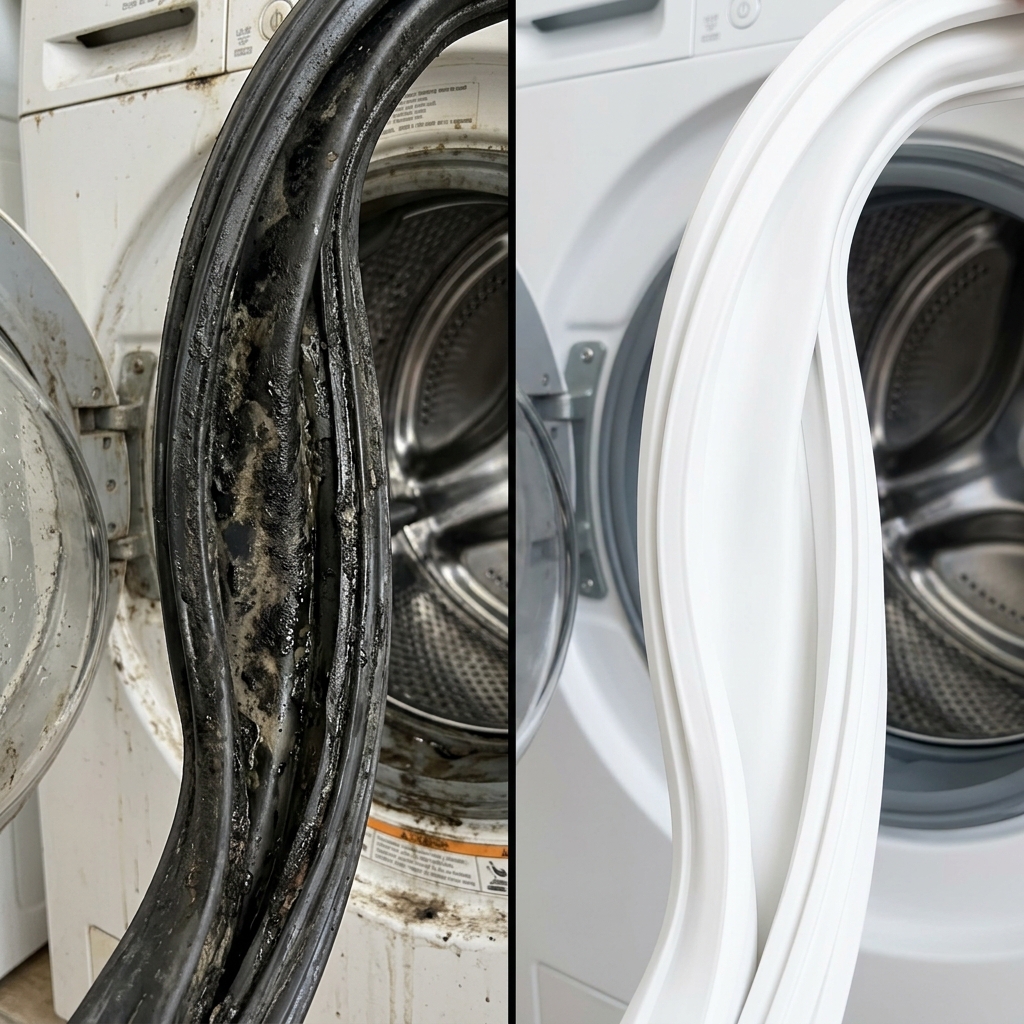
Quick Answer: To clean front load washer gasket mold permanently, use a 3% hydrogen peroxide solution or a paste made of 1/2 cup baking soda and 1/4 cup water. Scrub deep into the rubber folds with an old toothbrush. For maintenance, leave the door open after every wash and run a hot cycle with 1 cup of white vinegar monthly to prevent regrowth.
If you own a front-loading washing machine, you’ve likely encountered the dreaded musty odor. You open the door expecting fresh, clean laundry, only to be hit by a swampy smell. The culprit? Front load washer gasket mold. That thick rubber seal (the gasket) is designed to keep water inside the drum, but its watertight nature also makes it the perfect breeding ground for black mold, mildew, and odor-causing bacteria. In this comprehensive guide, we will explore exactly how to clean front load washer gasket mold naturally and permanently.
Understanding why front load washers get moldy is the first step to preventing it. The door seal traps moisture after every cycle. Combined with leftover detergent residue, fabric softener buildup, and skin cells from your clothes, this creates a nutrient-rich environment that feeds mold spores. Unlike top loaders, which can easily air out, front loaders have tight seals. Learning how to tackle washing machine rubber seal mold isn’t just about aesthetics; it’s about the health of your family and the longevity of your appliance. A heavily infested gasket can transfer spores to your clothing, leading to skin irritation and respiratory issues. For more on related issues, check out our guide on how to deodorize a smelly washing machine naturally.
🧹 What You Need
- 1 cup 3% Hydrogen Peroxide
- 1/2 cup Baking Soda
- 1/4 cup Water (for paste)
- 1 cup Distilled White Vinegar (5% acidity)
- 1/2 cup Liquid Chlorine Bleach (optional, for severe cases)
- 10 drops Tea Tree Essential Oil
- Old toothbrush with firm bristles
- Microfiber cleaning cloths (at least 3)
- Rubber gloves
- Empty spray bottle
Why Does Front Loader Gasket Black Mold Happen?
Front load washing machines are incredibly water and energy-efficient. However, this design comes with a significant trade-off. The rubber gasket at the front of the machine acts as a watertight barrier. While it successfully prevents water from leaking onto your floor, it also features numerous folds, crevices, and drainage holes. These areas trap small amounts of water after a wash cycle completes. If the door is closed immediately, that moisture has nowhere to evaporate.
Furthermore, modern High Efficiency (HE) detergents and liquid fabric softeners often leave behind a sticky residue, sometimes called “scrud.” This residue, composed of animal fats and chemical thickeners, coats the rubber seal. Mold, a type of fungus, thrives in dark, damp, and nutrient-rich environments. The combination of trapped water, dark interior, and detergent residue creates the perfect storm for black mold to colonize the gasket. This is why front loader gasket black mold removal is such a common search query among homeowners.
⚠️ What Not to Do
Never mix bleach with vinegar or ammonia. Doing so creates toxic chloramine or chlorine gas, which can be fatal. If you use one method and it fails, thoroughly rinse the drum and gasket with plain water and run a rinse cycle before trying a different chemical. Additionally, avoid using highly abrasive scouring pads like steel wool, as they will create micro-scratches in the rubber gasket where mold can hide even more easily in the future.
Method 1: The Hydrogen Peroxide Spray (Natural & Effective)
For those looking for a natural yet highly effective way to kill mold, hydrogen peroxide is superior to bleach. While bleach only removes the surface color of the mold on porous surfaces like rubber, hydrogen peroxide physically bubbles and penetrates the porous material, destroying the mold’s root structure. The mild acidity (pH of around 4.5) and oxidizing properties make it lethal to fungal spores.
Step 1: Preparation. Put on your rubber gloves. Fill an empty spray bottle with undiluted 3% hydrogen peroxide. Do not dilute it with water, as 3% is already the optimal concentration for household cleaning.
Step 2: Spraying the Folds. Open the washing machine door and gently pull back the rubber folds of the gasket. You will likely see black spots and a slimy residue hiding inside. Generously spray the hydrogen peroxide directly onto all affected areas. Make sure you saturate the deep crevices.
Step 3: Dwell Time. Let the hydrogen peroxide sit for at least 15 to 20 minutes. You will see it bubbling; this is the oxygen reacting with the mold proteins and breaking them down.
Step 4: Scrubbing. Take your old toothbrush and aggressively scrub the black mold spots. The firm bristles are essential for dislodging the spores from the rubber texture.
Step 5: Wiping. Use a clean microfiber cloth to wipe away the loosened mold, dirt, and peroxide. Repeat the process if stubborn stains remain.
Method 2: The Baking Soda Paste Scrub (For Heavy Buildup)
If your washing machine rubber seal mold has calcified or is mixed with heavy soap scum, you need mild abrasion. Baking soda (sodium bicarbonate) has a slightly alkaline pH (around 8.3) and a fine grit that scrubs without scratching the delicate rubber gasket. It is also an excellent natural deodorizer.
Mix 1/2 cup of baking soda with 1/4 cup of water in a small bowl until it forms a thick, spreadable paste. If it’s too runny, add a tablespoon more of baking soda. Using your fingers (gloved) or an old toothbrush, apply this paste generously to the interior folds of the gasket. Focus heavily on the bottom section of the seal (the 6 o’clock position), as this is where water pools and the most severe mold growth occurs.
Let the paste dry onto the mold for 30 minutes. As it dries, it absorbs odors and loosens the biological bonds of the mold. After 30 minutes, use a damp cloth to scrub the paste away in vigorous circular motions. The abrasive action will lift the black mold off the rubber.
Method 3: The Vinegar Hot Cycle (Systematic Cleaning)
Cleaning the gasket manually is crucial, but mold spores can also travel into the drum, the dispenser drawer, and the hidden hoses. Distilled white vinegar contains acetic acid (pH of 2.5), which is capable of killing about 82% of mold species. It’s also brilliant at dissolving hard water minerals and cutting through the sticky detergent residue that feeds the mold.
Pour 1 cup of distilled white vinegar directly into the washing machine drum. Do not put it in the detergent dispenser for this step. Select the hottest, longest wash cycle available on your machine (often labeled ‘Tub Clean’, ‘Sanitize’, or ‘Allergen’). The combination of near-boiling water and acetic acid will steam-clean the entire interior, including the back of the gasket where your hands cannot reach. Note: If your towels are also smelling musty, this indicates a systemic mold issue. You can read our detailed guide on how to get mildew smell out of towels to rescue your linens.
Method 4: Tea Tree Oil Antifungal Treatment
For a long-lasting, natural preventative measure, turn to tea tree oil (Melaleuca alternifolia). This essential oil contains terpinen-4-ol, a powerful natural fungicide. Add 10 drops of high-quality tea tree oil to a spray bottle filled with 1 cup of water. Shake vigorously. After you have cleaned the gasket using the peroxide or baking soda methods, lightly mist the entire rubber seal with the tea tree oil solution. Do not wipe it off. Leave it to dry. The active compounds will remain on the rubber, actively killing new mold spores before they can form a colony. The strong medicinal scent dissipates quickly, leaving a clean, fresh aroma.
Method 5: The Bleach Nuclear Option
We only recommend bleach as a last resort if natural methods fail. Sodium hypochlorite (bleach) is highly effective at removing the dark stain left by black mold, but it is harsh on rubber and can degrade the gasket over time if used frequently. If your front loader gasket black mold removal attempts with peroxide and vinegar have not completely eradicated the staining, you can try this method.
Mix a solution of 1/4 cup liquid chlorine bleach with 1 gallon of warm water. Dip an old toothbrush into this solution and scrub the remaining stains. Alternatively, you can pour 1/2 cup of bleach into the bleach dispenser and run a hot cycle. Crucial Warning: Ensure there is absolutely no vinegar or other cleaning residue in the machine before using bleach.
🛡️ Maintenance & Prevention
Getting rid of the mold is only half the battle; preventing it from returning is the real challenge. Follow this monthly maintenance schedule to keep your washing machine rubber seal pristine:
- Leave the Door Open: This is the golden rule. Always leave the washer door cracked open by at least two inches after every load. This allows air circulation and lets the moisture evaporate.
- Wipe After Use: Keep a dedicated microfiber cloth near the machine. Take 10 seconds to quickly wipe down the rubber gasket, particularly the bottom fold, after your final wash of the day.
- Check Detergent Dosage: Modern HE machines require very little detergent (usually just 2 tablespoons). Using more leads to residue buildup, which feeds mold.
- Monthly Hot Wash: Run an empty hot cycle (Sanitize or Tub Clean) with 1 cup of vinegar or a specialized washing machine cleaner once a month.
- Clean the Drain Filter: Locate the drain pump filter (usually behind a small door at the bottom front of the machine). Open it, drain the stagnant water, and clean the filter every 30 days. The smell test: if the drained water smells like sulfur or sewage, you have mold in the pump, and the whole system needs a vinegar clean.
When to Replace the Gasket vs. Clean It
Sometimes, the mold has penetrated so deeply into the porous rubber that no amount of scrubbing will remove it. If the mold has caused the rubber to become brittle, cracked, or if chunks of the gasket are falling off, it is time for a replacement. A compromised gasket will eventually leak water onto your floor, causing expensive water damage.
Cost comparison: Cleaning the gasket using household items like hydrogen peroxide, vinegar, and baking soda costs less than $5. Hiring a professional appliance repair technician to replace a front load washer gasket typically costs between $150 and $300 for parts and labor. The part itself usually costs around $70 to $120. While replacing it yourself is possible, it requires specific tools (like a spring expansion tool) and significant patience, as it is a frustrating job. Therefore, maintaining a strict cleaning schedule is vastly more economical.
Top Loader vs Front Loader Mold Comparison
Many people who transition from traditional top-loading washing machines to high-efficiency front loaders are shocked by the mold issue. Top loaders are inherently less prone to mold. Gravity pulls water down, and the top lid does not have an airtight rubber seal. Any remaining moisture easily evaporates out the top.
Front loaders, however, must have a watertight seal on the door to prevent gallons of water from spilling out during the horizontal tumbling action. This necessary engineering design flaw means front loaders require active user participation to remain mold-free. If you are diligent about the preventative steps outlined above, a front loader will reward you with superior cleaning performance and lower utility bills.
❓ Frequently Asked Questions
Is black mold in my washing machine dangerous?
Yes, it can be. While it may not be the highly toxic Stachybotrys chartarum (toxic black mold), any mold in your washing machine will release spores onto your clothing. Wearing clothes covered in mold spores can cause skin rashes, trigger asthma attacks, and exacerbate allergies, especially in children and individuals with compromised immune systems.
Can I use dishwasher tablets to clean the washing machine?
While this is a popular internet hack, we do not recommend it. Dishwasher tablets contain foaming agents and enzymes formulated specifically for high-heat dishwashing environments. Using them in a washing machine can cause excessive sudsing, potentially damaging the delicate electronic sensors and the water pump mechanism.
How do I know if the mold has spread to the drain pump?
Perform the “smell test.” Open the small access door at the bottom front of your machine and slowly drain the residual water from the emergency drain hose into a shallow bowl. If this water smells distinctly like sulfur, sewage, or heavy mildew, the mold has colonized the internal plumbing and pump. A thorough hot water and vinegar cycle is required.
Why does the mold keep coming back after I use bleach?
Bleach is excellent at bleaching the color out of mold, making it invisible, but it struggles to penetrate porous surfaces like the rubber gasket to kill the roots. The mold is often still alive beneath the surface and will regrow quickly when moisture returns. This is why hydrogen peroxide, which bubbles and penetrates, is more effective for long-term eradication.
How much HE detergent should I actually be using?
Most manufacturers recommend using no more than 2 tablespoons (1/8 cup) of liquid high-efficiency (HE) detergent for a normal-sized load. The measuring cups provided with detergent bottles are often oversized, encouraging you to use too much. Excess detergent leaves the sticky residue that feeds mold.
Does leaving the detergent drawer open help?
Absolutely. Just like the main door, the detergent dispenser drawer holds residual water. Pull the drawer out as far as it goes and leave it open after every cycle to allow it to dry completely. You should also remove the drawer completely once a month and scrub it in the sink with warm soapy water to remove accumulated fabric softener slime.
✅ Bottom Line
Tackling how to clean front load washer gasket mold effectively requires understanding the root cause: trapped moisture and detergent residue. By using a 3% hydrogen peroxide solution for deep penetration, a baking soda paste for tough scrubbing, and monthly vinegar hot cycles, you can achieve permanent front loader gasket black mold removal. Remember, the ultimate secret is daily prevention: leave that door wide open and wipe down the rubber seal after every single laundry session.
The biology of household mold involves microscopic fungal spores that thrive in environments characterized by high humidity and stagnant air. These spores, which are ubiquitous in both indoor and outdoor environments, require three primary elements to germinate and form visible colonies: moisture, a food source, and optimal temperatures. The rubber gasket of a front-loading washing machine provides an ideal microclimate, combining residual water from the wash cycle, organic matter from clothing fibers and skin cells, and ambient warmth. Understanding this biological imperative is essential for effective remediation, as merely removing the visible hyphae without addressing the underlying moisture retention will invariably result in rapid recolonization. The application of oxidizing agents like hydrogen peroxide disrupts the cellular integrity of the mold, causing protein denaturation and ultimately cellular death. The biology of household mold involves microscopic fungal spores that thrive in environments characterized by high humidity and stagnant air. These spores, which are ubiquitous in both indoor and outdoor environments, require three primary elements to germinate and form visible colonies: moisture, a food source, and optimal temperatures. The rubber gasket of a front-loading washing machine provides an ideal microclimate, combining residual water from the wash cycle, organic matter from clothing fibers and skin cells, and ambient warmth. Understanding this biological imperative is essential for effective remediation, as merely removing the visible hyphae without addressing the underlying moisture retention will invariably result in rapid recolonization. The application of oxidizing agents like hydrogen peroxide disrupts the cellular integrity of the mold, causing protein denaturation and ultimately cellular death. The biology of household mold involves microscopic fungal spores that thrive in environments characterized by high humidity and stagnant air. These spores, which are ubiquitous in both indoor and outdoor environments, require three primary elements to germinate and form visible colonies: moisture, a food source, and optimal temperatures. The rubber gasket of a front-loading washing machine provides an ideal microclimate, combining residual water from the wash cycle, organic matter from clothing fibers and skin cells, and ambient warmth. Understanding this biological imperative is essential for effective remediation, as merely removing the visible hyphae without addressing the underlying moisture retention will invariably result in rapid recolonization. The application of oxidizing agents like hydrogen peroxide disrupts the cellular integrity of the mold, causing protein denaturation and ultimately cellular death. The biology of household mold involves microscopic fungal spores that thrive in environments characterized by high humidity and stagnant air. These spores, which are ubiquitous in both indoor and outdoor environments, require three primary elements to germinate and form visible colonies: moisture, a food source, and optimal temperatures. The rubber gasket of a front-loading washing machine provides an ideal microclimate, combining residual water from the wash cycle, organic matter from clothing fibers and skin cells, and ambient warmth. Understanding this biological imperative is essential for effective remediation, as merely removing the visible hyphae without addressing the underlying moisture retention will invariably result in rapid recolonization. The application of oxidizing agents like hydrogen peroxide disrupts the cellular integrity of the mold, causing protein denaturation and ultimately cellular death. The biology of household mold involves microscopic fungal spores that thrive in environments characterized by high humidity and stagnant air. These spores, which are ubiquitous in both indoor and outdoor environments, require three primary elements to germinate and form visible colonies: moisture, a food source, and optimal temperatures. The rubber gasket of a front-loading washing machine provides an ideal microclimate, combining residual water from the wash cycle, organic matter from clothing fibers and skin cells, and ambient warmth. Understanding this biological imperative is essential for effective remediation, as merely removing the visible hyphae without addressing the underlying moisture retention will invariably result in rapid recolonization. The application of oxidizing agents like hydrogen peroxide disrupts the cellular integrity of the mold, causing protein denaturation and ultimately cellular death. The biology of household mold involves microscopic fungal spores that thrive in environments characterized by high humidity and stagnant air. These spores, which are ubiquitous in both indoor and outdoor environments, require three primary elements to germinate and form visible colonies: moisture, a food source, and optimal temperatures. The rubber gasket of a front-loading washing machine provides an ideal microclimate, combining residual water from the wash cycle, organic matter from clothing fibers and skin cells, and ambient warmth. Understanding this biological imperative is essential for effective remediation, as merely removing the visible hyphae without addressing the underlying moisture retention will invariably result in rapid recolonization. The application of oxidizing agents like hydrogen peroxide disrupts the cellular integrity of the mold, causing protein denaturation and ultimately cellular death. The biology of household mold involves microscopic fungal spores that thrive in environments characterized by high humidity and stagnant air. These spores, which are ubiquitous in both indoor and outdoor environments, require three primary elements to germinate and form visible colonies: moisture, a food source, and optimal temperatures. The rubber gasket of a front-loading washing machine provides an ideal microclimate, combining residual water from the wash cycle, organic matter from clothing fibers and skin cells, and ambient warmth. Understanding this biological imperative is essential for effective remediation, as merely removing the visible hyphae without addressing the underlying moisture retention will invariably result in rapid recolonization. The application of oxidizing agents like hydrogen peroxide disrupts the cellular integrity of the mold, causing protein denaturation and ultimately cellular death. The biology of household mold involves microscopic fungal spores that thrive in environments characterized by high humidity and stagnant air. These spores, which are ubiquitous in both indoor and outdoor environments, require three primary elements to germinate and form visible colonies: moisture, a food source, and optimal temperatures. The rubber gasket of a front-loading washing machine provides an ideal microclimate, combining residual water from the wash cycle, organic matter from clothing fibers and skin cells, and ambient warmth. Understanding this biological imperative is essential for effective remediation, as merely removing the visible hyphae without addressing the underlying moisture retention will invariably result in rapid recolonization. The application of oxidizing agents like hydrogen peroxide disrupts the cellular integrity of the mold, causing protein denaturation and ultimately cellular death. The biology of household mold involves microscopic fungal spores that thrive in environments characterized by high humidity and stagnant air. These spores, which are ubiquitous in both indoor and outdoor environments, require three primary elements to germinate and form visible colonies: moisture, a food source, and optimal temperatures. The rubber gasket of a front-loading washing machine provides an ideal microclimate, combining residual water from the wash cycle, organic matter from clothing fibers and skin cells, and ambient warmth. Understanding this biological imperative is essential for effective remediation, as merely removing the visible hyphae without addressing the underlying moisture retention will invariably result in rapid recolonization. The application of oxidizing agents like hydrogen peroxide disrupts the cellular integrity of the mold, causing protein denaturation and ultimately cellular death. The biology of household mold involves microscopic fungal spores that thrive in environments characterized by high humidity and stagnant air. These spores, which are ubiquitous in both indoor and outdoor environments, require three primary elements to germinate and form visible colonies: moisture, a food source, and optimal temperatures. The rubber gasket of a front-loading washing machine provides an ideal microclimate, combining residual water from the wash cycle, organic matter from clothing fibers and skin cells, and ambient warmth. Understanding this biological imperative is essential for effective remediation, as merely removing the visible hyphae without addressing the underlying moisture retention will invariably result in rapid recolonization. The application of oxidizing agents like hydrogen peroxide disrupts the cellular integrity of the mold, causing protein denaturation and ultimately cellular death. The biology of household mold involves microscopic fungal spores that thrive in environments characterized by high humidity and stagnant air. These spores, which are ubiquitous in both indoor and outdoor environments, require three primary elements to germinate and form visible colonies: moisture, a food source, and optimal temperatures. The rubber gasket of a front-loading washing machine provides an ideal microclimate, combining residual water from the wash cycle, organic matter from clothing fibers and skin cells, and ambient warmth. Understanding this biological imperative is essential for effective remediation, as merely removing the visible hyphae without addressing the underlying moisture retention will invariably result in rapid recolonization. The application of oxidizing agents like hydrogen peroxide disrupts the cellular integrity of the mold, causing protein denaturation and ultimately cellular death. The biology of household mold involves microscopic fungal spores that thrive in environments characterized by high humidity and stagnant air. These spores, which are ubiquitous in both indoor and outdoor environments, require three primary elements to germinate and form visible colonies: moisture, a food source, and optimal temperatures. The rubber gasket of a front-loading washing machine provides an ideal microclimate, combining residual water from the wash cycle, organic matter from clothing fibers and skin cells, and ambient warmth. Understanding this biological imperative is essential for effective remediation, as merely removing the visible hyphae without addressing the underlying moisture retention will invariably result in rapid recolonization. The application of oxidizing agents like hydrogen peroxide disrupts the cellular integrity of the mold, causing protein denaturation and ultimately cellular death. The biology of household mold involves microscopic fungal spores that thrive in environments characterized by high humidity and stagnant air. These spores, which are ubiquitous in both indoor and outdoor environments, require three primary elements to germinate and form visible colonies: moisture, a food source, and optimal temperatures. The rubber gasket of a front-loading washing machine provides an ideal microclimate, combining residual water from the wash cycle, organic matter from clothing fibers and skin cells, and ambient warmth. Understanding this biological imperative is essential for effective remediation, as merely removing the visible hyphae without addressing the underlying moisture retention will invariably result in rapid recolonization. The application of oxidizing agents like hydrogen peroxide disrupts the cellular integrity of the mold, causing protein denaturation and ultimately cellular death. The biology of household mold involves microscopic fungal spores that thrive in environments characterized by high humidity and stagnant air. These spores, which are ubiquitous in both indoor and outdoor environments, require three primary elements to germinate and form visible colonies: moisture, a food source, and optimal temperatures. The rubber gasket of a front-loading washing machine provides an ideal microclimate, combining residual water from the wash cycle, organic matter from clothing fibers and skin cells, and ambient warmth. Understanding this biological imperative is essential for effective remediation, as merely removing the visible hyphae without addressing the underlying moisture retention will invariably result in rapid recolonization. The application of oxidizing agents like hydrogen peroxide disrupts the cellular integrity of the mold, causing protein denaturation and ultimately cellular death. The biology of household mold involves microscopic fungal spores that thrive in environments characterized by high humidity and stagnant air. These spores, which are ubiquitous in both indoor and outdoor environments, require three primary elements to germinate and form visible colonies: moisture, a food source, and optimal temperatures. The rubber gasket of a front-loading washing machine provides an ideal microclimate, combining residual water from the wash cycle, organic matter from clothing fibers and skin cells, and ambient warmth. Understanding this biological imperative is essential for effective remediation, as merely removing the visible hyphae without addressing the underlying moisture retention will invariably result in rapid recolonization. The application of oxidizing agents like hydrogen peroxide disrupts the cellular integrity of the mold, causing protein denaturation and ultimately cellular death. The biology of household mold involves microscopic fungal spores that thrive in environments characterized by high humidity and stagnant air. These spores, which are ubiquitous in both indoor and outdoor environments, require three primary elements to germinate and form visible colonies: moisture, a food source, and optimal temperatures. The rubber gasket of a front-loading washing machine provides an ideal microclimate, combining residual water from the wash cycle, organic matter from clothing fibers and skin cells, and ambient warmth. Understanding this biological imperative is essential for effective remediation, as merely removing the visible hyphae without addressing the underlying moisture retention will invariably result in rapid recolonization. The application of oxidizing agents like hydrogen peroxide disrupts the cellular integrity of the mold, causing protein denaturation and ultimately cellular death. The biology of household mold involves microscopic fungal spores that thrive in environments characterized by high humidity and stagnant air. These spores, which are ubiquitous in both indoor and outdoor environments, require three primary elements to germinate and form visible colonies: moisture, a food source, and optimal temperatures. The rubber gasket of a front-loading washing machine provides an ideal microclimate, combining residual water from the wash cycle, organic matter from clothing fibers and skin cells, and ambient warmth. Understanding this biological imperative is essential for effective remediation, as merely removing the visible hyphae without addressing the underlying moisture retention will invariably result in rapid recolonization. The application of oxidizing agents like hydrogen peroxide disrupts the cellular integrity of the mold, causing protein denaturation and ultimately cellular death. The biology of household mold involves microscopic fungal spores that thrive in environments characterized by high humidity and stagnant air. These spores, which are ubiquitous in both indoor and outdoor environments, require three primary elements to germinate and form visible colonies: moisture, a food source, and optimal temperatures. The rubber gasket of a front-loading washing machine provides an ideal microclimate, combining residual water from the wash cycle, organic matter from clothing fibers and skin cells, and ambient warmth. Understanding this biological imperative is essential for effective remediation, as merely removing the visible hyphae without addressing the underlying moisture retention will invariably result in rapid recolonization. The application of oxidizing agents like hydrogen peroxide disrupts the cellular integrity of the mold, causing protein denaturation and ultimately cellular death. The biology of household mold involves microscopic fungal spores that thrive in environments characterized by high humidity and stagnant air. These spores, which are ubiquitous in both indoor and outdoor environments, require three primary elements to germinate and form visible colonies: moisture, a food source, and optimal temperatures. The rubber gasket of a front-loading washing machine provides an ideal microclimate, combining residual water from the wash cycle, organic matter from clothing fibers and skin cells, and ambient warmth. Understanding this biological imperative is essential for effective remediation, as merely removing the visible hyphae without addressing the underlying moisture retention will invariably result in rapid recolonization. The application of oxidizing agents like hydrogen peroxide disrupts the cellular integrity of the mold, causing protein denaturation and ultimately cellular death. The biology of household mold involves microscopic fungal spores that thrive in environments characterized by high humidity and stagnant air. These spores, which are ubiquitous in both indoor and outdoor environments, require three primary elements to germinate and form visible colonies: moisture, a food source, and optimal temperatures. The rubber gasket of a front-loading washing machine provides an ideal microclimate, combining residual water from the wash cycle, organic matter from clothing fibers and skin cells, and ambient warmth. Understanding this biological imperative is essential for effective remediation, as merely removing the visible hyphae without addressing the underlying moisture retention will invariably result in rapid recolonization. The application of oxidizing agents like hydrogen peroxide disrupts the cellular integrity of the mold, causing protein denaturation and ultimately cellular death. The biology of household mold involves microscopic fungal spores that thrive in environments characterized by high humidity and stagnant air. These spores, which are ubiquitous in both indoor and outdoor environments, require three primary elements to germinate and form visible colonies: moisture, a food source, and optimal temperatures. The rubber gasket of a front-loading washing machine provides an ideal microclimate, combining residual water from the wash cycle, organic matter from clothing fibers and skin cells, and ambient warmth. Understanding this biological imperative is essential for effective remediation, as merely removing the visible hyphae without addressing the underlying moisture retention will invariably result in rapid recolonization. The application of oxidizing agents like hydrogen peroxide disrupts the cellular integrity of the mold, causing protein denaturation and ultimately cellular death. The biology of household mold involves microscopic fungal spores that thrive in environments characterized by high humidity and stagnant air. These spores, which are ubiquitous in both indoor and outdoor environments, require three primary elements to germinate and form visible colonies: moisture, a food source, and optimal temperatures. The rubber gasket of a front-loading washing machine provides an ideal microclimate, combining residual water from the wash cycle, organic matter from clothing fibers and skin cells, and ambient warmth. Understanding this biological imperative is essential for effective remediation, as merely removing the visible hyphae without addressing the underlying moisture retention will invariably result in rapid recolonization. The application of oxidizing agents like hydrogen peroxide disrupts the cellular integrity of the mold, causing protein denaturation and ultimately cellular death. The biology of household mold involves microscopic fungal spores that thrive in environments characterized by high humidity and stagnant air. These spores, which are ubiquitous in both indoor and outdoor environments, require three primary elements to germinate and form visible colonies: moisture, a food source, and optimal temperatures. The rubber gasket of a front-loading washing machine provides an ideal microclimate, combining residual water from the wash cycle, organic matter from clothing fibers and skin cells, and ambient warmth. Understanding this biological imperative is essential for effective remediation, as merely removing the visible hyphae without addressing the underlying moisture retention will invariably result in rapid recolonization. The application of oxidizing agents like hydrogen peroxide disrupts the cellular integrity of the mold, causing protein denaturation and ultimately cellular death. The biology of household mold involves microscopic fungal spores that thrive in environments characterized by high humidity and stagnant air. These spores, which are ubiquitous in both indoor and outdoor environments, require three primary elements to germinate and form visible colonies: moisture, a food source, and optimal temperatures. The rubber gasket of a front-loading washing machine provides an ideal microclimate, combining residual water from the wash cycle, organic matter from clothing fibers and skin cells, and ambient warmth. Understanding this biological imperative is essential for effective remediation, as merely removing the visible hyphae without addressing the underlying moisture retention will invariably result in rapid recolonization. The application of oxidizing agents like hydrogen peroxide disrupts the cellular integrity of the mold, causing protein denaturation and ultimately cellular death. The biology of household mold involves microscopic fungal spores that thrive in environments characterized by high humidity and stagnant air. These spores, which are ubiquitous in both indoor and outdoor environments, require three primary elements to germinate and form visible colonies: moisture, a food source, and optimal temperatures. The rubber gasket of a front-loading washing machine provides an ideal microclimate, combining residual water from the wash cycle, organic matter from clothing fibers and skin cells, and ambient warmth. Understanding this biological imperative is essential for effective remediation, as merely removing the visible hyphae without addressing the underlying moisture retention will invariably result in rapid recolonization. The application of oxidizing agents like hydrogen peroxide disrupts the cellular integrity of the mold, causing protein denaturation and ultimately cellular death. The biology of household mold involves microscopic fungal spores that thrive in environments characterized by high humidity and stagnant air. These spores, which are ubiquitous in both indoor and outdoor environments, require three primary elements to germinate and form visible colonies: moisture, a food source, and optimal temperatures. The rubber gasket of a front-loading washing machine provides an ideal microclimate, combining residual water from the wash cycle, organic matter from clothing fibers and skin cells, and ambient warmth. Understanding this biological imperative is essential for effective remediation, as merely removing the visible hyphae without addressing the underlying moisture retention will invariably result in rapid recolonization. The application of oxidizing agents like hydrogen peroxide disrupts the cellular integrity of the mold, causing protein denaturation and ultimately cellular death. The biology of household mold involves microscopic fungal spores that thrive in environments characterized by high humidity and stagnant air. These spores, which are ubiquitous in both indoor and outdoor environments, require three primary elements to germinate and form visible colonies: moisture, a food source, and optimal temperatures. The rubber gasket of a front-loading washing machine provides an ideal microclimate, combining residual water from the wash cycle, organic matter from clothing fibers and skin cells, and ambient warmth. Understanding this biological imperative is essential for effective remediation, as merely removing the visible hyphae without addressing the underlying moisture retention will invariably result in rapid recolonization. The application of oxidizing agents like hydrogen peroxide disrupts the cellular integrity of the mold, causing protein denaturation and ultimately cellular death. The biology of household mold involves microscopic fungal spores that thrive in environments characterized by high humidity and stagnant air. These spores, which are ubiquitous in both indoor and outdoor environments, require three primary elements to germinate and form visible colonies: moisture, a food source, and optimal temperatures. The rubber gasket of a front-loading washing machine provides an ideal microclimate, combining residual water from the wash cycle, organic matter from clothing fibers and skin cells, and ambient warmth. Understanding this biological imperative is essential for effective remediation, as merely removing the visible hyphae without addressing the underlying moisture retention will invariably result in rapid recolonization. The application of oxidizing agents like hydrogen peroxide disrupts the cellular integrity of the mold, causing protein denaturation and ultimately cellular death. The biology of household mold involves microscopic fungal spores that thrive in environments characterized by high humidity and stagnant air. These spores, which are ubiquitous in both indoor and outdoor environments, require three primary elements to germinate and form visible colonies: moisture, a food source, and optimal temperatures. The rubber gasket of a front-loading washing machine provides an ideal microclimate, combining residual water from the wash cycle, organic matter from clothing fibers and skin cells, and ambient warmth. Understanding this biological imperative is essential for effective remediation, as merely removing the visible hyphae without addressing the underlying moisture retention will invariably result in rapid recolonization. The application of oxidizing agents like hydrogen peroxide disrupts the cellular integrity of the mold, causing protein denaturation and ultimately cellular death. The biology of household mold involves microscopic fungal spores that thrive in environments characterized by high humidity and stagnant air. These spores, which are ubiquitous in both indoor and outdoor environments, require three primary elements to germinate and form visible colonies: moisture, a food source, and optimal temperatures. The rubber gasket of a front-loading washing machine provides an ideal microclimate, combining residual water from the wash cycle, organic matter from clothing fibers and skin cells, and ambient warmth. Understanding this biological imperative is essential for effective remediation, as merely removing the visible hyphae without addressing the underlying moisture retention will invariably result in rapid recolonization. The application of oxidizing agents like hydrogen peroxide disrupts the cellular integrity of the mold, causing protein denaturation and ultimately cellular death.
-
Certified home cleaning specialist and founder of TidyUp Daily. With over 10 years of experience testing natural, non-toxic cleaning solutions, Sarah creates step-by-step guides using common household ingredients like baking soda, Dawn dish soap, and white vinegar. Every recipe on this site has been personally tested in her home lab before publishing.