Quick Answer
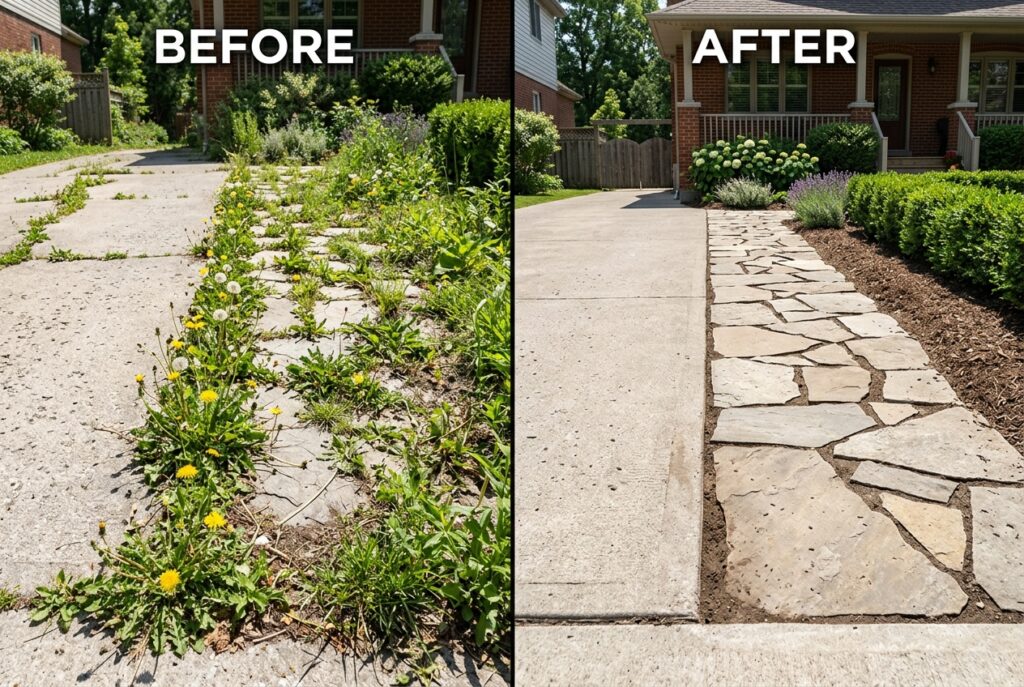
A spray of white vinegar (5% acetic acid), a tablespoon of dish soap, and a cup of salt can kill weeds within 24 hours. The acid strips the waxy coating off leaves, the soap helps it stick, and the salt dehydrates the roots.
Commercial weed killers like glyphosate work, but they come with health concerns and can contaminate groundwater. The good news is that acetic acid — the active compound in household vinegar — has been studied extensively by the USDA and shown to be effective against broadleaf weeds at concentrations of 5% and above.
The science is simple: vinegar is a contact herbicide. It destroys the cell membranes of plant tissue on contact, causing rapid desiccation. Unlike systemic herbicides that travel to the roots, vinegar works on the surface — which means it is safest for spot-treating weeds near desirable plants.
🧹 What You Need
- 🔹 White vinegar (5% acidity minimum — horticultural vinegar at 20% is even stronger)
- 🔹 Table salt or rock salt (sodium chloride dehydrates plant cells)
- 🔹 Liquid dish soap (acts as a surfactant — breaks surface tension so the solution sticks to waxy leaves)
- 🔹 Spray bottle or pump sprayer
- 🔹 Protective gloves and eye protection (especially with horticultural vinegar)
Step 1: Mix the Solution
Combine 1 gallon of white vinegar, 1 cup of table salt, and 1 tablespoon of dish soap in a bucket. Stir until the salt dissolves completely.
💡 The Science: Acetic acid (CH₃COOH) works by pulling moisture out of plant cells through osmotic stress. Salt amplifies this effect — sodium chloride creates a hypertonic solution that draws water out of cells even faster. The dish soap contains surfactants that reduce surface tension, allowing the liquid to spread across the waxy cuticle of leaves instead of beading up and rolling off.
Step 2: Apply on a Sunny Day
Spray weeds thoroughly until leaves are dripping wet. Target the crown and base of the plant, not just the tips.
Timing matters: apply between 10 AM and 2 PM on a dry, sunny day. UV radiation and heat accelerate the desiccation process. Rain within 24 hours will wash the solution off before it can work.
💡 Pro Tip: For stubborn weeds with deep taproots (dandelions, thistles), pour the solution directly at the base rather than spraying. You want it to reach the root zone.
Step 3: Wait and Reapply
Within 2 to 4 hours, you should see leaves wilting and browning. Full die-off takes 24 to 48 hours. For established perennial weeds, you may need 2 to 3 applications spaced a week apart to exhaust the root system.
⚠️ What Not to Do
- Do not spray near plants you want to keep — vinegar is non-selective and will damage any vegetation it touches
- Do not pour large amounts of salt-based solution in garden beds — salt accumulates in soil and can sterilize it for months
- Do not use horticultural vinegar (20%) without gloves and eye protection — it can cause chemical burns
- Do not apply on windy days — drift will damage nearby plants
How to Keep Weeds from Coming Back
- Apply a 3-inch layer of mulch — blocks sunlight and prevents germination
- Pour boiling water on driveway cracks as a chemical-free instant kill
- Lay landscape fabric under gravel paths to prevent root establishment
- Re-apply vinegar solution every 2 to 3 weeks during growing season as a preventative
❓ FAQ
Does vinegar kill weeds permanently?
It kills the top growth on contact, but deep-rooted perennials may regrow from the root system. Repeated applications 1 week apart will exhaust stored root energy and eventually kill the entire plant.
Is this safe for pets and kids?
Standard 5% vinegar is food-grade and safe once dry. Avoid horticultural vinegar (20%) around children and pets — it is highly caustic when wet.
Will this work on crabgrass and bermuda grass?
Yes, but grasses have extensive runner systems. You will need multiple applications and should combine with manual root removal for best results.
Can I add bleach for extra strength?
❌ Never. Mixing bleach with vinegar produces chlorine gas, which is toxic and potentially lethal. Never combine these two chemicals.
✅ Bottom Line
A vinegar, salt, and soap solution is a proven, science-backed weed killer for driveways, patios, and garden paths. It works through cell membrane disruption and osmotic dehydration. It is cheap, non-toxic when dry, and effective within 24 hours. For garden beds, stick to targeted spraying to protect soil health.