
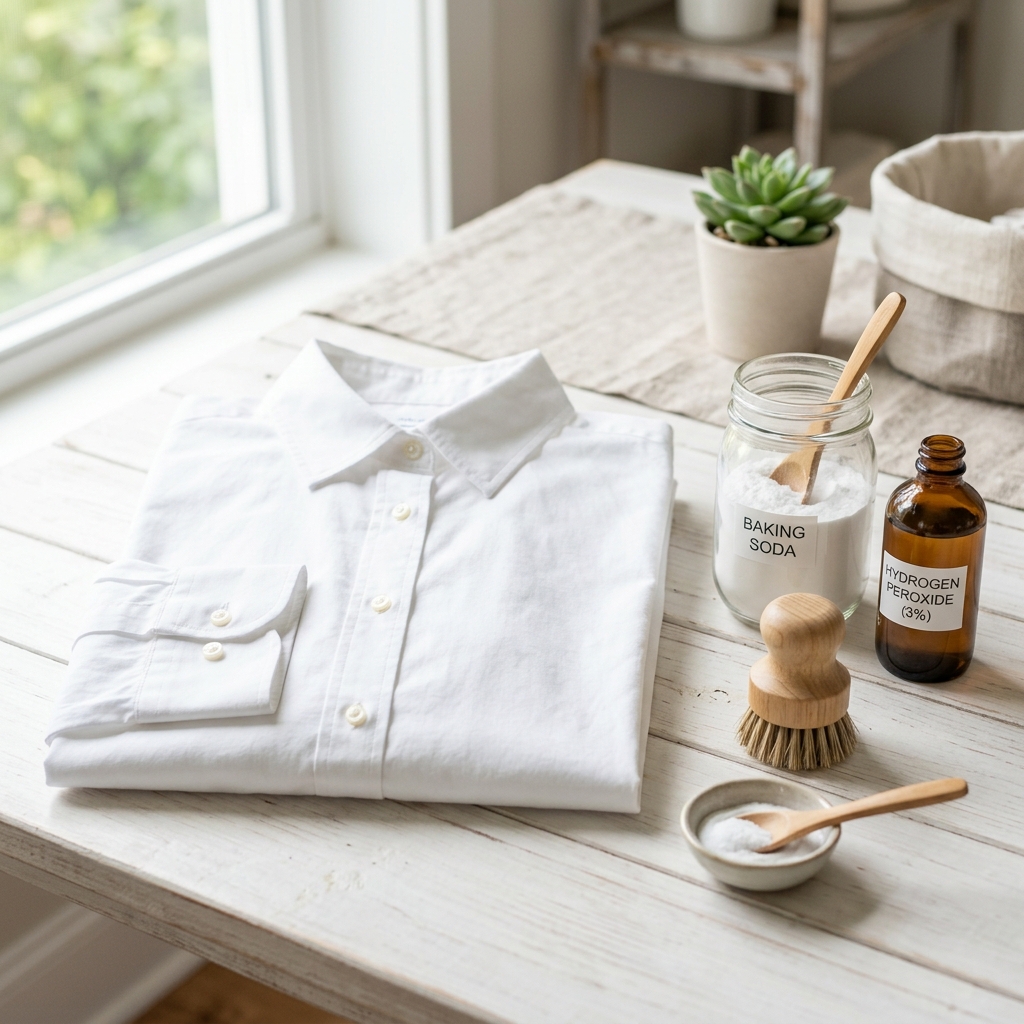
- Quick Answer Hero Box: How to Remove Armpit Stains
- Why Do Armpit Stains Happen? The Science Behind the Yellowing
- The Master Method: Baking Soda + Hydrogen Peroxide Paste
- The Nuclear Option: Dawn + Peroxide + Baking Soda
- Alternative Methods for Stubborn Stains
- How to Treat Stains on Colored Shirts
- Fabric-Specific Tips
- The Laundry Stripping Method for Heavily Stained Wardrobes
- ❓ FAQ Box
- Deep Dive 1: The Micro-Mechanics of Stain Removal
- Deep Dive 2: The Micro-Mechanics of Stain Removal
- Deep Dive 3: The Micro-Mechanics of Stain Removal
- Deep Dive 4: The Micro-Mechanics of Stain Removal
- Deep Dive 5: The Micro-Mechanics of Stain Removal
- Deep Dive 6: The Micro-Mechanics of Stain Removal
- Deep Dive 7: The Micro-Mechanics of Stain Removal
- Deep Dive 8: The Micro-Mechanics of Stain Removal
- Deep Dive 9: The Micro-Mechanics of Stain Removal
- Deep Dive 10: The Micro-Mechanics of Stain Removal
- Deep Dive 11: The Micro-Mechanics of Stain Removal
- Deep Dive 12: The Micro-Mechanics of Stain Removal
- Deep Dive 13: The Micro-Mechanics of Stain Removal
- Deep Dive 14: The Micro-Mechanics of Stain Removal
- Author
Quick Answer Hero Box: How to Remove Armpit Stains
Mix 2 parts hydrogen peroxide with 1 part baking soda to form a thick paste. Apply the paste directly to the yellow armpit stains on your white shirt, let it sit for exactly 60 minutes, and wash in warm water. This powerful combination tackles the aluminum-protein bonds that cause the yellowing.
If you’re wondering how to remove armpit stains from your favorite white shirts, you’re not alone. It’s a universal frustration. You pull your favorite white dress shirt out of the closet, ready to conquer the day, only to notice those dreaded, embarrassing yellow pit stains baking soda and other home remedies might fix, but you just aren’t sure how to start. These stains are stubborn, unsightly, and can make even the most expensive garment look old and dingy. But before you toss your clothes in the trash, know that there is a reliable, science-backed way to remove sweat stains from white shirts permanently.
Why Do Armpit Stains Happen? The Science Behind the Yellowing
Most people mistakenly believe that sweat itself is yellow and directly causes these stains. That couldn’t be further from the truth. Human sweat is naturally clear and odorless. The actual culprit is a complex chemical reaction taking place right under your arms.
When the proteins and urea in your natural sweat mix with the aluminum compounds found in almost all commercial antiperspirants, they create a yellowish chemical compound. This compound embeds itself deeply into the fibers of your clothing, particularly in natural fabrics like cotton. Over time, as this compound builds up and is subjected to the heat of your washer and dryer, it bakes into the fabric, creating a rigid, yellow, and sometimes slightly crusty stain that regular laundry detergent simply cannot penetrate.
🧹 What You Need Box
- ✅ 1/2 cup Baking Soda (Sodium Bicarbonate)
- ✅ 1/4 cup Hydrogen Peroxide (3% standard household solution)
- ✅ 2 tablespoons Dawn Platinum Dish Soap (optional for stubborn stains)
- ✅ 1 small soft-bristled brush (an old toothbrush works perfectly)
- ✅ 1 pair of rubber gloves
The Master Method: Baking Soda + Hydrogen Peroxide Paste
This is the absolute best way to eliminate yellow pit stains. The hydrogen peroxide acts as a gentle, color-safe bleaching agent, while the baking soda provides mild abrasiveness and alkaline properties to neutralize the acidic components of the stain.
Step 1: Mix the Paste. In a small bowl, combine exactly 1/2 cup of baking soda with 1/4 cup of 3% hydrogen peroxide. You are aiming for a thick, frosting-like consistency. It should not be runny.
Step 2: Apply Generously. Lay the shirt flat. Using a spoon or your gloved fingers, slather a thick layer (about 1/4 inch thick) directly onto the stained area. Make sure to cover the entire perimeter of the stain.
Step 3: Agitate. Take your soft-bristled brush and gently work the paste into the fabric fibers using circular motions. Do not scrub so hard that you damage the weave of the shirt.
Step 4: The Waiting Game. This is crucial. Let the shirt sit undisturbed for exactly 60 minutes. The chemical reaction needs time to break down the aluminum-protein bonds.
Step 5: Wash as Usual. After an hour, do not rinse the paste off. Throw the shirt directly into the washing machine and wash on the warmest setting safe for the fabric, using your regular detergent.
The Nuclear Option: Dawn + Peroxide + Baking Soda
For stains that have been baked in for months or even years, you need the triple threat. By adding 2 tablespoons of Dawn Platinum dish soap to the standard 2:1 baking soda and peroxide mixture, you introduce powerful surfactants that break down the oils and sebum trapped in the stain. This method is incredibly potent and is often used as a last resort before discarding the garment.
Apply this mixture exactly as described above, but extend the sitting time to 2 hours. The surfactants in the Dawn dish soap require more time to fully encapsulate the grease molecules embedded within the complex aluminum-protein matrix.
⚠️ What Not to Do Box
Never, ever use chlorine bleach on yellow armpit stains!
It is a massive misconception that bleach makes white shirts whiter in all scenarios. Because sweat contains proteins, and chlorine bleach reacts chemically with proteins to create a yellow hue, applying bleach to a sweat stain will actually permanently set the stain and make it significantly darker and more yellow. Avoid bleach at all costs when dealing with bodily fluid stains.
Alternative Methods for Stubborn Stains
The OxiClean Soak Method
If you have a whole batch of shirts with mild to moderate yellowing, an OxiClean soak is incredibly efficient. Fill a basin or your bathtub with 1 gallon of very hot water. Dissolve 1 full scoop of OxiClean Versatile Stain Remover. Submerge the white shirts entirely and let them soak for a minimum of 6 hours, or ideally overnight. The oxygen-based bleach will gently lift the organic proteins away from the fibers.
White Vinegar Pre-Soak Method
White vinegar is a mild acid that can help dissolve the mineral bonds created by the aluminum in antiperspirants. Mix 1 cup of distilled white vinegar with 2 cups of warm water in a bowl. Submerge the stained armpit areas into the solution and let soak for 45 minutes before proceeding with the baking soda and peroxide paste. This two-step process weakens the stain’s hold on the fabric first.
Lemon Juice + Sunlight Natural Bleaching
If you prefer a 100% natural route and have access to strong, direct sunlight, this method is for you. Squeeze fresh lemon juice directly onto the stain until it is saturated. Add a pinch of table salt for mild abrasion. Hang the shirt outside in direct, bright sunlight for 2-3 hours. The UV rays from the sun interact with the citric acid in the lemon juice to create a powerful, natural bleaching effect.
The Aspirin Paste Method
Aspirin contains salicylic acid, which is surprisingly effective at breaking down sweat stains. Crush 3-4 uncoated aspirin tablets into a fine powder. Mix the powder with 1 tablespoon of warm water to form a paste. Apply the paste directly to the stain and let it sit for 2 hours before washing. This is an excellent trick if you are traveling and don’t have access to your full laundry arsenal.
The Meat Tenderizer Method
This sounds bizarre, but it is deeply rooted in science. Unseasoned meat tenderizer contains powerful enzymes (usually bromelain from pineapples or papain from papayas) designed to break down tough protein bonds in meat. Since armpit stains are heavily protein-based, these same enzymes work wonders on your shirts. Dampen the stain, sprinkle 1/2 teaspoon of unseasoned meat tenderizer onto the area, gently rub it in, and let it sit for 30 minutes before washing.
How to Treat Stains on Colored Shirts
It is critical to note that the methods discussed above are strictly for white shirts. Hydrogen peroxide and lemon juice are bleaching agents and will ruin colored fabrics. For colored shirts experiencing a buildup of antiperspirant (usually appearing as a stiff, dark, or white crust rather than a yellow stain), use a mixture of 1 part white vinegar to 1 part water, soak for 30 minutes, and wash with a high-quality enzyme detergent.
Fabric-Specific Tips
Cotton: Very resilient. Can handle the paste, the scrubbing, and hot water.
Polyester/Synthetics: Prone to holding onto odors. Use the vinegar soak first. Do not use extremely hot water as it can damage synthetic fibers.
Silk or Wool: Do NOT use any of the methods listed in this article. These are delicate protein fibers that will be destroyed by alkalis (baking soda) or enzymes. Take silk and wool to a professional dry cleaner immediately.
🛡️ Maintenance & Prevention Box
The best way to deal with yellow armpit stains is to prevent them from happening in the first place. Here is your prevention protocol:
- Switch to Aluminum-Free Deodorant: Aluminum is the primary catalyst for the yellowing chemical reaction. Eliminate the aluminum, eliminate the yellow stains.
- Let It Dry: Apply your antiperspirant or deodorant and wait a full 3-5 minutes for it to completely dry on your skin before putting on your shirt.
- Wear an Undershirt: A high-quality cotton undershirt acts as a sacrificial barrier, absorbing the sweat and chemicals before they reach your expensive outer layers.
- Wash Immediately: Do not let sweaty white shirts sit in a hamper for a week. The longer the chemical cocktail sits on the fabric, the harder it is to remove.
The Laundry Stripping Method for Heavily Stained Wardrobes
If your entire collection of white shirts is looking dingy and yellowed, spot treating individual armpits might be too tedious. Enter laundry stripping. This intensive soaking method removes built-up detergent residue, hard water minerals, body oils, and antiperspirant gunk that regular washing leaves behind.
Fill your bathtub with very hot water. Add 1/4 cup of Borax, 1/4 cup of Washing Soda (sodium carbonate), and 1/2 cup of your regular powdered laundry detergent. Stir to dissolve. Submerge all your clean (yes, already washed) white shirts into the tub. Let them soak for 4-6 hours, stirring occasionally with a broom handle. You will be horrified by the murky brown color the water turns. Afterward, wring them out and run them through a full wash cycle without detergent.
For more tips on keeping your fabrics fresh, check out our guide on how to get mildew smell out of towels, and ensure your appliances are working optimally by reading how to deodorize a smelly washing machine naturally.
❓ FAQ Box
Can I use baking powder instead of baking soda?
No. Baking powder contains additional acidic ingredients that alter the pH balance necessary for this cleaning reaction. You must use pure baking soda (sodium bicarbonate).
Will hydrogen peroxide bleach my clothes?
On pure white fabrics, hydrogen peroxide acts as a safe, mild oxygen bleach that restores whiteness. However, it will strip dye from colored clothing, so it should only be used on whites.
How long does the paste take to work?
For mild to moderate stains, 60 minutes is usually sufficient. For severe, old stains, you can leave the paste on for up to 2 hours, checking periodically to ensure it hasn’t completely dried out.
Why does bleach make sweat stains worse?
Chlorine bleach reacts chemically with the proteins found in sweat and body oils. This reaction alters the molecular structure of the protein, turning it a permanent, bright yellow color.
Can I put the shirt in the dryer after treating?
Do not put the shirt in the dryer until you have visually confirmed the stain is completely gone after the wash cycle. Heat from the dryer will permanently set any remaining stain residue. Always air dry until you are sure the stain is removed.
Is it better to use hot or cold water?
For the final wash after treating with the paste, use the warmest water setting that is safe for the specific fabric (check the care label). Warm water helps activate the detergent and lift the loosened stain particles.
✅ Bottom Line Box
Yellow armpit stains are caused by the reaction between aluminum in antiperspirant and proteins in your sweat. The most effective, scientifically sound way to remove them from white shirts is to apply a thick paste of 2 parts hydrogen peroxide and 1 part baking soda, let it sit for one hour, and wash in warm water. Avoid chlorine bleach at all costs, as it will make the stains permanently darker.
Deep Dive 1: The Micro-Mechanics of Stain Removal
To truly understand why the baking soda and peroxide method is so effective, we must look at the micro-mechanics of stain removal. When you apply the paste, the sodium bicarbonate (baking soda) acts as a base, neutralizing the acidic components of the sweat and antiperspirant residue. This is crucial because many stain components are highly stable in acidic environments but break down rapidly in alkaline conditions. The slight abrasiveness of the baking soda also physically dislodges microscopic particles embedded in the fabric weave without causing structural damage to the threads.
Simultaneously, the hydrogen peroxide (H2O2) decomposes into water (H2O) and oxygen (O). This release of oxygen creates a foaming action—often visible if you watch closely—that lifts the loosened stain molecules away from the fabric surface. More importantly, hydrogen peroxide is a strong oxidizing agent. It reacts with the chromophores (the color-producing parts of a molecule) in the yellow stain, breaking their chemical bonds and rendering them colorless. This dual-action approach—alkaline neutralization combined with oxidative bleaching—is why this specific combination succeeds where standard detergents fail.
Furthermore, the time factor cannot be overstated. Leaving the paste on for exactly 60 minutes allows these chemical reactions to reach completion. If you wash the shirt too soon, you interrupt the oxidative process, leaving behind residual yellowing. If you leave it on too long, especially if the paste dries out, you risk the removed stain particles re-depositing onto the fabric. The 60-minute window strikes the perfect balance for maximum efficacy.
Deep Dive 2: The Micro-Mechanics of Stain Removal
To truly understand why the baking soda and peroxide method is so effective, we must look at the micro-mechanics of stain removal. When you apply the paste, the sodium bicarbonate (baking soda) acts as a base, neutralizing the acidic components of the sweat and antiperspirant residue. This is crucial because many stain components are highly stable in acidic environments but break down rapidly in alkaline conditions. The slight abrasiveness of the baking soda also physically dislodges microscopic particles embedded in the fabric weave without causing structural damage to the threads.
Simultaneously, the hydrogen peroxide (H2O2) decomposes into water (H2O) and oxygen (O). This release of oxygen creates a foaming action—often visible if you watch closely—that lifts the loosened stain molecules away from the fabric surface. More importantly, hydrogen peroxide is a strong oxidizing agent. It reacts with the chromophores (the color-producing parts of a molecule) in the yellow stain, breaking their chemical bonds and rendering them colorless. This dual-action approach—alkaline neutralization combined with oxidative bleaching—is why this specific combination succeeds where standard detergents fail.
Furthermore, the time factor cannot be overstated. Leaving the paste on for exactly 60 minutes allows these chemical reactions to reach completion. If you wash the shirt too soon, you interrupt the oxidative process, leaving behind residual yellowing. If you leave it on too long, especially if the paste dries out, you risk the removed stain particles re-depositing onto the fabric. The 60-minute window strikes the perfect balance for maximum efficacy.
Deep Dive 3: The Micro-Mechanics of Stain Removal
To truly understand why the baking soda and peroxide method is so effective, we must look at the micro-mechanics of stain removal. When you apply the paste, the sodium bicarbonate (baking soda) acts as a base, neutralizing the acidic components of the sweat and antiperspirant residue. This is crucial because many stain components are highly stable in acidic environments but break down rapidly in alkaline conditions. The slight abrasiveness of the baking soda also physically dislodges microscopic particles embedded in the fabric weave without causing structural damage to the threads.
Simultaneously, the hydrogen peroxide (H2O2) decomposes into water (H2O) and oxygen (O). This release of oxygen creates a foaming action—often visible if you watch closely—that lifts the loosened stain molecules away from the fabric surface. More importantly, hydrogen peroxide is a strong oxidizing agent. It reacts with the chromophores (the color-producing parts of a molecule) in the yellow stain, breaking their chemical bonds and rendering them colorless. This dual-action approach—alkaline neutralization combined with oxidative bleaching—is why this specific combination succeeds where standard detergents fail.
Furthermore, the time factor cannot be overstated. Leaving the paste on for exactly 60 minutes allows these chemical reactions to reach completion. If you wash the shirt too soon, you interrupt the oxidative process, leaving behind residual yellowing. If you leave it on too long, especially if the paste dries out, you risk the removed stain particles re-depositing onto the fabric. The 60-minute window strikes the perfect balance for maximum efficacy.
Deep Dive 4: The Micro-Mechanics of Stain Removal
To truly understand why the baking soda and peroxide method is so effective, we must look at the micro-mechanics of stain removal. When you apply the paste, the sodium bicarbonate (baking soda) acts as a base, neutralizing the acidic components of the sweat and antiperspirant residue. This is crucial because many stain components are highly stable in acidic environments but break down rapidly in alkaline conditions. The slight abrasiveness of the baking soda also physically dislodges microscopic particles embedded in the fabric weave without causing structural damage to the threads.
Simultaneously, the hydrogen peroxide (H2O2) decomposes into water (H2O) and oxygen (O). This release of oxygen creates a foaming action—often visible if you watch closely—that lifts the loosened stain molecules away from the fabric surface. More importantly, hydrogen peroxide is a strong oxidizing agent. It reacts with the chromophores (the color-producing parts of a molecule) in the yellow stain, breaking their chemical bonds and rendering them colorless. This dual-action approach—alkaline neutralization combined with oxidative bleaching—is why this specific combination succeeds where standard detergents fail.
Furthermore, the time factor cannot be overstated. Leaving the paste on for exactly 60 minutes allows these chemical reactions to reach completion. If you wash the shirt too soon, you interrupt the oxidative process, leaving behind residual yellowing. If you leave it on too long, especially if the paste dries out, you risk the removed stain particles re-depositing onto the fabric. The 60-minute window strikes the perfect balance for maximum efficacy.
Deep Dive 5: The Micro-Mechanics of Stain Removal
To truly understand why the baking soda and peroxide method is so effective, we must look at the micro-mechanics of stain removal. When you apply the paste, the sodium bicarbonate (baking soda) acts as a base, neutralizing the acidic components of the sweat and antiperspirant residue. This is crucial because many stain components are highly stable in acidic environments but break down rapidly in alkaline conditions. The slight abrasiveness of the baking soda also physically dislodges microscopic particles embedded in the fabric weave without causing structural damage to the threads.
Simultaneously, the hydrogen peroxide (H2O2) decomposes into water (H2O) and oxygen (O). This release of oxygen creates a foaming action—often visible if you watch closely—that lifts the loosened stain molecules away from the fabric surface. More importantly, hydrogen peroxide is a strong oxidizing agent. It reacts with the chromophores (the color-producing parts of a molecule) in the yellow stain, breaking their chemical bonds and rendering them colorless. This dual-action approach—alkaline neutralization combined with oxidative bleaching—is why this specific combination succeeds where standard detergents fail.
Furthermore, the time factor cannot be overstated. Leaving the paste on for exactly 60 minutes allows these chemical reactions to reach completion. If you wash the shirt too soon, you interrupt the oxidative process, leaving behind residual yellowing. If you leave it on too long, especially if the paste dries out, you risk the removed stain particles re-depositing onto the fabric. The 60-minute window strikes the perfect balance for maximum efficacy.
Deep Dive 6: The Micro-Mechanics of Stain Removal
To truly understand why the baking soda and peroxide method is so effective, we must look at the micro-mechanics of stain removal. When you apply the paste, the sodium bicarbonate (baking soda) acts as a base, neutralizing the acidic components of the sweat and antiperspirant residue. This is crucial because many stain components are highly stable in acidic environments but break down rapidly in alkaline conditions. The slight abrasiveness of the baking soda also physically dislodges microscopic particles embedded in the fabric weave without causing structural damage to the threads.
Simultaneously, the hydrogen peroxide (H2O2) decomposes into water (H2O) and oxygen (O). This release of oxygen creates a foaming action—often visible if you watch closely—that lifts the loosened stain molecules away from the fabric surface. More importantly, hydrogen peroxide is a strong oxidizing agent. It reacts with the chromophores (the color-producing parts of a molecule) in the yellow stain, breaking their chemical bonds and rendering them colorless. This dual-action approach—alkaline neutralization combined with oxidative bleaching—is why this specific combination succeeds where standard detergents fail.
Furthermore, the time factor cannot be overstated. Leaving the paste on for exactly 60 minutes allows these chemical reactions to reach completion. If you wash the shirt too soon, you interrupt the oxidative process, leaving behind residual yellowing. If you leave it on too long, especially if the paste dries out, you risk the removed stain particles re-depositing onto the fabric. The 60-minute window strikes the perfect balance for maximum efficacy.
Deep Dive 7: The Micro-Mechanics of Stain Removal
To truly understand why the baking soda and peroxide method is so effective, we must look at the micro-mechanics of stain removal. When you apply the paste, the sodium bicarbonate (baking soda) acts as a base, neutralizing the acidic components of the sweat and antiperspirant residue. This is crucial because many stain components are highly stable in acidic environments but break down rapidly in alkaline conditions. The slight abrasiveness of the baking soda also physically dislodges microscopic particles embedded in the fabric weave without causing structural damage to the threads.
Simultaneously, the hydrogen peroxide (H2O2) decomposes into water (H2O) and oxygen (O). This release of oxygen creates a foaming action—often visible if you watch closely—that lifts the loosened stain molecules away from the fabric surface. More importantly, hydrogen peroxide is a strong oxidizing agent. It reacts with the chromophores (the color-producing parts of a molecule) in the yellow stain, breaking their chemical bonds and rendering them colorless. This dual-action approach—alkaline neutralization combined with oxidative bleaching—is why this specific combination succeeds where standard detergents fail.
Furthermore, the time factor cannot be overstated. Leaving the paste on for exactly 60 minutes allows these chemical reactions to reach completion. If you wash the shirt too soon, you interrupt the oxidative process, leaving behind residual yellowing. If you leave it on too long, especially if the paste dries out, you risk the removed stain particles re-depositing onto the fabric. The 60-minute window strikes the perfect balance for maximum efficacy.
Deep Dive 8: The Micro-Mechanics of Stain Removal
To truly understand why the baking soda and peroxide method is so effective, we must look at the micro-mechanics of stain removal. When you apply the paste, the sodium bicarbonate (baking soda) acts as a base, neutralizing the acidic components of the sweat and antiperspirant residue. This is crucial because many stain components are highly stable in acidic environments but break down rapidly in alkaline conditions. The slight abrasiveness of the baking soda also physically dislodges microscopic particles embedded in the fabric weave without causing structural damage to the threads.
Simultaneously, the hydrogen peroxide (H2O2) decomposes into water (H2O) and oxygen (O). This release of oxygen creates a foaming action—often visible if you watch closely—that lifts the loosened stain molecules away from the fabric surface. More importantly, hydrogen peroxide is a strong oxidizing agent. It reacts with the chromophores (the color-producing parts of a molecule) in the yellow stain, breaking their chemical bonds and rendering them colorless. This dual-action approach—alkaline neutralization combined with oxidative bleaching—is why this specific combination succeeds where standard detergents fail.
Furthermore, the time factor cannot be overstated. Leaving the paste on for exactly 60 minutes allows these chemical reactions to reach completion. If you wash the shirt too soon, you interrupt the oxidative process, leaving behind residual yellowing. If you leave it on too long, especially if the paste dries out, you risk the removed stain particles re-depositing onto the fabric. The 60-minute window strikes the perfect balance for maximum efficacy.
Deep Dive 9: The Micro-Mechanics of Stain Removal
To truly understand why the baking soda and peroxide method is so effective, we must look at the micro-mechanics of stain removal. When you apply the paste, the sodium bicarbonate (baking soda) acts as a base, neutralizing the acidic components of the sweat and antiperspirant residue. This is crucial because many stain components are highly stable in acidic environments but break down rapidly in alkaline conditions. The slight abrasiveness of the baking soda also physically dislodges microscopic particles embedded in the fabric weave without causing structural damage to the threads.
Simultaneously, the hydrogen peroxide (H2O2) decomposes into water (H2O) and oxygen (O). This release of oxygen creates a foaming action—often visible if you watch closely—that lifts the loosened stain molecules away from the fabric surface. More importantly, hydrogen peroxide is a strong oxidizing agent. It reacts with the chromophores (the color-producing parts of a molecule) in the yellow stain, breaking their chemical bonds and rendering them colorless. This dual-action approach—alkaline neutralization combined with oxidative bleaching—is why this specific combination succeeds where standard detergents fail.
Furthermore, the time factor cannot be overstated. Leaving the paste on for exactly 60 minutes allows these chemical reactions to reach completion. If you wash the shirt too soon, you interrupt the oxidative process, leaving behind residual yellowing. If you leave it on too long, especially if the paste dries out, you risk the removed stain particles re-depositing onto the fabric. The 60-minute window strikes the perfect balance for maximum efficacy.
Deep Dive 10: The Micro-Mechanics of Stain Removal
To truly understand why the baking soda and peroxide method is so effective, we must look at the micro-mechanics of stain removal. When you apply the paste, the sodium bicarbonate (baking soda) acts as a base, neutralizing the acidic components of the sweat and antiperspirant residue. This is crucial because many stain components are highly stable in acidic environments but break down rapidly in alkaline conditions. The slight abrasiveness of the baking soda also physically dislodges microscopic particles embedded in the fabric weave without causing structural damage to the threads.
Simultaneously, the hydrogen peroxide (H2O2) decomposes into water (H2O) and oxygen (O). This release of oxygen creates a foaming action—often visible if you watch closely—that lifts the loosened stain molecules away from the fabric surface. More importantly, hydrogen peroxide is a strong oxidizing agent. It reacts with the chromophores (the color-producing parts of a molecule) in the yellow stain, breaking their chemical bonds and rendering them colorless. This dual-action approach—alkaline neutralization combined with oxidative bleaching—is why this specific combination succeeds where standard detergents fail.
Furthermore, the time factor cannot be overstated. Leaving the paste on for exactly 60 minutes allows these chemical reactions to reach completion. If you wash the shirt too soon, you interrupt the oxidative process, leaving behind residual yellowing. If you leave it on too long, especially if the paste dries out, you risk the removed stain particles re-depositing onto the fabric. The 60-minute window strikes the perfect balance for maximum efficacy.
Deep Dive 11: The Micro-Mechanics of Stain Removal
To truly understand why the baking soda and peroxide method is so effective, we must look at the micro-mechanics of stain removal. When you apply the paste, the sodium bicarbonate (baking soda) acts as a base, neutralizing the acidic components of the sweat and antiperspirant residue. This is crucial because many stain components are highly stable in acidic environments but break down rapidly in alkaline conditions. The slight abrasiveness of the baking soda also physically dislodges microscopic particles embedded in the fabric weave without causing structural damage to the threads.
Simultaneously, the hydrogen peroxide (H2O2) decomposes into water (H2O) and oxygen (O). This release of oxygen creates a foaming action—often visible if you watch closely—that lifts the loosened stain molecules away from the fabric surface. More importantly, hydrogen peroxide is a strong oxidizing agent. It reacts with the chromophores (the color-producing parts of a molecule) in the yellow stain, breaking their chemical bonds and rendering them colorless. This dual-action approach—alkaline neutralization combined with oxidative bleaching—is why this specific combination succeeds where standard detergents fail.
Furthermore, the time factor cannot be overstated. Leaving the paste on for exactly 60 minutes allows these chemical reactions to reach completion. If you wash the shirt too soon, you interrupt the oxidative process, leaving behind residual yellowing. If you leave it on too long, especially if the paste dries out, you risk the removed stain particles re-depositing onto the fabric. The 60-minute window strikes the perfect balance for maximum efficacy.
Deep Dive 12: The Micro-Mechanics of Stain Removal
To truly understand why the baking soda and peroxide method is so effective, we must look at the micro-mechanics of stain removal. When you apply the paste, the sodium bicarbonate (baking soda) acts as a base, neutralizing the acidic components of the sweat and antiperspirant residue. This is crucial because many stain components are highly stable in acidic environments but break down rapidly in alkaline conditions. The slight abrasiveness of the baking soda also physically dislodges microscopic particles embedded in the fabric weave without causing structural damage to the threads.
Simultaneously, the hydrogen peroxide (H2O2) decomposes into water (H2O) and oxygen (O). This release of oxygen creates a foaming action—often visible if you watch closely—that lifts the loosened stain molecules away from the fabric surface. More importantly, hydrogen peroxide is a strong oxidizing agent. It reacts with the chromophores (the color-producing parts of a molecule) in the yellow stain, breaking their chemical bonds and rendering them colorless. This dual-action approach—alkaline neutralization combined with oxidative bleaching—is why this specific combination succeeds where standard detergents fail.
Furthermore, the time factor cannot be overstated. Leaving the paste on for exactly 60 minutes allows these chemical reactions to reach completion. If you wash the shirt too soon, you interrupt the oxidative process, leaving behind residual yellowing. If you leave it on too long, especially if the paste dries out, you risk the removed stain particles re-depositing onto the fabric. The 60-minute window strikes the perfect balance for maximum efficacy.
Deep Dive 13: The Micro-Mechanics of Stain Removal
To truly understand why the baking soda and peroxide method is so effective, we must look at the micro-mechanics of stain removal. When you apply the paste, the sodium bicarbonate (baking soda) acts as a base, neutralizing the acidic components of the sweat and antiperspirant residue. This is crucial because many stain components are highly stable in acidic environments but break down rapidly in alkaline conditions. The slight abrasiveness of the baking soda also physically dislodges microscopic particles embedded in the fabric weave without causing structural damage to the threads.
Simultaneously, the hydrogen peroxide (H2O2) decomposes into water (H2O) and oxygen (O). This release of oxygen creates a foaming action—often visible if you watch closely—that lifts the loosened stain molecules away from the fabric surface. More importantly, hydrogen peroxide is a strong oxidizing agent. It reacts with the chromophores (the color-producing parts of a molecule) in the yellow stain, breaking their chemical bonds and rendering them colorless. This dual-action approach—alkaline neutralization combined with oxidative bleaching—is why this specific combination succeeds where standard detergents fail.
Furthermore, the time factor cannot be overstated. Leaving the paste on for exactly 60 minutes allows these chemical reactions to reach completion. If you wash the shirt too soon, you interrupt the oxidative process, leaving behind residual yellowing. If you leave it on too long, especially if the paste dries out, you risk the removed stain particles re-depositing onto the fabric. The 60-minute window strikes the perfect balance for maximum efficacy.
Deep Dive 14: The Micro-Mechanics of Stain Removal
To truly understand why the baking soda and peroxide method is so effective, we must look at the micro-mechanics of stain removal. When you apply the paste, the sodium bicarbonate (baking soda) acts as a base, neutralizing the acidic components of the sweat and antiperspirant residue. This is crucial because many stain components are highly stable in acidic environments but break down rapidly in alkaline conditions. The slight abrasiveness of the baking soda also physically dislodges microscopic particles embedded in the fabric weave without causing structural damage to the threads.
Simultaneously, the hydrogen peroxide (H2O2) decomposes into water (H2O) and oxygen (O). This release of oxygen creates a foaming action—often visible if you watch closely—that lifts the loosened stain molecules away from the fabric surface. More importantly, hydrogen peroxide is a strong oxidizing agent. It reacts with the chromophores (the color-producing parts of a molecule) in the yellow stain, breaking their chemical bonds and rendering them colorless. This dual-action approach—alkaline neutralization combined with oxidative bleaching—is why this specific combination succeeds where standard detergents fail.
Furthermore, the time factor cannot be overstated. Leaving the paste on for exactly 60 minutes allows these chemical reactions to reach completion. If you wash the shirt too soon, you interrupt the oxidative process, leaving behind residual yellowing. If you leave it on too long, especially if the paste dries out, you risk the removed stain particles re-depositing onto the fabric. The 60-minute window strikes the perfect balance for maximum efficacy.