- Quick Answer: How to Clean a Dishwasher
- Why Do Dishwashers Get So Smelly and Grimy?
- Phase 1: Preparing and Cleaning the Filter (The Crucial Step)
- Phase 2: Clearing the Spray Arms and Door Gaskets
- Phase 3: The Vinegar Cycle (The Acidic Wash)
- Phase 4: The Baking Soda Scrub (The Alkaline Finish)
- Using Citric Acid as a Heavy-Duty Alternative
- The Science Behind the Process: Why This Works Better Than Commercial Cleaners
- When to Call a Professional Plumber versus DIY
- Hard Water vs. Soft Water: Adjusting Your Routine
- ❓ Frequently Asked Questions
- The History of Dishwasher Maintenance: A Deep Dive
- Advanced Troubleshooting: Beyond the Basics
- The Environmental Impact of Natural Cleaners
- Author
Quick Answer: How to Clean a Dishwasher
To completely clean a dishwasher with baking soda and vinegar, start by removing the bottom rack and cleaning the filter manually in warm soapy water. Next, place exactly 1 cup of distilled white vinegar in a dishwasher-safe bowl on the top rack and run a full hot water cycle to dissolve grease and hard water minerals. Once complete, sprinkle exactly 1 cup of baking soda across the bottom of the tub and run a short hot water cycle to deodorize and scrub away any remaining stains. Leave the door open to air dry.
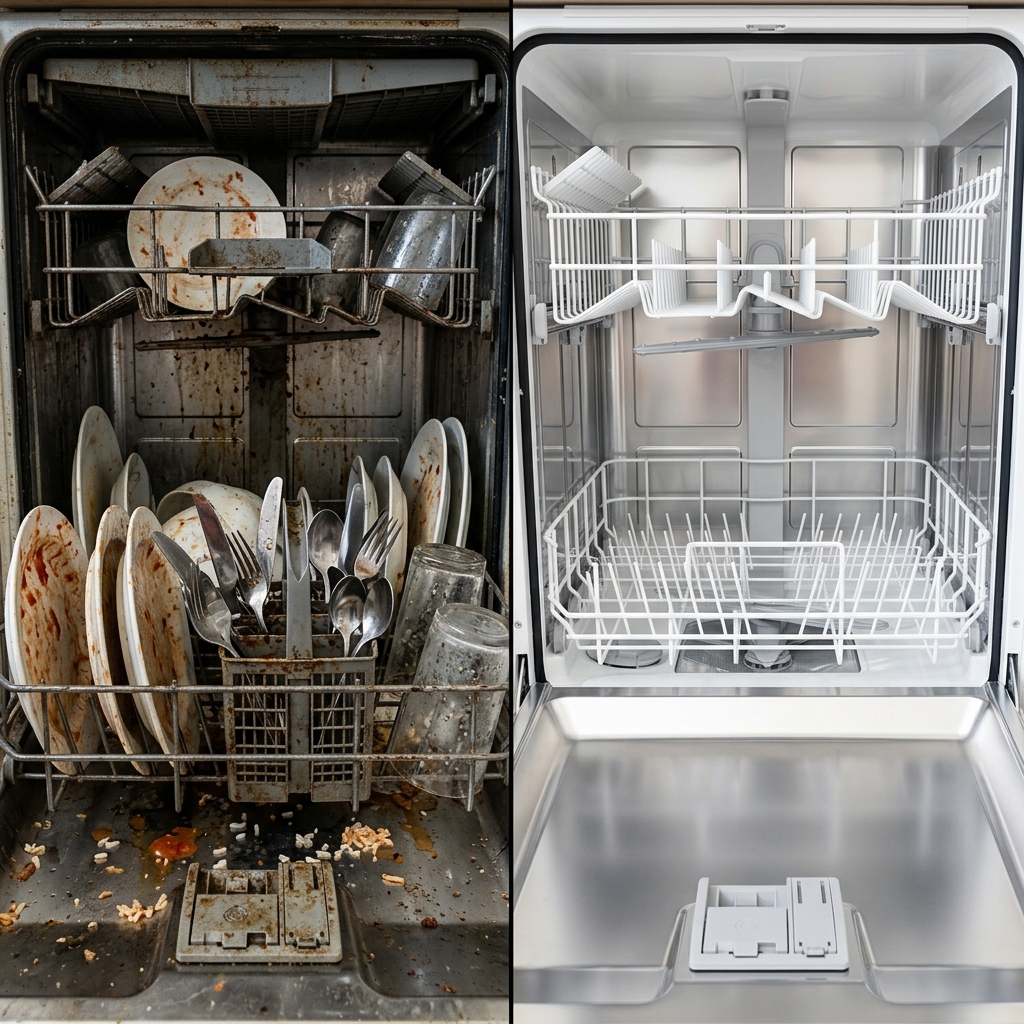
If your dishes are coming out cloudy, your glasses look perpetually smudged, or there is a lingering musty odor every time you pop open the door, it is definitely time to clean your dishwasher with baking soda and vinegar. Although it seems counterintuitive to clean a machine that is specifically designed for cleaning, your dishwasher takes on a massive amount of dirt, grease, and food debris on a daily basis. Without proper maintenance, these particles become trapped in the filter, the spray arms, and the drain, leading to nasty odors and drastically reduced performance. In this comprehensive deep clean guide, we are going to explore the absolute best methods for restoring your dishwasher to pristine condition using safe, natural, and highly effective household ingredients.
When you use a dishwasher, you are exposing the interior to a massive array of organic materials, fats, proteins, and complex carbohydrates. Over time, combined with the extreme heat of the drying cycle, these materials can literally bake onto the hidden crevices of the machine. Furthermore, hard water can deposit calcium and magnesium carbonate scale throughout the interior components, creating a chalky white film that dulls the interior and clogs the delicate spray arm jets. By learning how to clean a dishwasher with baking soda and vinegar, you can combat all of these issues simultaneously.
Vinegar, a mild acetic acid, is a phenomenally powerful agent for dissolving mineral scale and cutting through grease. Baking soda, or sodium bicarbonate, acts as a gentle abrasive that won’t scratch your appliance’s interior but is tough enough to dislodge stuck-on debris, while also chemically neutralizing the acidic odors left behind by rotting food. Together, they form a two-step deep cleaning process that no commercial cleaner can match in terms of safety, cost-effectiveness, and overall efficacy. Before you proceed, make sure you also check out our guide on oven tray cleaning or how to use a degreaser spray to keep the rest of your kitchen just as spotless!
🧹 What You Need (Exact Measurements)
- 1 cup (240 ml) of distilled white vinegar (5% acidity preferred)
- 1 cup (230 g) of pure sodium bicarbonate (baking soda)
- 1/2 cup (120 ml) of warm water mixed with 2 drops of Dawn dish soap
- 1 soft-bristled toothbrush or detailing brush
- 1 microfibre cleaning cloth
- 1 pair of rubber cleaning gloves
- 1 small wooden skewer or toothpick (for unblocking spray arm jets)
- Optional: 2 tablespoons of food-grade citric acid powder
Why Do Dishwashers Get So Smelly and Grimy?
Understanding the root cause of the grime is the first step toward effective prevention. A dishwasher operates by pumping hot water and detergent over your dishes, then draining the soiled water away. However, the machine is not a garbage disposal. When large food particles like rice, pasta, or fibrous vegetable scraps enter the machine, they are often caught by the primary filter located at the base of the tub. If this filter is not emptied regularly, the warm, moist environment becomes a perfect incubator for bacteria and mold. This biological growth is what produces that unmistakable ‘swampy’ smell.
Additionally, grease is a major culprit. While modern dishwashing detergents contain enzymes and surfactants designed to break down fats, a small amount of aerosolized grease can adhere to the upper walls and the door gasket of the dishwasher. Over months of use, this grease polymerizes, creating a sticky, tacky layer that attracts even more dirt. This is why a simple rinse is never enough; you need the acidic power of vinegar to break those lipid bonds.
Another massive factor is the mineral content of your water supply. If you live in an area with ‘hard water,’ your water contains high levels of dissolved calcium and magnesium. When the water evaporates during the drying cycle, it leaves these minerals behind. Over time, the scale build-up can completely block the tiny holes in the spinning spray arms, drastically reducing the water pressure inside the machine. If you’ve ever wondered why the top rack isn’t getting clean, a clogged spray arm is almost certainly the issue. Our extensive stainless steel sink guide discusses similar hard water issues and how to resolve them.
Phase 1: Preparing and Cleaning the Filter (The Crucial Step)
Most people don’t know this, but almost all modern dishwashers have a manual filter that must be cleaned by hand. In the past, dishwashers had built-in macerators (basically mini garbage disposals) that ground up food. However, these were extremely loud. To make dishwashers whisper-quiet, manufacturers removed the macerator and replaced it with a multi-stage mesh filter. If you don’t clean this filter, no amount of baking soda or vinegar will save you.
Start by completely emptying the dishwasher. Pull out the bottom rack so you have unrestricted access to the floor of the tub. Locate the filter assembly, which is usually a cylindrical component positioned near the center or back of the tub floor. In most models, you simply turn the upper cylinder a quarter-turn counter-clockwise and pull straight up. You will usually find two parts: a coarse outer mesh and a fine inner micro-filter.
Take the filter components to your kitchen sink. Run them under hot water. Using your soft-bristled toothbrush and a mixture of 1/2 cup warm water and 2 drops of dish soap, gently scrub the mesh. Be extremely careful not to tear the delicate micro-mesh screen; if it tears, food particles will enter the pump and potentially destroy the motor. Scrub all the greasy residue and calcified debris. Once it is completely clean and transparent, rinse it thoroughly and reinstall it into the dishwasher, locking it firmly into place.
Phase 2: Clearing the Spray Arms and Door Gaskets
Now that the filter is clean, turn your attention to the spray arms. There is usually one spray arm located at the bottom of the tub, and another attached to the bottom of the upper rack. Some high-end models have a third arm at the very top. These arms have tiny jets (holes) that spray high-pressure water. Inspect these holes carefully. If you see seeds, popcorn kernels, or mineral scale blocking the holes, use your small wooden skewer or toothpick to carefully dislodge the debris. Do not use metal objects like paperclips, as they can scratch the plastic and deform the jets, which ruins the spray pattern.
Next, we need to address the door gasket. The gasket is the thick rubber seal that runs around the perimeter of the dishwasher door, preventing water from leaking onto your floor. Because this area is not directly hit by the spray arms during a wash cycle, it is notorious for accumulating mold, mildew, and black sludge. Dampen your microfiber cloth with a small amount of white vinegar and thoroughly wipe down the entire length of the rubber gasket. Make sure you get into the folds and creases of the rubber. If there is stubborn mold, use the toothbrush to gently agitate the area. Never use bleach on these rubber seals, as bleach can degrade the rubber over time and cause a catastrophic leak.
⚠️ What Not to Do
- Never mix vinegar and bleach: This combination creates toxic chlorine gas which is incredibly dangerous.
- Never mix vinegar and baking soda in the same cycle: They will immediately neutralize each other, creating carbon dioxide bubbles and salty water, completely destroying their individual cleaning properties.
- Do not use abrasive scouring pads: Steel wool or harsh sponges will scratch the stainless steel or plastic tub, creating microscopic grooves where bacteria will thrive.
- Avoid generic glass cleaners: These can leave toxic residues that may transfer to your dishes during the next cycle.
Phase 3: The Vinegar Cycle (The Acidic Wash)
With the physical debris removed, it is time for the chemical deep clean. This is where the magic of the vinegar cycle happens. You will need exactly 1 cup (240 ml) of distilled white vinegar. Do not use apple cider vinegar or balsamic vinegar, as they contain sugars and colorants that can stain the interior of your appliance. Distilled white vinegar typically has a 5% acetic acid concentration, which is the perfect pH level (around 2.5) for dissolving alkaline mineral scale and cutting through polymerized fats.
Pour the 1 cup of vinegar into a dishwasher-safe glass measuring cup or bowl. Place this bowl securely on the top rack of the empty dishwasher. The reason we place it in a bowl rather than pouring it directly into the bottom of the tub is due to the machine’s initial drain cycle. Most dishwashers start a cycle by running the drain pump to clear any sitting water. If you pour the vinegar in the bottom, it will immediately be pumped out and wasted. By placing it in a bowl, the vinegar is slowly distributed as the hot water from the upper spray arm overflows the bowl during the main wash cycle.
Close the door and set your dishwasher to its hottest, longest setting. This is usually labeled as ‘Heavy Duty’, ‘Pots & Pans’, or ‘Sanitize’. The extreme heat is required to activate the acetic acid and help it penetrate the thick layers of grease. Let the machine run its entire cycle, but you can skip the heated dry option to save energy. When you open the door, the interior should smell faintly like salad dressing, but it will be remarkably shiny.
Phase 4: The Baking Soda Scrub (The Alkaline Finish)
Vinegar is excellent for hard water and grease, but it does not remove all types of stains and it certainly doesn’t leave a fresh scent. For the final stage, we use baking soda (sodium bicarbonate). Baking soda is highly alkaline (pH of about 8.3) and acts as an exceptional deodorizer. It works by neutralizing both acidic and basic odor molecules, rendering them completely scentless. Furthermore, baking soda is a very mild abrasive, scoring just a 2.5 on the Mohs hardness scale, meaning it will safely scrub away any remaining stuck-on debris without scratching the delicate surfaces.
Once the vinegar cycle has finished and the tub is slightly damp but not filled with water, measure out exactly 1 cup (230 g) of pure baking soda. Sprinkle it evenly across the entire bottom floor of the dishwasher tub. Be generous around the drain area and the heating element (if your model has an exposed heating element).
Now, close the door and run a short, hot water cycle. This is usually labeled as ‘Quick Wash’, ‘1-Hour Wash’, or ‘Express’. The hot water will dissolve the baking soda, creating a mildly alkaline slurry that will aggressively attack any remaining food particles and completely neutralize the vinegar odor. Once the cycle is completely finished, open the door immediately and leave it ajar for at least two hours to allow the interior to air dry completely. A dry dishwasher is an odorless dishwasher.
Using Citric Acid as a Heavy-Duty Alternative
If your dishwasher is severely afflicted by hard water scaling—often recognizable by a thick, chalky, white crust on the heating element or the walls—vinegar might not be strong enough for the first pass. In these extreme cases, food-grade citric acid is your best friend. Citric acid is a stronger organic acid than acetic acid and is absolutely phenomenal at chelating minerals (binding to calcium and magnesium ions so they wash away).
To use citric acid, fill your dishwasher detergent dispenser with exactly 2 tablespoons of powdered citric acid. Close the dispenser and run a regular hot water cycle. Do not put any dishes or other detergents in the machine. The citric acid will obliterate the limescale. After the citric acid cycle is complete, you can follow up with the standard baking soda cycle to ensure everything is neutralized and deodorized. Remember, citric acid is potent; use it only when dealing with severe hard water issues, as overuse can theoretically degrade internal rubber components over many years.
🛡️ Maintenance & Prevention Schedule
- Daily: Scrape (don’t rinse) your dishes before loading. Rinsing wastes water, and modern detergents need some food residue to activate properly. Leave the door slightly ajar after unloading to prevent moisture buildup.
- Weekly: Wipe down the edges of the door and the rubber gasket with a damp cloth to prevent black mold from taking hold.
- Monthly: Remove and manually wash the bottom filter in the sink. Run the baking soda and vinegar cycles as detailed in this guide.
- Annually: Inspect the spray arm jets with a flashlight and clear any blockages with a wooden skewer. Check the drain hose for any severe kinks.
The Science Behind the Process: Why This Works Better Than Commercial Cleaners
Many consumers are tempted to buy expensive, single-use commercial dishwasher cleaning tablets. While these products do work, they are often formulated with harsh synthetic chemicals, artificial fragrances, and complex phosphates. The baking soda and vinegar method is rooted in simple, elegant chemistry. By separating the acidic wash (vinegar) and the alkaline wash (baking soda) into two distinct cycles, you are subjecting the grime to a powerful dual-action treatment.
If you were to mix them together, the classic school volcano experiment would occur. The acetic acid and sodium bicarbonate would react to form sodium acetate, water, and carbon dioxide gas. This reaction is visually impressive but chemically useless for cleaning, as the resulting solution is essentially slightly salty water. By running them independently, the vinegar is allowed to operate at its peak acidity to dissolve scale, and the baking soda is allowed to operate at its peak alkalinity to neutralize odors and gently scrub.
This method is also vastly superior for the environment. Both vinegar and baking soda are completely biodegradable and non-toxic. They will not harm your septic system, they will not pollute local waterways, and they leave zero toxic residue on the walls of your dishwasher—meaning your dishes remain entirely safe for food contact. It’s a win for your wallet, your health, and the planet.
When to Call a Professional Plumber versus DIY
While the baking soda and vinegar method is a miracle cure for 95% of dishwasher ailments, there are certain mechanical failures that require professional intervention. If you have followed this guide meticulously and your dishwasher still has an inch of standing water in the bottom after a cycle completes, you likely have a physical clog in the drain hose or the air gap.
Check the air gap (the small cylindrical fixture on your sink deck near the faucet). If water is aggressively shooting out of the air gap during the drain cycle, the hose connecting the air gap to the garbage disposal is clogged. You can usually clear this yourself with a long bottle brush. However, if the dishwasher makes a loud grinding noise during the wash cycle, or if it fails to fill with water entirely, the motor or the inlet valve has likely failed. At this point, no amount of cleaning will fix the issue, and it is time to call a licensed appliance repair technician or plumber.
Hard Water vs. Soft Water: Adjusting Your Routine
Your geographical location plays a massive role in how frequently you need to clean your dishwasher. If you live in a region with extremely hard water (over 120 PPM of calcium carbonate), you will need to perform the vinegar cycle more frequently. Hard water not only leaves spots on your glassware, but it completely alters the chemical efficiency of your dishwasher detergent. The surfactants in the detergent bind with the calcium in the water instead of the grease on your dishes, rendering the detergent ineffective. If you notice a drastic drop in cleaning performance, a quick vinegar cycle can reset the internal environment.
Conversely, if you have a whole-house water softener, you might only need to run the vinegar cycle a few times a year. Soft water allows detergent to lather incredibly well, meaning you actually need to use less detergent per load. Using too much detergent with soft water can lead to a condition called ‘glass etching’—permanent microscopic scratches on your glassware that look like cloudiness but cannot be removed. Understanding your water profile is just as critical as the cleaning itself.
❓ Frequently Asked Questions
Can I mix vinegar and baking soda together to clean the dishwasher?
Absolutely not. This is a very common misconception. Mixing them creates a rapid chemical reaction that produces carbon dioxide and salt water. Once the bubbling stops, the cleaning power is completely gone. You must use them in separate cycles to get the benefits of the acid and the alkaline.
How often should I clean my dishwasher with this method?
For optimal performance, you should perform this deep clean once a month. If you have very soft water and thoroughly scrape your plates, you might be able to extend this to once every two to three months. However, the manual filter should always be checked monthly.
Is it safe to put bleach in a dishwasher?
It is highly advised against. Bleach is extremely caustic and can dry out and crack the rubber seals and gaskets inside the machine. More importantly, if your dishwasher has a stainless steel interior, bleach will cause irreversible pitting and rusting. Stick to vinegar and baking soda.
Why is there always a little bit of water left in the bottom?
A small puddle of water (about 1 to 2 cups) left in the recessed area under the filter is perfectly normal. It is designed to be there to keep the rubber seals in the pump from drying out and cracking between uses. If the water level is covering the filter or spilling into the main tub, then you have a drainage issue.
Can I use apple cider vinegar instead of white vinegar?
It is not recommended. Apple cider vinegar contains natural sugars, colorants, and ‘the mother’ (strands of proteins and enzymes). When subjected to the extreme heat of a dishwasher, these sugars can bake onto the interior walls, and the colorants can cause staining. Always use clear, distilled white vinegar.
What is the best temperature for the cleaning cycles?
You should use the absolute hottest setting your machine offers. Often labeled ‘Sanitize’ or ‘Heavy Wash’, this usually heats the water to around 155°F (68°C). The heat is essential for melting away polymerized grease and maximizing the chemical reaction of the cleaning agents.
Can I run this cycle with dishes inside?
No. The machine must be completely empty. The goal is to clean the internal components of the machine itself. If you put dishes inside, the vinegar and baking soda will expend their energy cleaning the food off the dishes rather than descaling the tub and unclogging the spray arms.
Are commercial dishwasher cleaners better?
Not necessarily. Commercial cleaners are formulated to be convenient, one-step solutions, but they often rely on harsh chemicals and strong artificial perfumes that just mask odors. The natural two-step baking soda and vinegar method is often more effective at addressing both grease and mineral scale, and it is significantly cheaper.
The History of Dishwasher Maintenance: A Deep Dive
To fully appreciate the necessity of modern dishwasher maintenance, one must look back at the evolution of the appliance itself. The first mechanical dishwashing device was invented in 1850 by Joel Houghton, a wooden machine that splashed water onto dishes using a hand-cranked wheel. It wasn’t until 1886 that Josephine Cochrane invented the first reliable, practical dishwasher, which utilized high water pressure directed onto a wire rack. Early models did not have the delicate micro-filters we see today. They relied on sheer mechanical force and incredibly harsh, phosphate-heavy detergents to literally blast food off the plates. Because these early machines consumed massive amounts of water—often over 10 gallons per cycle—they were somewhat self-cleaning. The sheer volume of water flushed the system completely.
However, as environmental concerns grew in the late 20th and early 21st centuries, manufacturers were mandated to drastically reduce water consumption. Today’s high-efficiency dishwashers use as little as 3 to 4 gallons of water per cycle. To achieve the same cleaning results with a fraction of the water, engineers had to redesign the internal architecture. They introduced complex filtration systems, variable speed pumps, and highly calibrated spray nozzles. While this technological leap saved billions of gallons of water globally, it created a new problem for the consumer: the machines became highly sensitive to debris. A modern dishwasher cannot flush away large food particles because it simply doesn’t use enough water to do so. It recycles the same 3 gallons of water throughout the wash cycle, passing it through the micro-filter repeatedly. This is precisely why the manual filter was introduced, and why a dedicated cleaning routine utilizing vinegar and baking soda became an absolute mandatory requirement for home appliance ownership. Understanding this engineering shift helps explain why your grandmother never had to clean her dishwasher, but you absolutely must clean yours.
Advanced Troubleshooting: Beyond the Basics
Even with a rigorous baking soda and vinegar routine, you might occasionally encounter stubborn issues that require a deeper understanding of your appliance’s mechanics. Let’s delve into some of the most common, yet perplexing, dishwasher malfunctions and how to diagnose them.
The Case of the Cloudy Glasses: If your glasses emerge from the wash looking opaque and chalky, you must determine whether the issue is hard water scale or glass etching. There is a simple test. Take a cloudy glass and soak it in a bowl of pure white vinegar for five minutes. If the cloudiness disappears, you are dealing with hard water mineral deposits. In this scenario, you need to run the vinegar cycle more frequently, and consider adding a dedicated rinse aid to your daily loads. Rinse aids break the surface tension of water, preventing droplets (and the minerals within them) from clinging to the glass. However, if the glass remains cloudy after the vinegar soak, it has unfortunately been etched. Etching is permanent physical damage to the glass caused by a combination of soft water, high heat, and excessive detergent. To prevent further etching, you must immediately reduce the amount of detergent you use per cycle.
The Phantom Leak: Discovering a pool of water on your kitchen floor is a terrifying experience. Before assuming the worst, check the most common culprit: a dirty door gasket. We discussed cleaning the gasket earlier, but it is worth reiterating. If a single piece of dried food or a thick layer of grease prevents the rubber gasket from making a perfectly watertight seal against the stainless steel tub, capillary action will draw water right out of the machine during the vigorous wash cycle. The fix is usually just a thorough scrub with soapy water. Another hidden cause of leaks is using the wrong type of soap. If you or a family member accidentally places regular liquid dish soap (like Dawn or Fairy) into the dishwasher dispenser, it will create a massive amount of suds. Dishwasher detergent is specially formulated to be non-sudsing. Standard dish soap will create a wall of foam that will literally push its way out of the door vents and spill onto the floor. If this happens, you must cancel the cycle, scoop out as much foam as possible, and pour half a cup of vegetable oil into the tub. The oil breaks down the soap bubbles. Then, run a short cycle to flush the system.
The Environmental Impact of Natural Cleaners
In an era where ecological consciousness is paramount, the choice of cleaning products extends far beyond personal convenience. The global reliance on synthetic, petroleum-derived cleaning agents has had a profound impact on aquatic ecosystems. When you use commercial dishwasher cleaners, you are often flushing complex chemical compounds down the drain. These can include artificial fragrances, synthetic dyes, and most concerningly, phosphates. While many regions have banned phosphates in everyday detergents due to their role in causing massive algae blooms in lakes and rivers, some heavy-duty industrial cleaners still utilize controversial surfactants that resist biodegradation.
By choosing to clean your dishwasher with baking soda and vinegar, you are actively participating in a micro-environmental revolution. Acetic acid (vinegar) is a naturally occurring compound that breaks down rapidly in water systems without leaving harmful residues. Sodium bicarbonate (baking soda) is an earth-derived mineral that is completely benign to aquatic life. Furthermore, by maintaining your appliance and extending its functional lifespan, you are reducing the incredible amount of e-waste and metal scrap that ends up in landfills. A well-maintained dishwasher can easily last 10 to 15 years, whereas a neglected one might fail catastrophically in just 5 years. The environmental cost of manufacturing, shipping, and eventually disposing of a 100-pound kitchen appliance is staggering. By investing a mere 30 minutes a month into the baking soda and vinegar cleaning routine, you are not just ensuring sparkling dishes; you are making a tangible, positive impact on the global supply chain and ecological health.
✅ The Bottom Line
Learning how to clean a dishwasher with baking soda and vinegar is the single most effective, inexpensive, and eco-friendly way to maintain your appliance. By manually washing the filter, running a hot vinegar cycle to dissolve hard water scale, and following up with a baking soda wash to deodorize and scrub, you will completely eradicate nasty odors and ensure your dishes come out sparkling clean every single time. Stick to a monthly schedule, and your dishwasher will reward you with years of flawless service.