Streak-Free Mirror and Glass Cleaner Recipe Summary
Preparation Time: 5 Minutes | Estimated Cost: Under $2.00
Ingredients List
- 1.5 cups Distilled Water
- 1/4 cup 70% Rubbing Alcohol (Isopropyl)
- 1/4 cup White Vinegar
- 1 tablespoon Cornstarch
Step-by-Step Instructions
- Whisk cornstarch into warm distilled water until fully dissolved.
- Pour water mixture, rubbing alcohol, and white vinegar into a fine mist spray bottle.
- Shake gently before each spray to keep the mixture evenly blended.
- Spray glass lightly and wipe with a clean microfiber cloth.
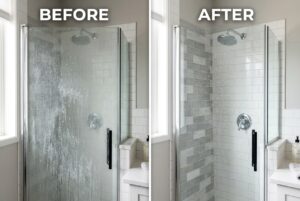
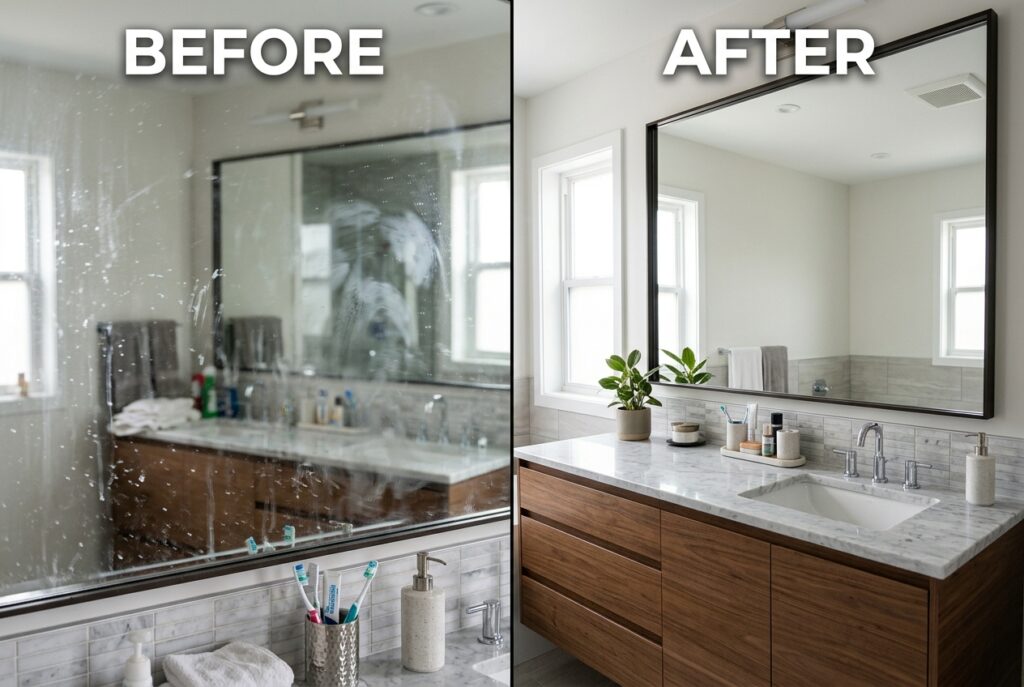
Standard glass sprays often leave behind a cloudy haze that shows up under bright light. This trusted home formula uses rubbing alcohol for rapid evaporation alongside a small amount of cornstarch, which acts as a gentle micro-scrubber to remove film without scratching.
The Secret Role of Cornstarch in Glass Cleaning
Cornstarch breaks down water tension on smooth glass surfaces. As you wipe, the fine cornstarch particles absorb grease and film without leaving residue behind, delivering a streak-free shine superior to commercial aerosol sprays.
If You Don’t Have This, Use This (Ingredient Substitutions)
- No Rubbing Alcohol? Substitute with high-proof grain alcohol or increase white vinegar slightly.
- No Cornstarch? Use arrowroot powder or skip entirely, ensuring you wipe thoroughly with a waffle-weave microfiber towel.
Frequently Asked Questions
Why does my glass still look cloudy after cleaning?
Cloudiness is usually caused by leftover wax or chemical film built up from previous commercial glass cleaners. Repeat the cleaning process twice with this formula to strip away old residue.
Can I clean windows in direct sunlight?
It is best to clean windows on overcast days or during cooler morning hours. Direct sun causes liquids to evaporate faster than you can wipe, leaving behind water spots.