Quick Answer
Mice can squeeze through gaps as small as 6mm (the width of a pencil). The most effective natural approach combines steel wool gap sealing, peppermint oil deterrents, and snap traps with peanut butter bait. Exclusion is more important than killing.
A single pair of mice can produce up to 60 offspring per year. That means if you see one mouse, you likely have a dozen. Poison works but creates secondary risks — poisoned mice die inside walls creating horrible odors, and pets or wildlife can be harmed by eating poisoned rodents.
The science-backed approach focuses on exclusion first, deterrents second, trapping third. Research from the University of Nebraska-Lincoln Extension shows that sealing entry points is 3 to 5 times more effective long-term than any trapping or baiting method alone.
🧹 What You Need
- 🔹 Steel wool (coarse grade) — mice cannot chew through it
- 🔹 Caulk or expanding foam — to seal around steel wool plugs
- 🔹 Peppermint essential oil — contains menthol which irritates rodent nasal passages
- 🔹 Cotton balls — for peppermint oil placement
- 🔹 Classic snap traps — still the most effective and humane quick-kill method
- 🔹 Peanut butter — the best bait (high protein and fat scent attracts mice more than cheese)
Step 1: Find and Seal Entry Points
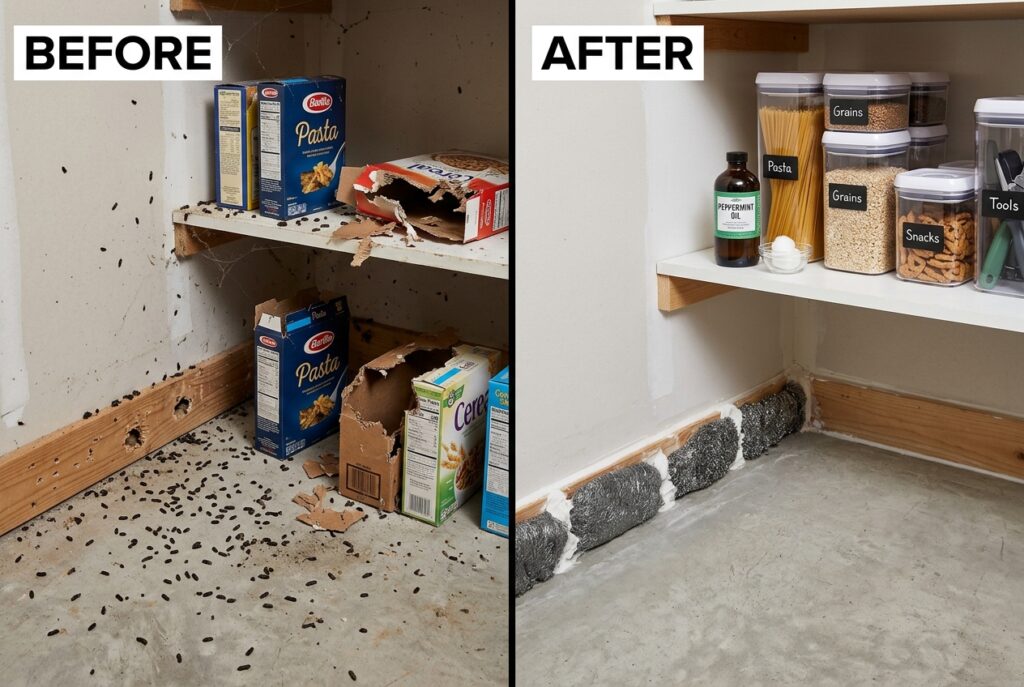
Inspect your entire foundation, baseboards, pipe entries, and door gaps. Look for droppings (small dark pellets), grease marks along walls, and gnaw marks on wood or plastic.
Stuff steel wool tightly into every gap wider than 6mm, then seal over it with caulk. Mice can chew through foam, wood, and even aluminum — but steel wool shreds their mouths, so they avoid it.
💡 The Science: Steel wool works because mouse incisors grow continuously at 0.3mm per day. They can gnaw through most materials, but the fine metal fibers of steel wool cause pain and micro-cuts to their gums, making it the one material they consistently avoid.
Step 2: Deploy Peppermint Oil Deterrents
Soak cotton balls in 100% peppermint essential oil and place them at entry points, in cabinets, behind appliances, and in the attic. Replace every 5 to 7 days as the scent fades.
💡 The Science: Mice have an extremely sensitive olfactory system with over 1,000 odorant receptor genes. Menthol in peppermint oil triggers trigeminal nerve irritation — the same nerve that makes humans tear up from onions. It does not kill mice but makes treated areas extremely unpleasant to occupy.
Step 3: Set Snap Traps Strategically
Place traps perpendicular to walls with the trigger end touching the baseboard. Mice run along edges, not through open spaces. Use a pea-sized smear of peanut butter on the trigger — do not use a large glob or they can lick it off without triggering the mechanism.
Set traps in pairs, 2 inches apart. Place at least 6 to 12 traps for a moderate infestation. More traps in the first 48 hours catches more mice before they learn to avoid them.
⚠️ What Not to Do
- Do not use glue traps — they are widely considered inhumane and often ineffective for adult mice
- Do not use cheese as bait — it dries out quickly and is less attractive than peanut butter
- Do not rely on peppermint oil alone — it is a deterrent, not an elimination method
- Do not leave pet food out overnight — it is the number one food source for indoor mice
❓ FAQ
Does peppermint oil really work on mice?
Research is mixed. A 2010 study showed it reduced mouse activity by about 50% in enclosed spaces, but it is not a standalone solution. Use it as part of a multi-method approach alongside sealing and trapping.
How do I know if the mice are gone?
Place a thin layer of flour along baseboards. If no new tracks appear in 5 to 7 days, the infestation is likely resolved. Also check for fresh droppings daily.
When should I call a professional?
If you are still seeing activity after 2 weeks of consistent sealing, trapping, and deterrents, or if you suspect the infestation is in wall cavities or the attic, call a licensed pest control professional.
✅ Bottom Line
The most effective mouse control is exclusion — sealing every gap with steel wool and caulk. Combine with peppermint deterrents and snap traps baited with peanut butter for a natural, poison-free approach that eliminates the problem without endangering pets, children, or wildlife.