Quick Answer
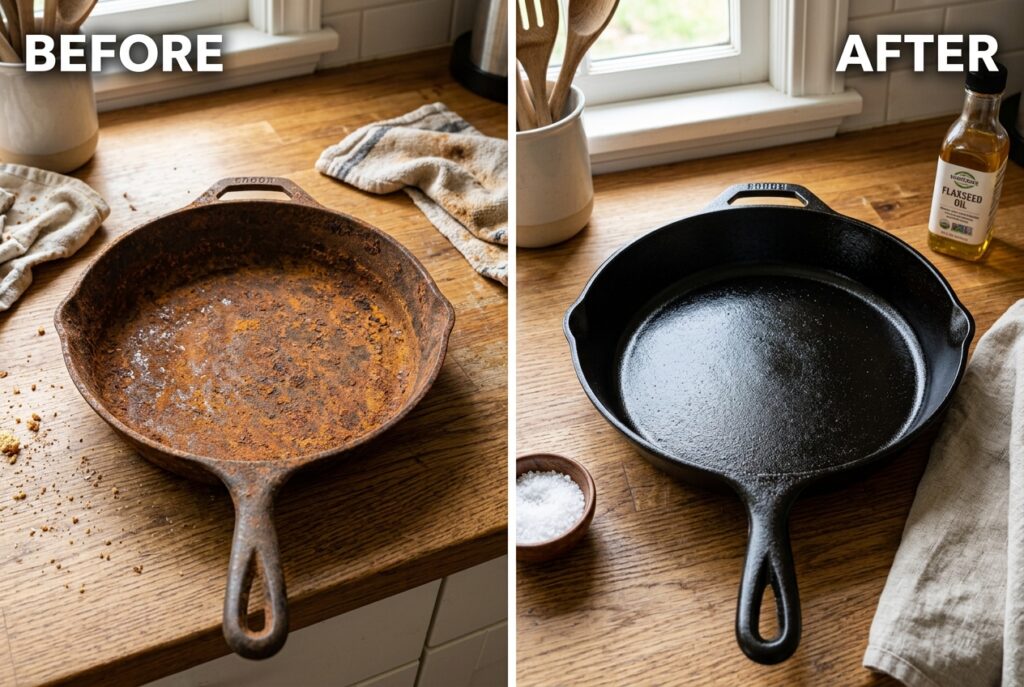
Rust on cast iron is iron oxide (Fe₂O₃) — a chemical reaction between iron, oxygen, and water. Remove it with a vinegar soak, scrub with coarse salt and oil, then rebuild the seasoning with thin layers of flaxseed or vegetable oil baked at 450°F.
Cast iron skillets can last 100+ years if maintained. Rust does not mean the pan is ruined — it is a surface-level chemical reaction that is completely reversible. The key is understanding the chemistry: seasoning is polymerized oil (a hard, non-stick polymer created when oil is heated past its smoke point and bonds to the iron through free-radical polymerization).
🧹 What You Need
- 🔹 White vinegar (acetic acid dissolves iron oxide)
- 🔹 Coarse kosher salt (abrasive scrub)
- 🔹 Steel wool or chain mail scrubber
- 🔹 Flaxseed oil or vegetable oil (for re-seasoning)
- 🔹 Paper towels
- 🔹 Oven (for seasoning at 450°F / 230°C)
Step 1: Vinegar Soak (Light to Moderate Rust)
Submerge the skillet in a 50/50 mix of white vinegar and water for 1 to 3 hours. Check every 30 minutes — do not leave it longer than 4 hours or the acid will start pitting the iron itself.
💡 The Science: Acetic acid reacts with iron oxide: Fe₂O₃ + 6CH₃COOH → 2Fe(CH₃COO)₃ + 3H₂O. The rust converts to soluble iron acetate, which dissolves into the liquid, leaving clean iron behind.
Step 2: Salt Scrub
After soaking, pour 2 tablespoons of coarse salt into the pan with a splash of oil. Scrub vigorously with a paper towel or cloth. The salt acts as a gentle abrasive that removes remaining rust without scratching the iron surface.
For heavy rust, use steel wool with firm pressure. The goal is bare gray iron — no orange spots remaining.
Step 3: Rinse and Dry Immediately
Rinse with hot water (no soap) and dry immediately and completely with a towel, then place on a burner on low heat for 2 minutes to evaporate all moisture. Bare iron will begin rusting again within minutes if left wet.
Step 4: Re-Season the Pan
Apply a very thin layer of flaxseed oil or vegetable oil to the entire pan — inside, outside, and handle. Wipe off excess until the surface looks almost dry. Place upside-down in a 450°F (230°C) oven for 1 hour. Let cool in the oven. Repeat 3 to 4 times for a durable non-stick finish.
💡 The Science: At high temperatures, unsaturated fatty acids in the oil undergo free-radical polymerization — they cross-link and bond to the iron surface, creating a hard, hydrophobic polymer layer. This is the same chemistry used in industrial non-stick coatings. Flaxseed oil works best because it has the highest concentration of omega-3 (alpha-linolenic acid), which polymerizes most effectively.
⚠️ What Not to Do
- Do not soak in vinegar longer than 4 hours — acid will pit and damage the iron
- Do not put cast iron in the dishwasher — ever
- Do not apply thick oil layers when seasoning — it creates a sticky, uneven finish
- Do not store cast iron in humid areas without a light oil coating
❓ FAQ
Is rust on cast iron dangerous to cook with?
Small amounts of iron oxide are not toxic, but rusty surfaces harbor bacteria and create uneven cooking. Always remove rust before cooking.
Can I use soap on cast iron?
Yes — modern dish soap is mild enough that it will not strip seasoning. The old advice against soap dates from when lye-based soaps were common. A gentle wash with Dawn is fine.
How often should I re-season?
A well-used pan seasons itself with every cook. Do a full oven seasoning only when the surface looks patchy, food starts sticking, or after rust removal.
✅ Bottom Line
A rusty cast iron skillet is never beyond saving. A vinegar soak dissolves the iron oxide, salt scrubs the surface clean, and oven seasoning with flaxseed oil rebuilds a durable non-stick polymer coating. The whole process takes about 4 hours and restores a pan that can last another century.