All-Purpose Citrus Degreaser Spray Recipe Summary
Preparation Time: 5 Minutes | Estimated Cost: Under $2.00
Ingredients List
- 1 cup Distilled White Vinegar
- 1 cup Distilled Water
- 1 tablespoon Liquid Dish Soap or Liquid Castile Soap
- 15 drops Lemon or Orange Essential Oil
Step-by-Step Instructions
- Combine distilled white vinegar and distilled water in a clean spray bottle.
- Add 1 tablespoon of liquid dish soap to break surface tension and lift grease.
- Add essential oil drops for a natural, clean fragrance.
- Swirl gently before each use. Spray surface, wait 60 seconds, and wipe clean with a microfiber cloth.
Walking into a freshly cleaned kitchen should feel rewarding, but commercial degreasers often leave behind a harsh chemical scent that lingers for hours. These store-bought sprays frequently rely on heavy butyl solvents and synthetic fragrances. Breathing in these fumes can trigger headaches and compromise your indoor air quality.
You do not need aggressive chemicals to tackle stubborn kitchen grease. A simple combination of natural acidity and plant-based surfactants can break down oils just as effectively.
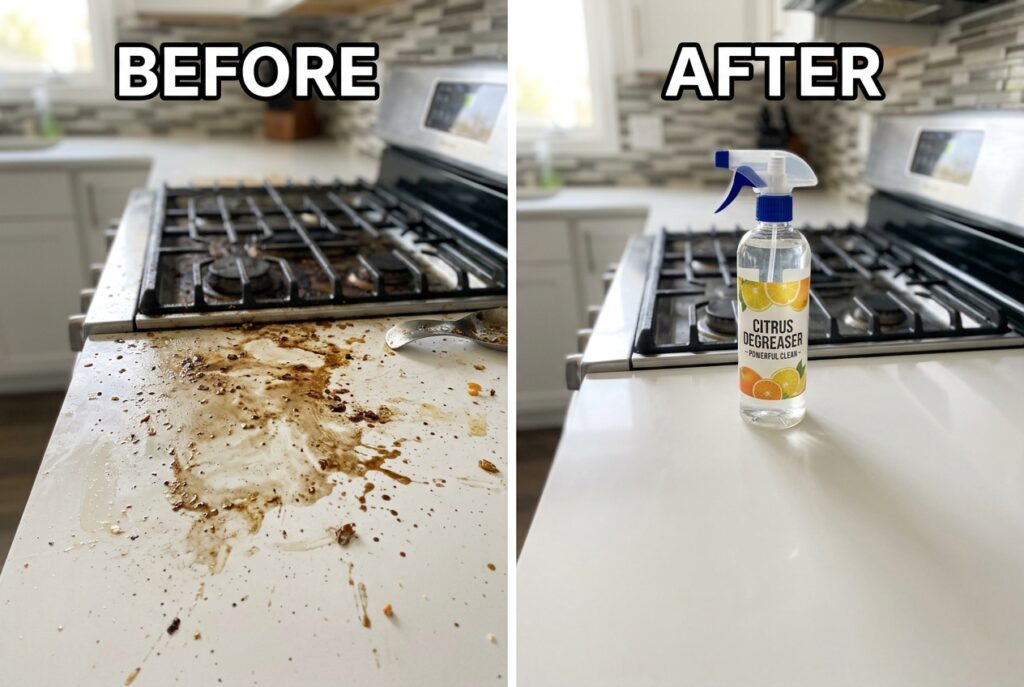
This four-ingredient natural DIY cleaning spray uses acetic acid to dissolve stubborn stove oil and counter spills safely. When paired with a quality dish soap, it lifts grime away from surfaces so you can wipe it clean without endless scrubbing.
Making your own cleaning products also puts you in control of what goes onto your food preparation surfaces. You will save money, reduce plastic waste, and create a safer environment for your entire household.
🧹 What You Need
Creating this degreaser requires just a few basic items. You likely already have most of these in your pantry.
- Distilled White Vinegar: The mild acidity naturally breaks down oil and removes sticky residues.
- Distilled Water: Using distilled water prevents mineral deposits and keeps your solution shelf-stable for months.
- Liquid Dish Soap or Castile Soap: This acts as a surfactant. It breaks the surface tension of the grease, allowing the water and vinegar to lift it away.
- Lemon or Orange Essential Oil: Citrus oils contain d-limonene, a natural compound known for cutting through tough grease, while adding a fresh scent.
- Glass Spray Bottle: Glass is preferred because essential oils can degrade cheap plastics over time.
- Microfiber Cloth: The tiny fibers trap and hold the lifted grease rather than just pushing it around your counters.
Step-by-Step Instructions
Step 1: Pour in the Liquids
Start by adding one cup of distilled white vinegar and one cup of distilled water to your spray bottle. Using a small funnel helps prevent spills. We mix these first to dilute the acidity safely.
Step 2: Add the Soap
Carefully add one tablespoon of liquid dish soap or castile soap to the mixture. Pro tip: Always add the soap after the water and vinegar. If you add it first, pouring water over it will create a massive bubble overflow.
Step 3: Introduce the Citrus
Add 15 drops of lemon or orange essential oil. The essential oil provides natural degreasing properties and masks the sharp scent of the vinegar.
Step 4: Swirl to Combine
Attach the spray nozzle and swirl the bottle gently. Do not shake it vigorously, as this will create excessive foam inside the bottle. You want the ingredients blended evenly, not a bottle full of suds.
Step 5: Spray and Wait
Spray the mixture directly onto your greasy surfaces. Common mistake: Wiping immediately. Wait at least 60 seconds to allow the acetic acid and surfactants to penetrate and soften the hardened oil.
Step 6: Wipe Clean
Take a clean, dry microfiber cloth and wipe the surface. Fold the cloth into quarters so you have multiple clean sides to use as you work around the kitchen. If a spot is particularly stubborn, reapply and let it sit for another minute.
⚠️ What Not to Do
While this cleaner is natural, you must still handle it correctly. Misusing vinegar-based sprays can damage certain materials in your home.
Never use this spray on natural stone surfaces like marble, granite, or travertine. The acidity in the vinegar can eat away at the sealant and permanently etch the stone.
Do not mix this solution with bleach or ammonia. Combining vinegar with bleach creates dangerous chlorine gas, which is highly toxic. Always use this cleaner completely on its own.
Avoid spraying this directly onto unsealed wood. Moisture and acidity can warp or discolor untreated timber over time.
How to Keep Your Kitchen Grease-Free
The best way to handle kitchen grease is to stop it from building up in the first place. Small daily habits can dramatically reduce your deep-cleaning workload.
Use a splatter guard whenever you fry or sauté foods. This simple mesh screen stops tiny oil droplets from coating your backsplash and surrounding cabinets.
Run your range hood vent on high every time you cook. This pulls vaporized oils out of the air before they can settle onto your upper cabinets and ceiling.
Wipe down your stovetop immediately after cooking, while it is still slightly warm. Fresh grease wipes away effortlessly, while cold grease solidifies into a stubborn, sticky mess.
Frequently Asked Questions
How long does this homemade citrus degreaser last?
Because distilled water is used without organic food particles, this spray remains effective for up to three to six months. Store it in a cool, dry place away from direct sunlight.
Can I use tap water instead of distilled water?
Tap water can be used if you plan to use the full bottle within one week. For longer storage, distilled water prevents bacterial growth and mineral haze that can ruin the mixture.
Is this degreaser safe to use around pets?
Yes. When properly diluted and wiped dry, this natural vinegar and citrus oil spray is non-toxic. It is safe for homes with dogs and cats, though you should always ensure the area is dry before letting pets walk on it.
Why does my spray leave a cloudy film?
A cloudy residue usually means you used too much dish soap. If this happens, simply wipe the area again with a damp cloth soaked only in plain water to remove the excess soap.
✅ Bottom Line
Cleaning up kitchen grease does not require harsh chemical solvents that irritate your senses. By mixing distilled vinegar, water, a touch of soap, and citrus oil, you can create a highly effective, natural degreaser for pennies. Make a batch today and enjoy a spotless, fresh-smelling kitchen without the toxic fumes.
📖 Related Cleaning Guides
Related Cleaning Guides:
- How to Clean Oven Trays
- How to Clean Greasy Baking Trays
- How to Clean a Greasy Flat Top Griddle
- How to Clean a Greasy BBQ Grill Top & Grates