Quick Answer
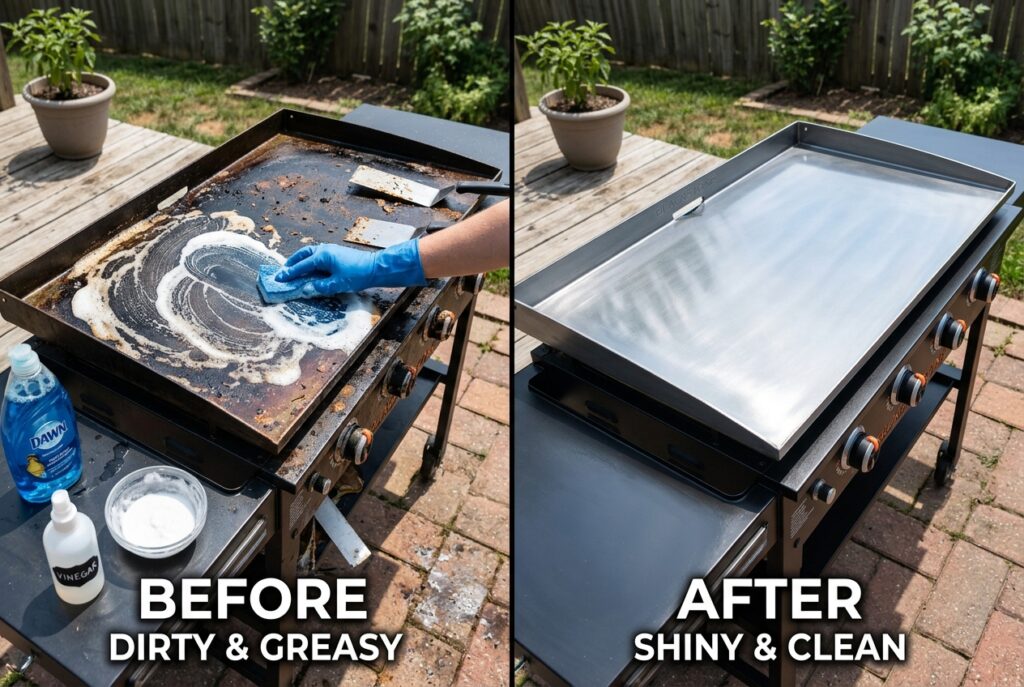
To clean a dirty, greasy outdoor flat-top griddle: Mix 1/2 cup Baking Soda with 2 tbsp Blue Dawn Dish Soap and 2-3 tbsp warm water to form a thick, deep-penetrating paste. Spread the paste evenly across the warm steel griddle plate and let it sit for 20 minutes to break down polymerized grease. Spray generously with 1/2 cup White Vinegar to trigger a powerful carbonation fizzing reaction that lifts carbonized crust from the metal. Scrub with a non-scratch griddle pad, squeegee off the grey sludge, rinse with warm water, dry thoroughly, and apply 1 tablespoon of canola oil to re-season the cooking surface.
Outdoor flat-top griddles — such as Blackstone, Pit Boss, Camp Chef, and commercial steel flat-tops — have revolutionized backyard cooking. From searing dozens of smash burgers to cooking large batches of bacon, eggs, and hibachi fried rice, the flat steel cooktop provides unparalleled surface area and heat retention. However, that high-heat cooking surface comes with a major maintenance challenge: heavy grease accumulation and carbonized food buildup.
Every time you cook fats, marinade sugars, and proteins on a griddle, intense thermal energy bakes those residues into a hard, sticky, pitch-black crust across the steel plate. Over time, this thick layer of burnt grease degrades heat transfer, causes severe smoking during preheating, causes delicate foods like fish and eggs to tear and stick, and can harbor bitter, rancid off-flavors that taint every dish you cook.
Many griddle owners resort to harsh chemical oven sprays, toxic lye degreasers, or aggressive steel scrapers that gouge the metal plate and strip away years of valuable non-stick seasoning. The good news is that you don’t need harsh chemicals or grueling physical labor to restore a filthy flat-top griddle. By understanding the chemistry of cooking grease and using a 3-ingredient combination of baking soda, concentrated blue Dawn dish soap, and white vinegar, you can safely lift heavy carbonized sludge and restore your griddle plate to smooth, non-stick perfection.
- 🧹 What You Need
- Understanding the Science of Griddle Buildup
- Step 1: Perform a Warm Scraping Cycle
- Step 2: Mix the High-Surfactant Degreasing Paste
- Step 3: Apply the Paste & Allow Dwell Time
- Step 4: Trigger the Carbonation Vinegar Reaction
- Step 5: Scrub Away Carbon Sludge & Wipe Clean
- Step 6: Dry & Re-Season for Rust Protection
- ⚠️ What Not to Do
- Long-Term Prevention & Maintenance
- ❓ FAQ
- ✅ Bottom Line
- 📖 Related Cleaning Guides
- Author
🧹 What You Need
- Baking Soda (Sodium Bicarbonate): 1/2 cup — acts as a mild, non-scratch abrasive and alkaline grease breaker.
- Blue Dawn Ultra Dish Soap: 2 tablespoons — provides specialized petroleum-based surfactants designed to emulsify stubborn animal fats.
- White Vinegar (5% Acidity): 1/2 cup — placed in a spray bottle to trigger an enzymatic carbonation reaction.
- Warm Water: 2 to 3 tablespoons for paste creation + 1 cup for final rinsing.
- Griddle Scraper / Bench Knife: Heavy-duty stainless steel scraper for pushing loose debris.
- Griddle Scrubbing Pad or Brass Wire Brush: Non-scratch synthetic scouring pad or soft brass wire brush.
- Microfiber Cloths & Heavy-Duty Paper Towels: For wiping away dark carbon sludge and drying metal.
- High-Smoke-Point Seasoning Oil: 1 to 2 tablespoons of Canola Oil, Avocado Oil, or Ghee for final rust prevention.
Understanding the Science of Griddle Buildup
To clean a flat-top griddle efficiently, it helps to understand what is happening at a chemical level on the steel surface. Griddle buildup consists of two distinct layers:
1. Polymerized Oil (The Desirable Seasoning Layer): When fresh oil is heated past its smoke point on cold-rolled steel, the fatty acid chains break apart and cross-link with oxygen to form a hard, microscopic polymer. This natural polymer fills the microscopic pores of the steel, creating a smooth, dark, non-stick cooking barrier. Proper seasoning is smooth, hard, and dry to the touch.
2. Burnt Carbon & Sticky Fat Sludge (The Undesirable Crust): When food particles, sugary sauces, and excess grease are left on the hot plate after cooking, they char into carbonized ash trapped inside un-polymerized, rancid fat. This creates a rough, tacky black crust over top of your good seasoning. This layer must be removed periodically to keep your griddle hygienic and performing properly.
Our cleaning method specifically targets and dissolves the un-polymerized carbon sludge layer while preserving the underlying steel baseplate integrity.
Step 1: Perform a Warm Scraping Cycle
Never attempt to clean a cold, bone-dry griddle plate loaded with rock-hard grease. Heat is your greatest ally when breaking down heavy grease bonds.
Turn your griddle burners to low heat for 3 to 5 minutes until the metal plate is warm to the touch (around 150°F to 180°F). As the metal expands slightly and the fats soften, take your heavy-duty griddle scraper at a 45-degree angle and push all loose food particles, burnt crumbs, and pooling grease forward directly into the rear or front grease collection trough.
Shut off the gas burners completely and allow the griddle top to cool down until it is safely warm — comfortable enough to work near without risk of burning your hands.
Step 2: Mix the High-Surfactant Degreasing Paste
In a medium mixing bowl, combine 1/2 cup of baking soda with 2 tablespoons of blue Dawn dish soap and 2 to 3 tablespoons of warm water. Stir briskly with a spoon until a smooth, thick, spreadable paste forms with the consistency of tooth paste.
Why this combination works so effectively:
- Alkaline Softening: Baking soda has a pH of approximately 8.3, which saponifies and softens acidic grease molecules.
- Surfactant Penetration: Blue Dawn contains specialized grease-cutting agents that lower the surface tension of water, allowing the paste to seep deep into carbon pores.
- Mild Mechanical Scrubbing: Microscopic baking soda crystals provide mild abrasive friction that scours away crust without scratching cold-rolled steel.
Step 3: Apply the Paste & Allow Dwell Time
Using a silicone spatula or soft brush, spread the degreasing paste generously across the entire flat-top surface. Pay extra attention to the central cooking zones, rear corners, and sidewalls where grease splatter accumulates.
For lightly soiled griddles, let the paste sit for 10 to 15 minutes. For heavily neglected griddles with years of baked-on black carbon crust, cover the paste layer with sheets of plastic wrap or aluminum foil to lock in moisture and let it dwell for 25 to 30 minutes. This dwell time allows the surfactants to break the chemical bonds holding the burnt grease to the metal.
Step 4: Trigger the Carbonation Vinegar Reaction
Fill a clean spray bottle with 1/2 cup of distilled white vinegar. Hold the spray bottle 6 inches above the griddle plate and spray the vinegar directly over the baking soda paste layer.
As the acetic acid in the vinegar reacts with the sodium bicarbonate in the baking soda, a dramatic fizzing reaction occurs, creating carbon dioxide (CO2) gas bubbles. Millions of tiny gas bubbles expand rapidly within the carbonized pores, physically lifting the loosened grease sludge away from the steel surface.
Step 5: Scrub Away Carbon Sludge & Wipe Clean
Take a non-scratch synthetic griddle scouring pad or soft brass wire brush and scrub the griddle surface in firm circular motions. As you scrub, the thick black carbon will emulsify into a greyish liquid slurry.
Use your bench scraper or clean paper towels to push the emulsified slurry directly into the grease trap. Dampen a microfiber cloth with warm water and wipe down the griddle top thoroughly to remove all remaining soap and vinegar residues. Repeat with a second clean damp towel until the steel surface wipes clean with zero soap bubbles.
Step 6: Dry & Re-Season for Rust Protection
Clean steel will rust rapidly if exposed to moisture and air. Immediately turn your griddle burners on low for 2 to 3 minutes to evaporate every micro-drop of moisture from the steel plate.
Pour 1 tablespoon of high-smoke-point oil (canola, avocado, or grapeseed oil) onto the center of the warm griddle. Using a folded paper towel held with tongs, rub the oil evenly over the entire griddle plate, including the outer side walls and back lip. Allow the oil to smoke lightly for 3 minutes, then turn off the burners. Your griddle is now clean, protected, and non-stick for your next cookout!
⚠️ What Not to Do
- Never Pour Ice Water on a Hot Griddle: Pouring cold water or ice onto a hot griddle plate causes extreme thermal shock, which can permanently warp or crack heavy cold-rolled steel plates.
- Never Use Harsh Oven Cleaners (Lye/Sodium Hydroxide): Chemical oven sprays leave toxic residues that absorb into porous steel, tainting your food and destroying the seasoning layer completely.
- Never Leave Steel Wet Overnight: Raw griddle steel oxidizes into orange rust within hours if left damp without a protective oil coating.
Long-Term Prevention & Maintenance
To keep your flat-top griddle spotless without needing deep cleans after every meal:
- Post-Cookout Scrape: Immediately after removing food, squirt a small amount of warm water onto the warm griddle and scrape food particles into the grease cup.
- Thin Micro-Coat Oil: Apply a paper towel dipped in canola oil across the plate after every use.
- Protective Cover: Always use a weatherproof soft cover or hard hood to keep rain and humidity away from the cooktop.
❓ FAQ
Will vinegar damage my Blackstone griddle seasoning?
Vinegar is a mild acid that helps break down sticky un-cured oil sludge. While heavy acid can strip light seasoning, our quick 5-minute vinegar spray method followed by rinsing and immediate re-oiling protects and strengthens your seasoned cooktop.
How do I remove rust spots from a flat top griddle?
If light surface rust appears, sprinkle baking soda over the rusty area, spray with vinegar, and scrub firmly with a griddle stone or fine steel wool pad until clean silver steel appears, then immediately apply 2-3 coats of seasoning oil under heat.
What is the best oil for seasoning a flat top griddle?
High-smoke-point oils with high unsaturated fats work best: Canola oil (smoke point 400°F), Avocado oil (smoke point 520°F), or dedicated Blackstone Seasoning Conditioner paste.
✅ Bottom Line
Restoring a dirty, carbon-crusted flat-top griddle doesn’t require dangerous chemical sprays or exhausting physical labor. By pairing the alkaline grease-softening power of baking soda and blue Dawn dish soap with the carbonation fizzing action of white vinegar, you can safely dissolve heavy grease sludge and keep your outdoor griddle cooking flawlessly for years to come.
📖 Related Cleaning Guides
Related Cleaning Guides:
- How to Clean Oven Trays
- How to Clean Greasy Baking Trays
- Homemade DIY Degreaser Spray Recipe
- How to Clean a Greasy BBQ Grill Top & Grates