Quick Answer
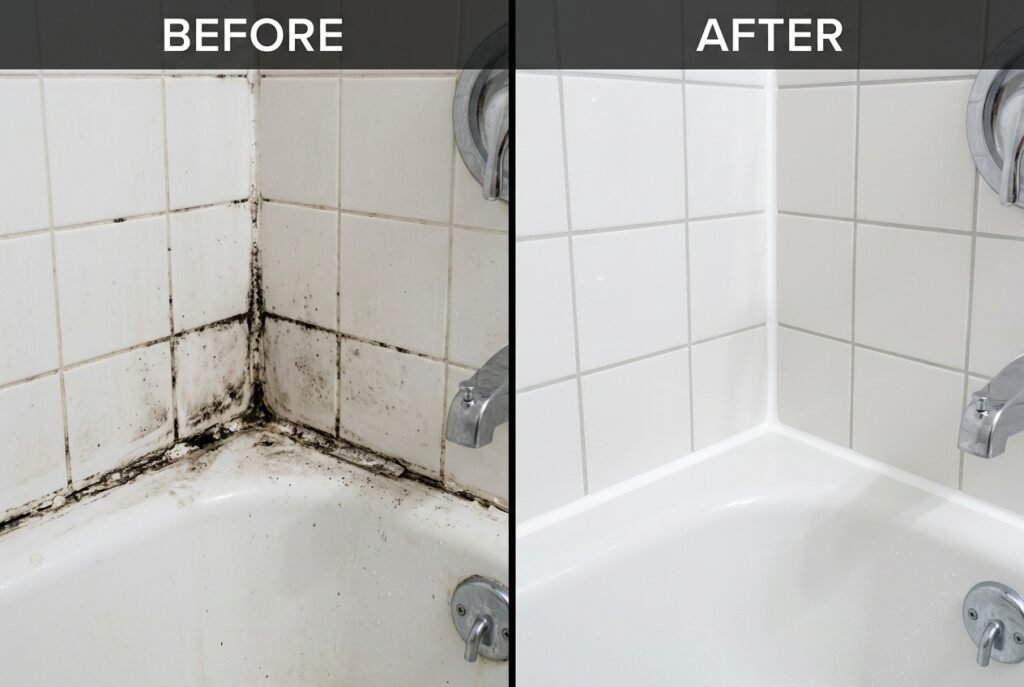
Black mold on caulk is usually Cladosporium or Stachybotrys feeding on moisture and soap residue. Kill it with a hydrogen peroxide or bleach-soaked cotton strip left on the caulk for 2 to 4 hours. If the stain is deep inside the caulk, the only real fix is removing and replacing the caulk entirely.
Mold is not just ugly — it is a living organism. The black discoloration is a colony of fungal hyphae that have penetrated into the porous silicone or latex caulk. Surface cleaning removes the visible growth, but if the mold has rooted into the material itself, it will return within weeks.
💡 The Science: Mold requires three things to grow: moisture (relative humidity above 60%), warmth (70-90°F), and organic food (soap scum, skin cells, body oils). A shower provides all three — which is why bathroom caulk is the most common mold location in any home.
🧹 What You Need
- 🔹 3% hydrogen peroxide or bleach diluted 1:10
- 🔹 Cotton balls or strips of toilet paper (to hold solution against caulk)
- 🔹 Spray bottle
- 🔹 Old toothbrush
- 🔹 Caulk removal tool and fresh silicone caulk (if replacing)
- 🔹 Ventilation fan or open window
Step 1: The Cotton Strip Method
Soak cotton balls or twist toilet paper into strips and saturate with hydrogen peroxide (safer) or diluted bleach (stronger). Press the saturated strips directly against the moldy caulk line. Leave for 2 to 4 hours minimum — overnight for severe cases.
💡 The Science: Hydrogen peroxide (H₂O₂) is an oxidizing agent that releases oxygen free radicals when it contacts organic matter. These radicals destroy the cell walls of mold hyphae. The cotton strip method works because it maintains sustained contact time — spraying alone evaporates too quickly on vertical surfaces.
Step 2: Scrub and Rinse
Remove the strips and scrub the caulk line with an old toothbrush. Rinse thoroughly with warm water. If black staining remains after 2 treatments, the mold has penetrated below the caulk surface and replacement is the only permanent fix.
Step 3: When to Replace the Caulk
If the caulk is cracked, peeling, or the mold returns within 2 weeks of cleaning, cut it out with a caulk removal tool, clean the gap with rubbing alcohol, let it dry completely, and apply fresh 100% silicone caulk (not latex — silicone is naturally mold-resistant).
⚠️ What Not to Do
- ❌ Never mix bleach with vinegar — produces toxic chlorine gas
- Do not dry-scrub mold — it releases spores into the air you breathe
- Do not caulk over moldy caulk — the mold will grow underneath and return
- Do not skip ventilation — run the exhaust fan for 30 minutes after every shower
How to Prevent Mold from Coming Back
- Run the exhaust fan for 30 minutes after every shower
- Squeegee the walls and glass after showering — removes the moisture film mold feeds on
- Spray caulk lines with hydrogen peroxide weekly as a preventative
- Keep bathroom humidity below 60% — use a dehumidifier if needed
❓ FAQ
Is black shower mold dangerous?
Most shower mold is Cladosporium, which is allergenic but not severely toxic. True Stachybotrys (toxic black mold) is rare in showers — it prefers drywall and wood. However, any mold can trigger respiratory symptoms in sensitive individuals.
Does vinegar kill mold?
Yes — white vinegar kills about 82% of mold species according to research. It is less aggressive than bleach but safer for regular use. Spray undiluted, let sit 1 hour, then scrub.
Why does bleach not always work on caulk mold?
Bleach kills surface mold effectively but cannot penetrate porous caulk. The mold hyphae living inside the material survive and regrow. That is why replacement is sometimes the only real solution.
✅ Bottom Line
The cotton strip method with hydrogen peroxide is the most effective surface treatment for moldy caulk. If the stain has penetrated deep, replace the caulk with 100% silicone. The real long-term fix is moisture control — run your fan, squeegee after showers, and spray peroxide weekly.