⚡ Quick Answer: How Do You Restore Burnt Baking Sheets Using Saponification?
The scientifically proven non-toxic formula: Heavy brown and black grease on baking sheets is not surface dirt; it is cross-linked, polymerized vegetable oil resembling synthetic varnish. You cannot dissolve it with dish soap, and spraying acidic vinegar directly onto baking soda simply neutralizes the alkaline pH into sodium acetate and salt water, killing its cleaning power. Instead, apply a thick catalytic paste of pure sodium bicarbonate (baking soda) and 3% hydrogen peroxide (forming an alkaline pH 9.2 oxidizing slurry), seal under plastic wrap for 2 hours of dwell time to induce alkaline saponification of the triglyceride ester bonds, pour boiling water across the surface to break the brittle matrix, and wipe clean with a non-scratch nylon scrub pad. Your pans will return to gleaming, reflective metal without harsh caustic fumes or scratches.
2 Hours
Minimal (Light Touch)
$0.45 (Saves $35)
Zero (Non-Toxic)
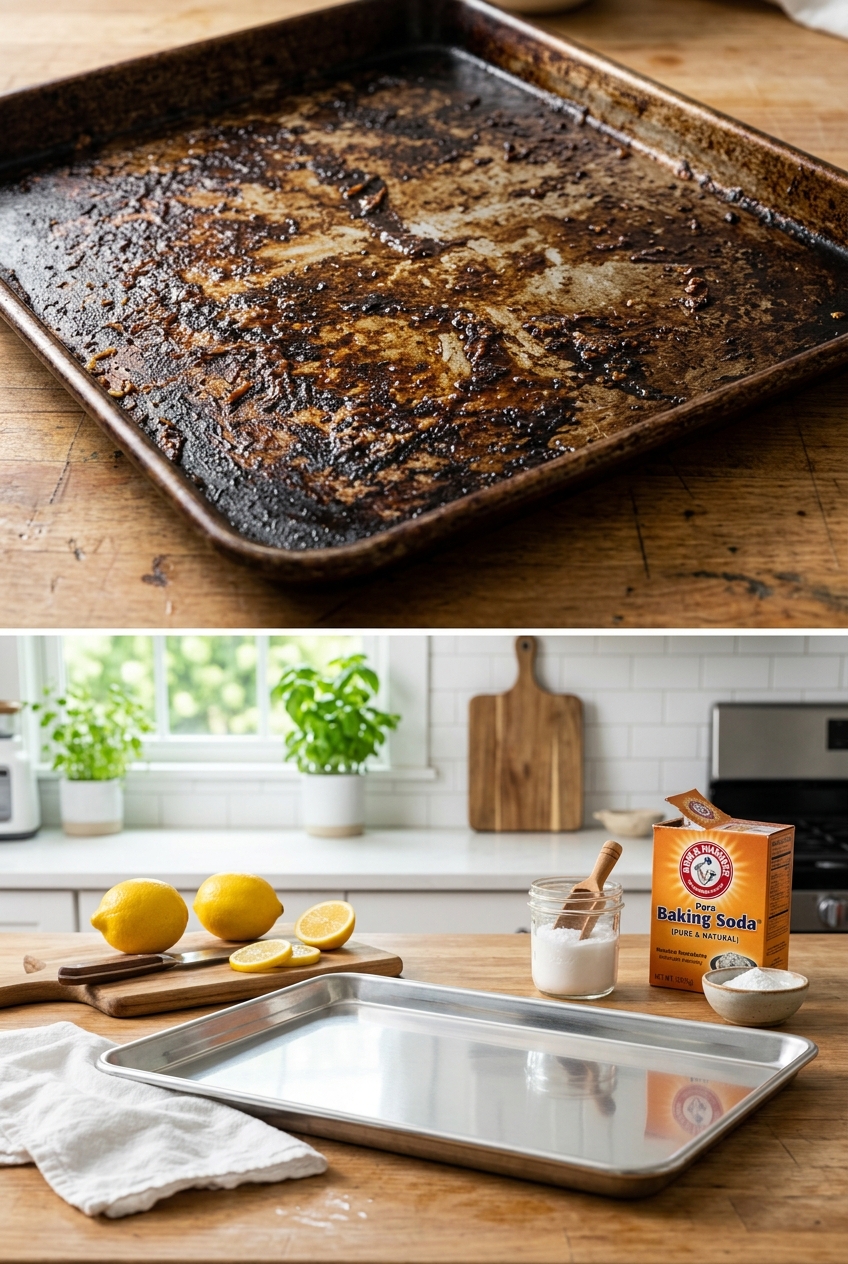
Every home kitchen has at least one beloved baking sheet, rimmed half-sheet pan, or roasting tray that has turned into an embarrassing graveyard of baked-on brown and black grease. Over months of roasting vegetables with olive oil, broiling chicken wings, and baking holiday cookies at 400°F to 450°F, droplets of cooking oil spread across the metal, oxidize, and cook into an amber-brown, glass-like coating that refuses to budge under standard dish soap, hot water, or heavy elbow grease.
Frustrated homeowners typically turn to one of two disastrous extremes: either they spray caustic aerosol commercial oven cleaners containing sodium hydroxide (lye) that fill their home with choking respiratory fumes and permanently corrode aluminum sheet pans, or they scrub frantically with steel wool, gouging deep micro-scratches into the metal surface that permanently trap bacteria and guarantee future sticking. Fortunately, when you understand the chemistry of lipid polymerization, you can deploy a safe, kitchen-pantry chemical reaction that breaks the bond between polymerized oil and metal without toxic fumes or destructive scratching.
🧪 Required Chemistry & Cleaning Supplies Checklist
- 1 cup pure USP food-grade sodium bicarbonate (baking soda)
- 1/4 to 1/2 cup standard 3% hydrogen peroxide (fresh brown bottle)
- 1 tablespoon concentrated plant-based liquid dish soap or castile soap
- Standard clear polyethylene plastic food wrap (Saran wrap or cling film)
- 1 electric kettle or saucepan filled with boiling water
- 1 non-scratch scouring pad (Scotch-Brite zero-scratch or walnut shell scrubber)
- Wooden scraper or plastic silicone dish squeegee
- 1 pair of nitrile or latex household cleaning gloves
⚠️ Material Compatibility: Raw Aluminum vs. Stainless Steel
Before treating your pan, identify your metal substrate. Stainless steel (such as All-Clad) and enameled steel can handle unlimited alkaline dwell time without pitting. However, natural raw aluminum (such as Nordic Ware commercial sheet pans) is an amphoteric metal that will react with prolonged high alkalinity (pH > 10). For raw aluminum pans, limit the hydrogen peroxide and baking soda slurry dwell time to a strict maximum of 90 minutes, and never use caustic sodium hydroxide (lye) oven cleaners, which will permanently blacken and dissolve aluminum metal.
The Chemistry of Burnt Grease: Saponification vs. The “Vinegar Myth”
To eliminate burnt stains effortlessly, you must dispel the single most widespread myth in internet cleaning hacks: mixing baking soda and white vinegar. When you pour acidic white vinegar (acetic acid, CH3COOH) onto alkaline baking soda (sodium bicarbonate, NaHCO3), an immediate, dramatic fizzing eruption occurs. While this looks impressive in viral social media videos, the chemical equation reveals the truth:
NaHCO3 + CH3COOH → CH3COONa + H2O + CO2
The bubbling is merely carbon dioxide gas escaping into the air. What remains on your pan is neutral water and sodium acetate salt. By combining an acid and a base together, you completely destroy the high pH that makes baking soda an effective degreaser in the first place!
Burnt grease is composed of unsaturated fatty acids that undergo thermal polymerization: high heat breaks double carbon bonds in the oil, causing molecules to cross-link into a rigid polymer chain identical to industrial linoleum or varnish. To break this varnish, you need saponification—the alkaline hydrolysis of triglyceride ester bonds. Combining sodium bicarbonate with hydrogen peroxide produces percarbonate ions and reactive oxygen species at a stable pH of approximately 9.2. This alkaline mixture converts the cross-linked fatty acid chains into water-soluble soap molecules, lifting the burnt film away from the metallic substrate without mechanical grinding.
Step-by-Step Restoration Protocol: The 2-Hour Saponification Method
Place the burnt baking sheet in your kitchen sink or on a flat countertop protected with an old towel. Rinse the pan under hot tap water with a few drops of dish soap to wash away any loose food particles, bread crumbs, or fresh non-polymerized grease.
Shake off excess surface water, leaving the metal damp but not pooled with deep standing water. A slightly damp surface ensures the alkaline powder bonds evenly across the burned contours without washing away into the corners.
In a small glass or ceramic mixing bowl, combine 1 cup of pure sodium bicarbonate (baking soda) with 1 tablespoon of concentrated liquid dish soap. Slowly pour in approximately 1/4 to 1/3 cup of 3% hydrogen peroxide, stirring constantly with a spoon.
The mixture will begin fizzing lightly into a creamy, thick, spreadable white slurry with the consistency of cake frosting. The dish soap acts as an amphiphilic wetting agent to penetrate surface oil films, while the hydrogen peroxide provides oxygen radicals that bleach organic stains and break carbonaceous bonds. If the paste is too runny, add a pinch more baking soda; if too thick and crumbly, add a few drops of peroxide.
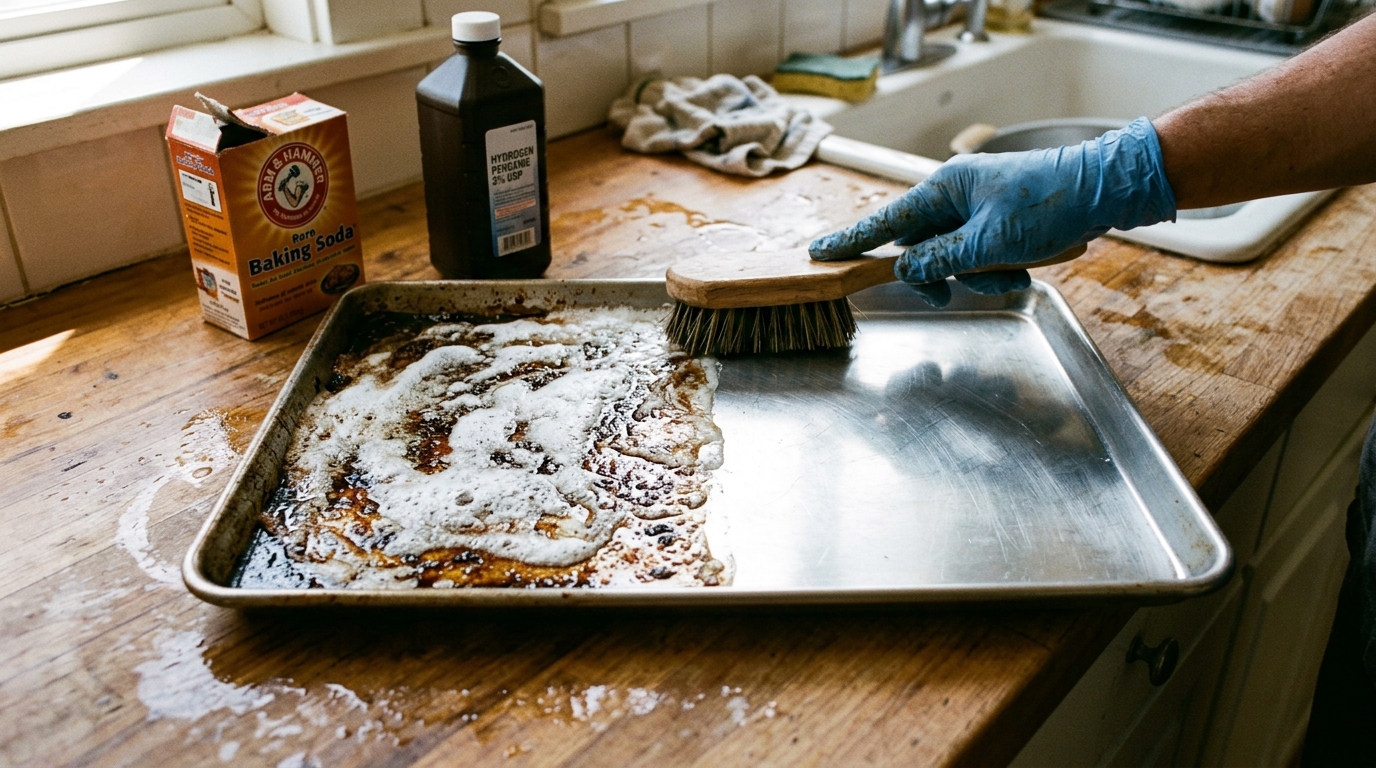
Wearing protective household gloves, use your hands or a flexible silicone spatula to spread the white catalytic paste generously over every brown, blackened, or greasy section of the baking sheet. Aim for an even layer roughly 1/8-inch thick across all stained areas.
Now comes the crucial secret that makes this method 10x more effective: encapsulation. Tear off sheets of plastic cling wrap and press them flat directly onto the surface of the paste, covering the entire baking sheet. Chemical saponification requires water as a reaction medium; if the baking soda paste is left exposed to room air, it will dry out into a chalky powder within 20 minutes and chemical activity will completely halt. Plastic wrap traps 100% of the moisture, allowing the alkaline peroxide to actively hydrolyze polymerized grease continuously for hours.
Allow the covered baking sheet to sit undisturbed at room temperature for a minimum of 2 full hours (for extreme decade-old burnt carbon, you may let it dwell up to 4 hours on stainless steel). As the reaction proceeds, you will observe the white paste beneath the plastic film turning dirty yellow and dark tea-brown as it liquefies the cross-linked oil polymers.
To accelerate the reaction during the final 10 minutes, boil a kettle of water. Peel away the plastic wrap and discard it in the trash. Pour 2 to 3 cups of boiling water directly onto the browned paste. The sudden thermal shock softens any residual carbonized binders, dissolving the newly created soap compounds into liquid solution.
Using a non-scratch nylon scrub sponge (or a wooden kitchen spatula for heavy corners), gently massage the surface in small circular motions. Because the chemical reaction has already broken the molecular bonds, the burnt brown stains will effortlessly lift and wash away like muddy syrup—zero hard scrubbing required.
Pour out the dirty brown liquid and rinse the baking sheet thoroughly under warm running tap water. To bring out a brilliant mirror shine and neutralize any residual alkaline chalkiness, splash 2 tablespoons of distilled white vinegar across the pan and give it a final light wipe with a microfiber cloth. The mild acidity dissolves mineral haze, leaving the metal gleaming, sanitary, and completely restored to pristine condition.
Ditch Dangerous Oven Cleaners & Save Thousands on Cookware
Commercial degreasers and oven cleaners release toxic caustic fumes that irritate lungs and deteriorate metal finishes. The Home Rescue & Restoration Bible by Yolo Fisher contains 49 chemistry-backed protocols for restoring burnt Dutch ovens, glass oven doors, ceramic cooktops, grout lines, and stainless cookware using safe pantry essentials.
Preventing Future Burnt Oil Stains: Silicone Mats & Proper Seasoning
Now that your baking sheets are restored to like-new condition, adopting two simple kitchen practices will protect them from ever polymerizing again:
- Use Reusable Silicone Baking Mats or Unbleached Parchment: Whenever roasting vegetables, roasting bacon, or baking cookies, line your pan with a food-grade silicone baking mat (such as a Silpat) or high-density unbleached parchment paper. The barrier absorbs lipid spatters and prevents hot oil droplets from contacting bare hot metal, making cleanup as simple as rinsing a silicone sheet.
- Avoid Aerosol Cooking Sprays: Commercial aerosol cooking sprays contain synthetic propellant gases and soy lecithin as an emulsifying agent. When exposed to temperatures above 375°F in the oven, lecithin cooks into an insoluble sticky golden varnish that bonds far more aggressively to metal than pure butter or olive oil. Lightly brush pure avocado oil or clarified butter using a silicone pastry brush instead of aerosol sprays.
Pin This Non-Toxic Kitchen Hack To Your Cleaning Board