⚡ How Do You Get Rid of Yellow Armpit Stains on White Shirts?
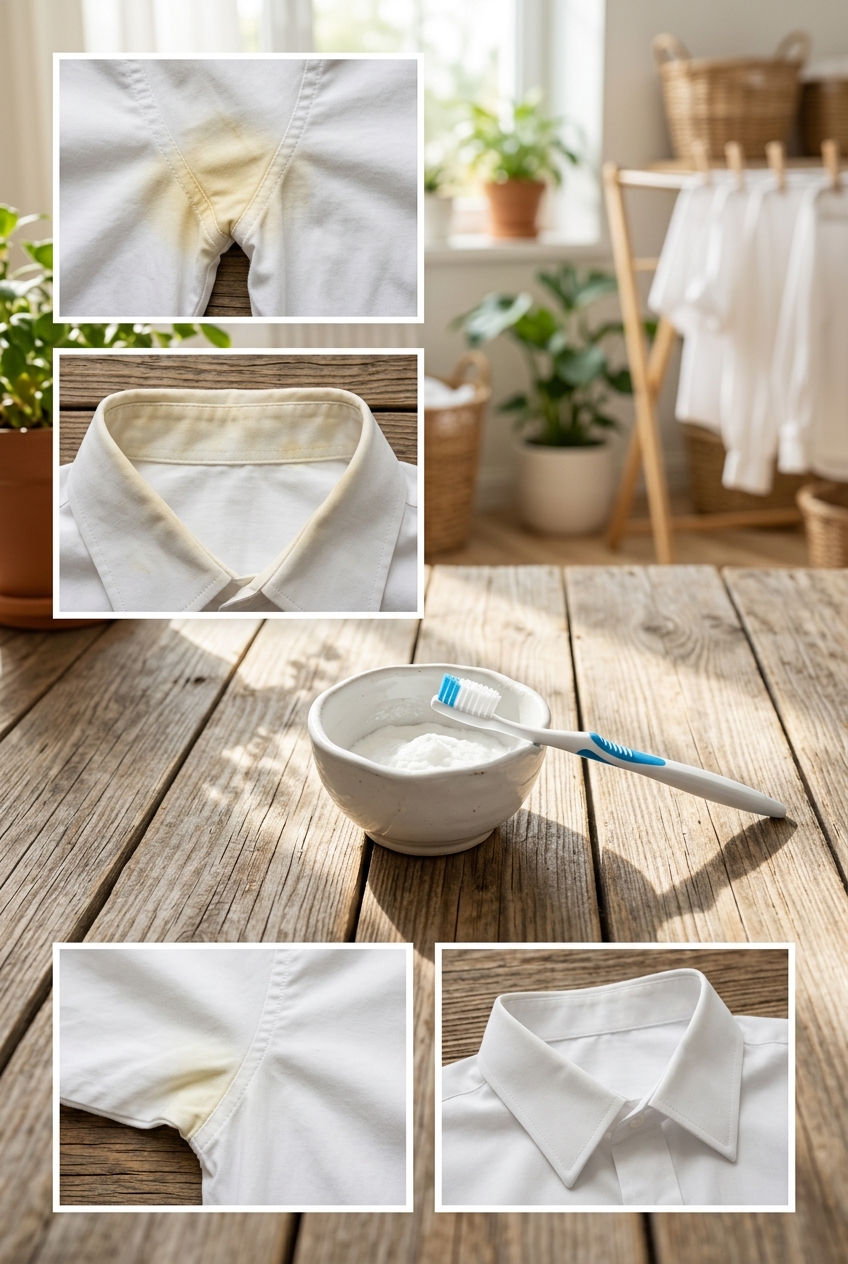
To permanently eliminate yellow armpit stains on white cotton shirts: Mix 1 part liquid dish soap (Dawn), 2 parts 3% hydrogen peroxide, and 2 parts sodium bicarbonate (baking soda) into a thick spreadable paste. Generously coat both sides of the stained underarm fabric, vigorously work the slurry deep into the fibers with a soft-bristled toothbrush, let it dwell for 1 to 2 hours in a shaded area to oxidize the stain, then wash in warm water with an oxygen bleach powder. The yellowing lifts completely without fiber degradation.
Don’t throw away your favorite white dress shirts or tees. Discover why chlorine bleach makes yellow sweat stains worse, and how a targeted baking soda, peroxide, and enzyme paste oxidizes stubborn stains permanently. Below is the exact, step-by-step field guide tested and verified by the TidyUp Daily laboratory team.
📋 Required Materials, Tools & Reagents
-
✓
1/2 cup 3% USP hydrogen peroxide (fresh bottle for maximum oxidation) -
✓
1/2 cup pure sodium bicarbonate (baking soda) -
✓
2 tablespoons blue concentrated dish soap (Dawn surfactant) -
✓
Soft-bristled cleaning toothbrush -
✓
Small glass or ceramic mixing bowl -
✓
Measuring spoons -
✓
Oxygen-based laundry booster powder (sodium percarbonate)
⚠️ Fabric Chemistry Alert: Why Chlorine Bleach Ruins Armpit Stains
NEVER use chlorine bleach (sodium hypochlorite) on yellow armpit sweat stains. Armpit stains are caused by protein-bound aluminum salts. Chlorine bleach oxidizes and permanently browns protein compounds, chemical-bonding the yellow discoloration permanently into cotton cellulose fibers. Furthermore, do not expose hydrogen peroxide-treated shirts to direct ultraviolet sunlight while wet, which can weaken cotton yarn.
The Step-by-Step Field-Tested Protocol
Analyze the Underarm Staining and Fabric Composition
Inspect the garment care label. This non-toxic oxidation protocol is designed for white cotton, cotton-polyester blends, and linen garments. Avoid using on raw silk, wool, or dry-clean-only fabrics without a hidden spot test. Lay the shirt inside-out on a clean, waterproof work surface or wooden laundry table with the underarm seams spread flat.
Prepare the Triple-Action Active Oxidation Paste
In a small glass bowl, combine 2 parts sodium bicarbonate (baking soda), 2 parts 3% hydrogen peroxide, and 1 part concentrated dish soap (e.g., 4 tablespoons baking soda, 4 tablespoons peroxide, 2 tablespoons Dawn). Stir with a spoon into a smooth, frothy paste resembling cake frosting. Prepare this fresh: hydrogen peroxide begins releasing active oxygen immediately upon contact with organic matter.
Deep Mechanical Fiber Impregnation with a Toothbrush
Spoon generous dollops of the paste directly onto the yellow crust on the interior armpit seam. Turn the shirt right-side out and apply paste to the exterior fabric as well. Using a soft-bristled toothbrush, scrub the paste in circular motions directly across the grain of the fabric. Mechanical friction forces the microscopic baking soda crystals into the twisted cotton fiber bundles, breaking apart stiffened deodorant waxes.
Allow a 90 to 120-Minute Controlled Oxidation Dwell Time
Allow the paste to sit undisturbed on the fabric for 90 minutes to 2 hours at room temperature. During this dwell window, hydrogen peroxide undergoes catalytic decomposition, releasing singlet oxygen radicals that oxidize dark chromophores into colorless, water-soluble byproducts. The dish soap acts as an amphiphilic surfactant, breaking surface tension and emulsifying sebum body oils. Re-mist with a spray of straight hydrogen peroxide if the paste dries out prematurely.
Pre-Rinse with Warm Water and Wash with Oxygen Booster
Rinse the underarms under a stream of warm tap water (105°F / 40°C), rubbing the fabric against itself to dislodge chalky baking soda residue. Place the shirt into the washing machine. Add your standard laundry detergent along with 2 tablespoons of oxygen bleach powder (sodium percarbonate) to the drum. Run a warm wash cycle. After the cycle finishes, inspect the armpits before drying: always air dry on a hanger until you confirm the stain is 100% gone, as high clothes dryer heat can bake in any residual traces.
🔬 The Chemistry of Yellow Stains: Aluminum Chlorohydrate + Sebum Reaction
Many people mistakenly believe that human perspiration itself is yellow. In reality, eccrine sweat is 99% clear water and mineral salts, while apocrine sweat contains odorless proteins, fatty acids, and urea. The yellow discoloration is the product of an irreversible chemical reaction between aluminum chlorohydrate (the active antiperspirant astringent that plugs sweat pores) and the protein-lipid fractions in human sebum. When washed in alkaline commercial detergents at low temperatures, aluminum complexes cross-link with organic fatty acids, creating an insoluble, waxy hydrophobic film that darkens over time as the fats oxidize and turn rancid. Hydrogen peroxide (H2O2) serves as a selective bleaching and oxidizing agent: its perhydroxyl radicals (HO2-) cleave the double bonds in the conjugated chromophore molecules responsible for the yellow color, converting them into non-pigmented, hydrophilic compounds that easily dissolve in the laundry rinse.
The Chemistry of Antiperspirants: Why Modern Formulations Cause Severe Yellowing
To permanently eradicate yellow sweat stains, homeowners must understand that human perspiration itself is fundamentally colorless. The body’s eccrine glands secrete 99% sterile water and sodium chloride, while apocrine glands in the axillary region secrete trace proteins, squalene lipids, and cholesterol esters. The yellow disaster occurs when these organic proteins make physical contact with aluminum zirconium tetrachlorohydrex glycine—the active astringent compound found in standard solid and roll-on antiperspirants.
When acidic antiperspirant aluminum salts react with human sebum and are subsequent washed in hard tap water containing dissolved calcium and carbonate minerals, an insoluble organometallic polymer complex is formed. Commercial detergents fail to break this complex because their surfactants are formulated for free-floating surface oils, not cross-linked coordination complexes bonded directly to cellulose fiber hydroxyl groups. Over time, heat from residential clothes dryers vulcanizes the aluminum-protein matrix, turning light cream stains into dark yellow, stiff, brittle armor plating that resists ordinary detergents.
Commercial Spray-and-Wash vs. Active Peroxide Slurry: The Scientific Verdict
Off-the-shelf stain remover sprays rely primarily on ethoxylated alcohol surfactants and synthetic solvents. While effective against fresh culinary grease or red wine, they lack the selective oxidative potential required to cleave aluminum-protein complexes without bleaching the base cotton fiber:
- Enzyme Boosters: Modern protease enzymes digest free proteins, but become inactivated when trapped inside dense aluminum salt crusts. The mechanical toothbrush scrub in our protocol physically pulverizes the crust, allowing hydrogen peroxide radicals to access the core.
- Why Chlorine Bleach Destroys Cotton: Sodium hypochlorite (household chlorine bleach) undergoes a violent chlorination reaction with the amine groups in sweat proteins, producing chloramines that turn dark yellow-brown and irreversibly burn into cotton yarn.
- Safe Long-Term Storage: After restoring white shirts with our peroxide and baking soda slurry, always rinse thoroughly in cold water before line drying in natural indirect daylight. Air drying prevents high dryer heat from setting microscopic traces of perspiration.
Master 85+ Non-Toxic Repairs & Save Over $4,000 in Service Calls
This protocol is excerpted from The Home Rescue Bible (2026 Edition). Get instant access to full chemistry formulas, appliance diagnostic wire schematics, and plumbing bypass trees.
Frequently Asked Questions
Can I use this baking soda and peroxide formula on colored shirts?
Proceed with caution. 3% hydrogen peroxide is a color-safe oxygen bleach on most synthetic and vat-dyed cotton fabrics, but reactive natural dyes can lighten. Always perform a 10-minute spot test on an inconspicuous interior hem before applying to dark or vibrant colored garments.
How can I prevent yellow pit stains from forming on my new white shirts?
Switch to an aluminum-free deodorant, or allow your antiperspirant stick to dry completely for 5 minutes before putting on your shirt. In addition, rinse your white shirts in cold water immediately after heavy workouts rather than leaving them in a dark, damp laundry hamper where sebum oxidation accelerates.
Will this method also eliminate the stiff, crunchy texture in the armpits?
Yes! The stiff, cardboard-like texture is caused by hardened deodorant waxes and aluminum salt deposits. The combination of baking soda’s mild abrasive scrubbing and Dawn’s grease-cutting surfactants emulsifies the wax layer, restoring soft, natural fabric drape.
📌 Pin This Field Guide to Your Home Board