⚡ Quick Answer: How Do You Remove Stubborn Toilet Waterline Rings?
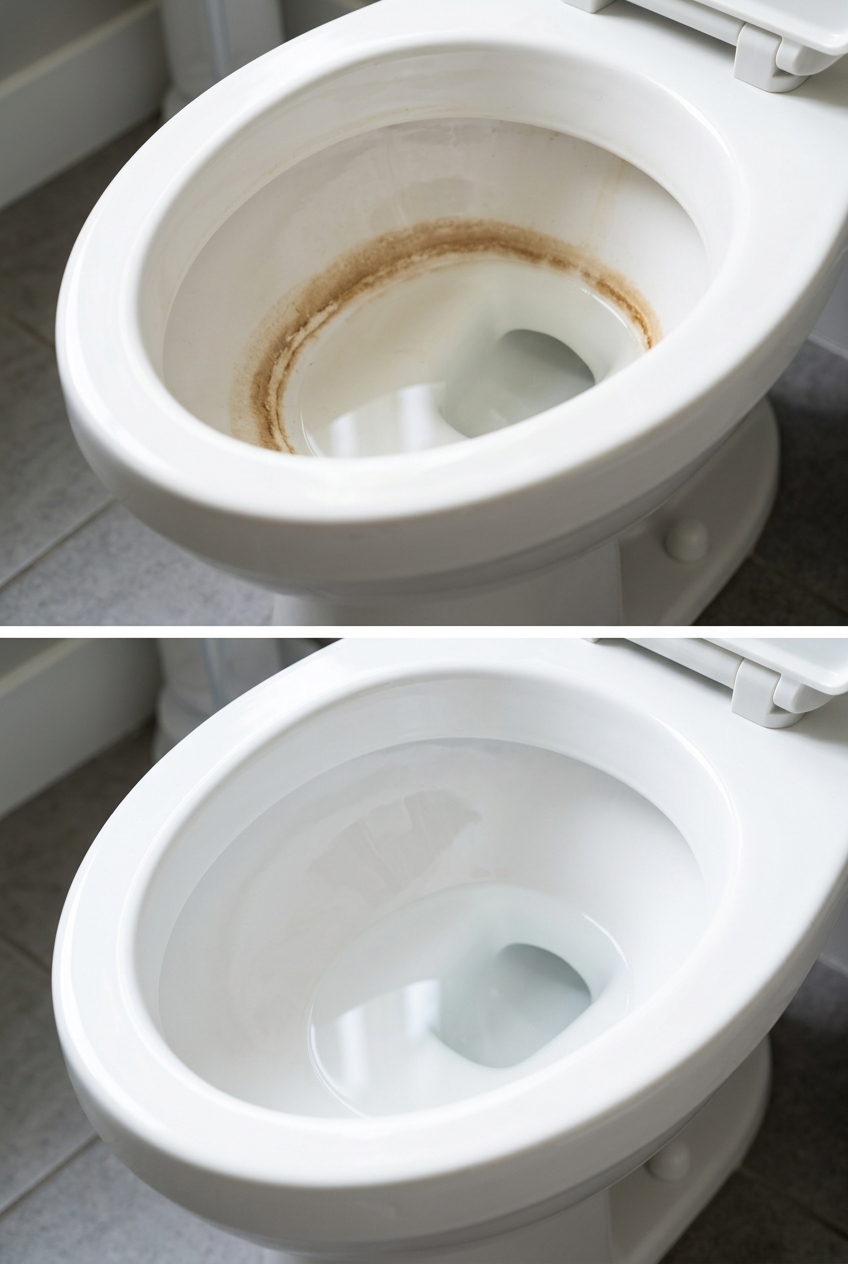
To permanently remove hardened brown or yellow mineral rings from a toilet bowl without scratching the porcelain glaze: First, lower the water level below the ring by pushing the water down the trap with a toilet brush or turning off the angle shutoff valve and flushing. Second, apply an effervescent chelation slurry of 1 cup anhydrous citric acid powder and 1 cup sodium bicarbonate directly onto the exposed mineral band. Allow the carbon dioxide bubbling and acid chelation to dwell for 30 to 45 minutes to dissolve calcium carbonate and iron oxide crystal bonds. Third, submerge a natural volcanic pumice stone in water for 5 minutes (never use dry pumice), and gently rub the wet stone across the softened mineral ring using zero downward pressure. Because vitreous china porcelain rates 7 on the Mohs hardness scale while pumice rates only 5, the mineral crust pulverizes into a harmless paste while the factory glaze remains 100% scratch-free.
15–20 Minutes
$2.80
Vitreous Porcelain Only
Zero Caustic Fumes
A dark brown, yellow, or reddish ring encrusted around the standing waterline of a toilet bowl is one of the most stubborn visual embarrassments in home cleaning. Guests frequently mistake these mineral deposits for unsanitary bathroom hygiene, causing homeowners endless stress. Frustrated individuals often dump cups of bleach into the bowl or attack the stain with heavy-duty chemical drain cleaners and steel wool, only to discover that the ring remains virtually untouched or returns darker than before.
The fundamental misunderstanding stems from the nature of the stain. Waterline rings are not organic soil; they are inorganic geological formations known as limescale. When municipal tap water or well water contains high concentrations of dissolved calcium bicarbonate, magnesium, and ferric iron (rust), these minerals precipitate out of solution at the water-air interface where evaporation occurs. Over months, these ions crystallize into dense calcite and aragonite mineral sheets that bond molecularly with the vitreous china glaze. Bleach is an alkaline oxidizer; it has zero chemical capacity to dissolve calcium mineral scale. Bleach temporarily whitens organic pigments trapped within the crust, but the rough microscopic rock matrix remains intact, quickly re-trapping dirt and turning dark again within days.
🛠️ Materials & Protocol Checklist
- 1 cup pure anhydrous citric acid powder (or non-toxic food grade descaler)
- 1 cup sodium bicarbonate (baking soda)
- 1 natural grey volcanic pumice scouring stick (with handle)
- 1 standard toilet bowl brush or plunger
- Heavy-duty waterproof rubber cleaning gloves
- Small bucket or plastic cup for water extraction
⚠️ Material Boundary: Never Use Pumice on Plastic, Acrylic, or Enamel
Pumice stones are safe strictly on vitreous china porcelain (the fired ceramic material from which standard residential toilet bowls and sinks are made). Never use a pumice stone on fiberglass shower pans, acrylic tubs, plastic RV toilets, or painted metal fixtures. The Mohs hardness of fiberglass (3.0) and acrylic (2.5) is softer than pumice (5.0), meaning pumice will instantly gouge and permanently scratch those synthetic materials.
The Science of Mohs Hardness & Effervescent Chelation
To remove geological mineral scale from ceramic porcelain without inflicting damage, you must combine acidic ligand chelation with differential mineral hardness.
Citric acid (C6H8O7) donates protons (H+) to the insoluble calcium carbonate (CaCO3) crystals, driving a rapid acid-base dissolution reaction:
CaCO3 + 2H+ → Ca2+ + H2O + CO2↑
As the calcium bonds break, carbon dioxide gas bubbles effervesce, mechanically agitating and micro-fracturing the mineral crust from the inside out.
For decades-old hard water scale that has calcified into an impermeable rock layer, mild acid alone may take days to penetrate. This is where natural volcanic pumice provides the ultimate mechanical solution through the laws of relative mineral hardness:
- Vitreous China Porcelain Glaze: Mohs Hardness 7.0 (Harder than quartz)
- Volcanic Pumice Stone: Mohs Hardness 5.0 (Siliceous volcanic glass)
- Calcite Hard Water Mineral Scale: Mohs Hardness 3.0
Because calcite scale (3.0) is softer than wet pumice (5.0), the pumice grinds the mineral crust into harmless powder. And because the wet pumice (5.0) is substantially softer than the porcelain glaze (7.0), the stone physically disintegrates upon contact with the ceramic, creating a lubricating pumice slurry that cannot scratch or dull the glossy factory glaze.
Step-by-Step Restoration Protocol: The Zero-Scratch Method
Applying descaling paste into a toilet bowl filled with water dilutes the active ingredients to negligible levels. To expose the ring, use your toilet brush to push water rapidly down the trapway in swift, plunging motions. The siphoning action will lower the bowl water level by 4 to 6 inches, fully exposing the dry mineral band. Alternatively, turn the oval chrome water shutoff valve behind the toilet clockwise until tight, flush the toilet once, and sponge out residual water.
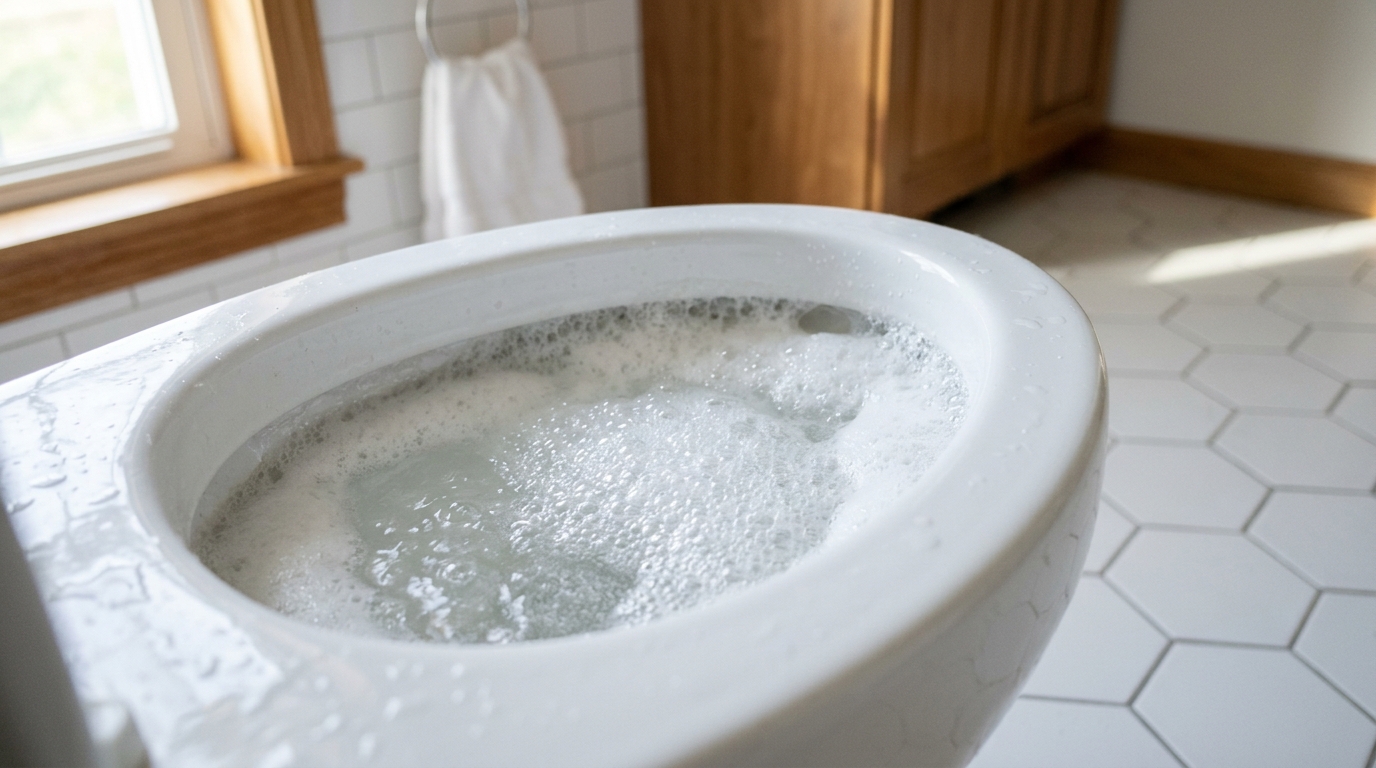
Sprinkle 1 cup of sodium bicarbonate directly onto the exposed mineral ring. Next, gently pour or dust 1 cup of citric acid powder over the baking soda. Mist the dry powder lightly with a spray bottle of warm water. The powders will instantly erupt into a thick, foaming effervescent paste. Using your toilet brush, spread the foaming slurry across the entire circumference of the waterline ring and underneath the upper rim jets. Allow the slurry to dwell undisturbed for 30 to 45 minutes.
Crucial Rule: Submerge your volcanic pumice stone in a bucket of warm water for a full 5 minutes before touching the porcelain. A dry pumice stone can cause micro-abrasions; a thoroughly saturated pumice stone is soft and safe. Wearing rubber gloves, take the wet stone and rub it gently back and forth over the softened mineral ring. Apply zero downward force—let the weight of the stone and the abrasive volcanic cells do the work. The stone will quickly shave away the mineral deposits, creating a gray paste.
While the bowl is being treated, inspect the water siphon jets located under the interior rim of the toilet. Hard water deposits regularly clog these small angled holes, reducing flush power and leaving vertical brown mineral trails down the back of the bowl. Dip a small nylon detail brush into the citric acid paste and scrub each rim jet opening to dissolve calcified scale and restore full hydraulic flushing velocity.
Turn the water shutoff valve counter-clockwise to restore water flow, allowing the tank to refill completely. Flush the toilet twice to rinse away all pumice slurry and dissolved calcium residue. Run your gloved fingers along the porcelain waterline; you will feel a smooth, glassy surface completely devoid of grit, roughness, or discoloration.
Save this zero-scratch hard water formula to your Bathroom Cleaning Pinterest board!
Save $4,000+ in Unnecessary Contractor & Repair Calls
Don’t pay emergency service fees for common household breakdowns. Master verified diagnostics, preventative schedules, and laboratory-tested non-toxic restoration formulas in the complete digital field manual.
Preventative Maintenance: Stop Waterline Rings Before They Form
Once your toilet bowl is restored to factory brilliance, prevent mineral scale from reforming with these ongoing habits:
- The Weekly Borax Nightcap: Before going to sleep on Sunday nights, sprinkle ½ cup of natural sodium tetraborate (Borax) into the standing toilet bowl water and swish lightly with your brush. Borax softens standing water, binds calcium ions, and inhibits mineral precipitation overnight. Simply flush in the morning.
- Skip Harsh Blue Drop-In Tank Tablets: Avoid blue chlorine chemical drop-in pucks. The high concentration of chlorine bleach deteriorates the rubber flapper valve and silicone seals inside your tank, causing ghost flushing and leaks that run up hundreds of dollars in water bills.
- Quarterly Tank Descaling: Mineral scale that collects in your bowl originates in your ceramic toilet tank. Once every four months, pour 1 cup of citric acid into the toilet tank, let it sit for 2 hours, and flush twice to descale the internal siphon valves and flush channels.
Frequently Asked Questions About Toilet Bowl Rings
Q: Will a pumice stone scratch the porcelain of my toilet?
As long as the pumice stone is thoroughly wet and used on vitreous china porcelain, it is physically impossible for the stone to scratch the glaze. Vitreous porcelain rates 7.0 on the Mohs hardness scale, whereas pumice rates 5.0. In materials science, a softer material cannot scratch a harder material. The stone will wear down and sacrifice itself while leaving the porcelain intact.
Q: Can I use Coca-Cola or Red Bull to remove toilet rings like viral videos claim?
While colas contain tiny traces of phosphoric acid (pH ~2.5), they are packed with high concentrations of sugar and artificial caramel colorings. Pouring soda into a toilet bowl feeds bacterial colonies in the drain and can actually stain porous mineral scale brown. Pure citric acid powder provides 100 times the descaling potency without sticky sugars or artificial dyes.
Q: Why did bleach fail to remove my dark toilet bowl ring?
Bleach (sodium hypochlorite) is an alkaline disinfectant; it cannot dissolve hard water mineral crystals like calcium carbonate and ferric iron. Bleach merely oxidizes organic contaminants trapped in the crust, turning the scale temporarily pale. Because the crystalline rock matrix remains bonded to the porcelain, it rapidly re-absorbs minerals and turns dark again within a few flushes.