⚡ Quick Answer: How to Make a Pet-Safe Organic Mosquito & Tick Yard Spray
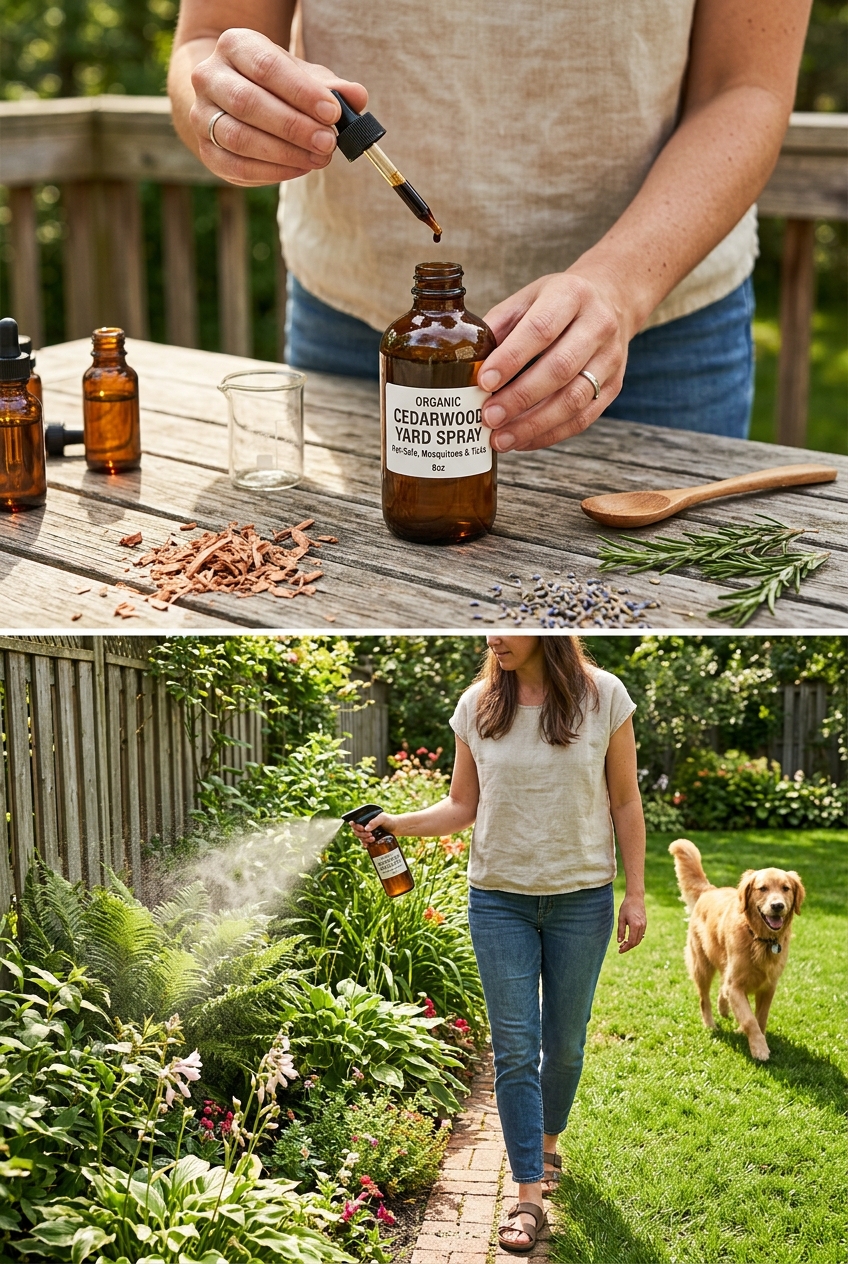
The winning botanical formulation: Combine 8 fluid ounces of cold-pressed Eastern Redcedar oil (Juniperus virginiana), 2 fluid ounces of pure Lemongrass essential oil (Cymbopogon flexuosus), 4 fluid ounces of pure liquid potassium castile soap (acting as an amphiphilic natural surfactant), and 4 fluid ounces of unsulfured horticultural blackstrap molasses into a standard hose-end dial sprayer. Set the sprayer dilution dial to 2 ounces per gallon (1:64 ratio) and thoroughly soak perimeter turf, shrub borders, mulch beds, and under-deck shaded zones. This botanical recipe kills mosquito larvae and nymphal ticks on contact through octopaminergic neurotoxicity while remaining 100% safe for dogs, cats, children, honeybees, and earthworms once dry.
15 Minutes
$24 (Saves $380)
5,000 Sq. Ft.
100% Pet & Bee Safe
Every summer, homeowners across North America face the same agonizing dilemma: tolerate swarms of biting mosquitoes and disease-carrying deer ticks (Ixodes scapularis), or hire commercial chemical mosquito spraying franchises that blanket suburban properties in synthetic pyrethroids like bifenthrin, permethrin, and cypermethrin. Commercial exterminator services charge $75 to $140 every three weeks, totaling over $600 per season, while spraying broad-spectrum neurotoxins that indiscriminately slaughter beneficial native pollinators, decimate monarch caterpillars, poison aquatic life in nearby streams, and leave dangerous residues that pets ingest through grooming their paws.
Fortunately, cutting-edge entomological research has proven that nature has already engineered exceptionally potent pest defense compounds. By harnessing specific botanical terpenes from cedarwood and lemongrass and properly emulsifying them for hose-end delivery, you can establish an impenetrable perimeter defense barrier around your lawn and patio that repels biting arthropods without introducing synthetic chemicals into your family’s living environment.
🌿 Required Recipe Ingredients & Equipment Checklist
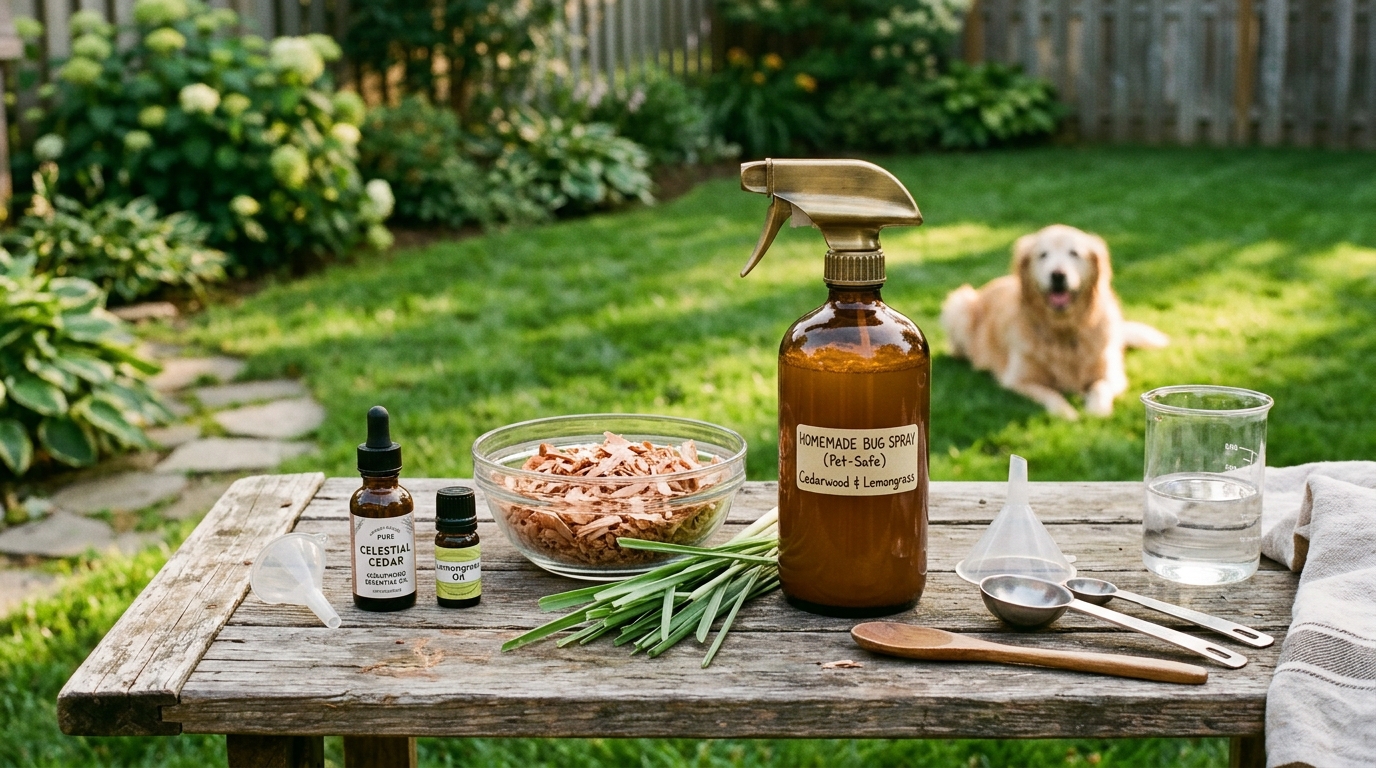
- 8 oz pure cold-pressed Texas or Virginian Cedarwood oil (Juniperus virginiana)
- 2 oz pure therapeutic-grade Lemongrass essential oil (Cymbopogon flexuosus)
- 4 oz unscented pure liquid Castile soap (such as Dr. Bronner’s Baby Unscented)
- 4 oz unsulfured blackstrap horticultural molasses (natural carbohydrate sticker)
- 1 standard 32-ounce hose-end dial sprayer (such as Ortho Dial N Spray or Chapin G362)
- 1-quart glass mixing jar or stainless steel mixing vessel
- Long wooden stirring spoon or wire whisk
- 50-foot garden hose connected to outdoor spigot with clean municipal or well water
- Protective gardening gloves and safety sunglasses during mixing
🐾 Feline Safety & Essential Oil Dilution Science
Cats lack the essential liver enzyme glucuronyl transferase, making them sensitive to highly concentrated phenolic essential oils (such as tea tree, pennyroyal, or wintergreen). Virginian Cedarwood oil (Juniperus virginiana) is NOT a true cedar; it is a juniper that contains zero toxic thujone. At our calibrated field dilution of 1:64 (under 0.5% active concentration in outdoor spray), this formula is completely safe for both dogs and cats once the spray has dried on foliage (typically 45 minutes on a sunny afternoon). Keep all pets indoors while spraying until moisture evaporates.
The Entomology of Plant Terpenes: Why Cedar & Lemongrass Paralyze Pests
To appreciate how this natural formulation works, we must examine insect physiology. Insects, ticks, and arachnids regulate their movement, heart rate, respiration, and sensory behavior through an endogenous neurotransmitter called octopamine. Octopamine is unique to invertebrates; mammals, birds, reptiles, and humans do not possess octopamine receptors, instead utilizing norepinephrine and dopamine.
The primary active chemical constituents in cold-pressed Virginian cedarwood oil are cedrol, cedrene, and thujopsene. When vaporized terpenes from cedarwood contact an arthropod’s exoskeleton, they dissolve the insect’s protective waxy outer epicuticle, triggering rapid cellular dehydration. Furthermore, these terpenes bind to and block the insect’s octopamine receptor sites. This induces immediate neurological paralysis and respiratory suffocation in adult mosquitoes, fleas, and nymphal ticks.
Lemongrass essential oil contains high concentrations of citral (geranial and neral) and geraniol. These aromatic monoterpenes blind the sensory antennae of female mosquitoes, overwhelming the olfactory receptors they use to detect carbon dioxide plumes (CO2), lactic acid, and thermal body signatures emitted by human skin and pets. Unable to track blood hosts, mosquitoes flee the treated zone.
Step-by-Step Preparation & Yard Application Protocol
Because hydrophobic plant oils do not dissolve in water, pouring raw essential oils into a garden hose sprayer will result in immediate separation, clogging the nozzle and causing uneven application. You must chemically emulsify the oils using an amphiphilic surfactant.
In a 1-quart glass jar, pour 8 ounces of cold-pressed cedarwood oil and 2 ounces of lemongrass oil. Add 4 ounces of pure liquid potassium castile soap. Whisk the mixture vigorously with a fork or wire whisk for 90 seconds. The potassium carboxylate soap molecules will surround the oil droplets, creating a milky, homogeneous micro-emulsion that dissolves seamlessly into water when drawn through the sprayer siphon tube.
Standard botanical sprays wash away with morning dew within 48 hours. To dramatically extend the outdoor longevity of your organic spray, add 4 ounces of warm unsulfured blackstrap horticultural molasses to the emulsified soap-oil concentrate.
Molasses serves two vital biological functions: first, its sticky polysaccharide complex acts as an all-natural agricultural sticker, binding the essential oil molecules tightly to the cuticles of grass blades and shrub foliage so morning dew cannot dislodge them. Second, raw molasses feeds beneficial aerobic soil microbes and mycorrhizal fungi, stimulating healthy soil biology while repelling sugar-sensitive pest insects. Whisk thoroughly until smooth.
Pour your prepared 18-ounce concentrate into the reservoir jar of your hose-end dial sprayer. Secure the spray head firmly onto the jar, and twist the garden hose onto the brass fitting.
Adjust the top selector dial to 2 OZ per Gallon. This setting draws exactly 2 ounces of concentrate for every gallon of municipal water flowing through the internal venturi valve, yielding an optimal 1:64 dilution ratio. This precise concentration delivers maximum octopaminergic neurotoxicity to target pests without causing phytotoxic leaf scorching on delicate ornamental garden flowers.
Mosquitoes do not spend the day baking in the hot sun on the center of your open lawn; they rest in humid, shady microclimates to avoid desiccation. Choose a calm late afternoon or early evening when ambient winds are below 5 mph and the sun is declining.
Begin by walking the perimeter boundary of your property. Spray shrubs, tall ornamental grasses, woodpiles, compost margins, shaded garden beds, and the dark underbelly of wooden decks, patios, and outdoor furniture. Hold the spray nozzle roughly 3 feet from foliage, sweeping in broad overlapping arcs to coat the undersides of leaves where adult mosquitoes cling during daytime hours. Next, spray outward across your lawn turf, laying down an unbroken botanical barrier. One 32-ounce sprayer reservoir covers roughly 4,500 to 5,500 square feet of yard.
Keep pets and young children off the sprayed lawn for 45 to 60 minutes until foliage is dry to the touch. Once dry, your yard will emit a refreshing, clean cedar-citrus aroma that humans find delightful, but ticks and mosquitoes find completely intolerable.
Apply this formula once every 21 to 28 days throughout peak tick and mosquito season (May through October in most temperate zones). If your area experiences torrential thunderstorms with over 1.5 inches of rainfall within a 24-hour period, apply a light touch-up perimeter spray to refresh the aromatic terpene barrier around outdoor gathering spaces.
Eliminate Toxic Exterminators and Save $450+ Every Season
Commercial pest control contracts cost $700+ per summer for chemical pyrethroid sprays that harm beneficial bees and birds. Chapter 4 of The Home Rescue & Restoration Bible by Yolo Fisher reveals all-natural, lab-tested formulations for perimeter tick defense, natural ant and termite barriers, wasp nest eradication, and rodent deterrents that safeguard your family without toxic chemicals.
Larval Source Reduction: Eliminating Standing Water Breeding Habitats
No outdoor repellent spray can succeed if your property actively breeds hundreds of new mosquitoes daily. A single female mosquito (Culex pipiens or Aedes albopictus) can lay 100 to 300 eggs in as little as one tablespoon of stagnant water. In warm summer weather, those eggs hatch into swimming larvae (“wrigglers”) and mature into biting adults in just 7 to 10 days.
Conduct a weekly yard inspection after rain events. Empty and invert flowerpot saucers, bird baths, pet water bowls, children’s toys, wheelbarrows, and tarps. Clear clogged gutters of decomposed leaves, as standing water inside gutter troughs is the #1 unrecognized breeding ground in suburban homes. For permanent decorative water features, rain barrels, or french drain catch basins that cannot be drained, drop in biological mosquito dunks containing Bacillus thuringiensis israelensis (Bti). Bti is a naturally occurring soil bacterium whose crystalline delta-endotoxin destroys the gut lining of mosquito larvae within 24 hours, yet is entirely harmless to fish, frogs, dogs, cats, and birds.
Pin This Organic Yard Recipe To Your Garden Board