⚡ How Do You Clean Burnt Gas Stove Grates Without Scrubbing?
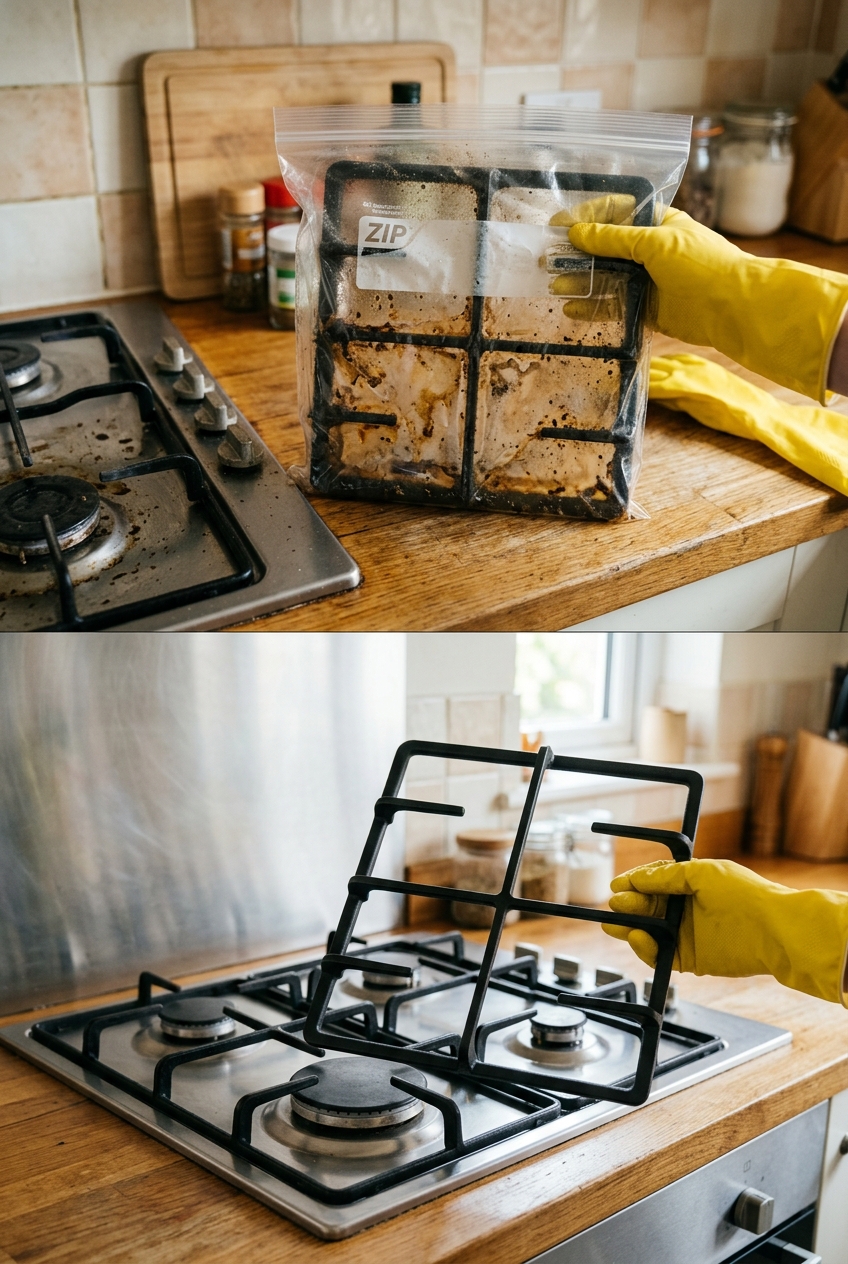
To clean heavily carbonized cast iron gas stove grates without scrubbing: Place each cooled grate inside an individual heavy-duty 1-gallon zipper freezer bag (or contractor trash bag). Pour in 2 to 3 tablespoons of standard household ammonia (the grates do not need to be submerged—the volatile gas fumes do all the chemical work). Seal the bag airtight, place it outdoors or in a well-ventilated area for 12 hours, then rinse under hot tap water with a sponge. The black grease wipes off like butter.
Tired of breaking wire brushes on rock-hard, burnt-on gas stove grease? Discover the viral sealed ammonia vapor hack that dissolves 5 years of carbonized oil overnight with zero elbow grease. Below is the exact, step-by-step field guide tested and verified by the TidyUp Daily laboratory team.
📋 Required Materials, Tools & Reagents
-
✓
1/2 cup standard household clear ammonia (approx. 5% ammonium hydroxide) -
✓
Heavy-duty 1-gallon zipper storage bags (or heavy contractor trash bags for large joined grates) -
✓
Heavy-duty chemical-resistant rubber gloves -
✓
Safety goggles or eye glasses -
✓
Standard non-scratch kitchen sponge -
✓
Warm running tap water and mild dish soap
⚠️ Chemical Safety Alert: Never Mix Ammonia with Chlorine Bleach or Acids
Never mix ammonia with chlorine bleach, acidic cleaners (vinegar, citric acid), or hydrogen peroxide. Combining ammonia and bleach creates deadly chloramine and hydrazine toxic vapors that cause severe respiratory burns and lung damage. Always pour ammonia outdoors or directly next to an open window, and never leave open ammonia bags inside living quarters.
The Step-by-Step Field-Tested Protocol
Confirm Grate Composition and Cool Completely
Ensure your cooktop grates are completely cool to the touch. This vapor method works miracles on cast iron, enameled cast iron, and porcelain-coated steel grates. Do not use this method on raw unfinished aluminum burner caps or brass decorative trim, as high alkalinity can cause surface tarnishing on soft metals.
Enclose Grates in Heavy-Duty Airtight Bags
Place each individual grate into a heavy-duty 1-gallon freezer bag with a reliable double-zipper seal. If your stove features large continuous grates that span multiple burners, slide two overlapping grates into a heavy 3-mil black contractor trash bag. Ensure the bag has zero punctures or tears.
Add the Ammonia Vapor Charge (Do Not Submerge)
A common mistake is attempting to submerge the entire grate in liquid ammonia. Liquid contact is unnecessary and wasteful. Pour only 2 to 4 tablespoons (about 1/4 cup) of household ammonia into the bottom corner of each bag. The secret is gaseous diffusion: ammonia molecules readily evaporate at room temperature, filling the sealed enclosure with concentrated volatile alkaline gas that penetrates micro-cracks in the burnt carbon.
Seal Airtight and Let Dwell Overnight (12 to 14 Hours)
Press out excess air gently without inhaling the vapor, and seal the zipper completely. For trash bags, twist the neck tightly and knot it or clamp it with zip ties. Place the sealed bags flat on a patio, garage floor, or inside an empty laundry sink away from direct sunlight, children, and pets. Leave the bags undisturbed for 12 to 14 hours. The dark brown liquefied grease will visibly pool in the lower corners of the plastic.
Outdoor Opening, Hot Water Rinse, and Seasoning Touch-Up
Put on rubber gloves and take the bags outdoors or directly to an open window. Unzip the bags facing away from your face and allow the residual fumes to disperse into the open air. Slide the grates out directly into a sink basin. Turn on hot tap water. Using a standard kitchen sponge, wipe down the cast iron. The stubborn carbonized oil will dissolve and slide off the metal instantly without wire brushes. Dry thoroughly with a clean rag. For bare cast iron grates, wipe a dime-sized drop of canola oil over the warm iron to maintain corrosion protection.
🔬 The Chemistry of Ammonia Gas Saponification: Hydrolyzing Cross-Linked Lipids
Cooking oil splattered across gas stove grates undergoes high-temperature thermal polymerization. As unsaturated fatty acids reach 400°F–500°F above gas burners, double carbon bonds cross-link into tough, plasticized, varnished films similar to industrial epoxy resins. Liquid detergents and soap surfactants cannot penetrate this dense carbonized matrix because surface tension prevents capillary penetration. Household ammonia (NH4OH) readily releases anhydrous ammonia gas (NH3), which has an exceptionally small molecular weight (17.03 g/mol) and rapid molecular diffusion velocity. The volatile alkaline gas permeates the microscopic pores of the carbon lattice, breaking ester linkages through alkaline hydrolysis. It converts the insoluble cross-linked fatty acid chains into water-soluble ammonium salts (ammonium soaps) and glycerol, which wash away cleanly under warm running water.
Cast Iron Conditioning: How to Re-Season Grates to Prevent Future Carbon Buildup
Once ammonia fumes have stripped away five years of baked-on carbonized grease, the underlying cast iron metal is left in a raw, microporous, vulnerable state. If you return bare cast iron directly to a gas burner without conditioning it, humidity and kitchen steam will cause orange surface flash rust to form within 48 hours. Furthermore, future cooking spills will fuse directly into the microscopic fissures of the bare iron, making future cleaning exponentially harder.
To re-establish a durable, hydrophobic non-stick seasoning layer: Pour 1 teaspoon of high-smoke-point oil (flaxseed oil, canola oil, or grapeseed oil) onto a clean cotton rag. Rub the oil thoroughly across all surfaces of the dry grate until it glistens, then take a second dry rag and wipe away 99% of the oil until the metal appears almost dry to the touch. Place the grates inside your oven and bake at 425°F (218°C) for 60 minutes, then allow them to cool slowly inside the closed oven. This thermal treatment drives triglyceride polymerization, creating a rock-hard, slick organosilicon-like patina that repels hot grease splatters and wipes clean with a damp cloth for months.
Why Boiling in Vinegar or Dishwasher Cycles Ruins Gas Stove Grates
Many popular home cleaning blogs suggest running gas stove grates through a high-heat residential dishwasher cycle or boiling them in a large tub of white vinegar. Laboratory metal testing demonstrates why both practices cause irreversible damage to kitchen cooktops:
- Dishwasher Detergent Etching: Commercial dishwasher tablets contain concentrated sodium metasilicate, sodium carbonate, and active chlorine bleaching agents operating at a caustic pH of 11.5–12.5. Combined with 160°F sanitizing steam, these chemicals leach iron and magnesium out of cast metal alloys, leaving grates with a milky grey chalky oxidation haze that cannot be washed away.
- Acid Pitting from Vinegar: Acetic acid in white vinegar has a low pH of 2.4. Prolonged submersions dissolve the protective iron-carbide passivated boundary layer, creating microscopic pitting along the grate tines that permanently weakens structural integrity and causes permanent orange rust streaks.
- The Ammonia Advantage: Ammonia vapor operates exclusively on organic hydrocarbon lipids through alkaline vapor diffusion without touching or etching the inorganic ferrous crystal matrix beneath.
Master 85+ Non-Toxic Repairs & Save Over $4,000 in Service Calls
This protocol is excerpted from The Home Rescue Bible (2026 Edition). Get instant access to full chemistry formulas, appliance diagnostic wire schematics, and plumbing bypass trees.
Frequently Asked Questions
Will ammonia strip the black finish off my cast iron grates?
No. True factory matte black stove grates are either vitrified porcelain enamel or cast iron seasoned with iron oxide passivated layers. Ammonia is alkaline and does not attack iron or porcelain. It selectively reacts with organic oils and carbon deposits.
Can I use this method to clean the burner caps and rings too?
Yes, provided the burner caps are porcelain-enameled steel or cast iron (typically black). Do not place gold-colored brass burner flame rings or raw aluminum flame spreaders in ammonia, as ammonia corrodes aluminum and oxidizes copper alloys.
What should I do if my grates smell like ammonia after rinsing?
Ammonia is extremely water-soluble. Rinse the grates for 60 seconds under warm running water with regular dish soap. Any residual scent will fully evaporate within 15 minutes of air drying.
📌 Pin This Field Guide to Your Home Board