⚡ How Do You Unclog a Shower Drain Full of Hair Without Harsh Chemicals?
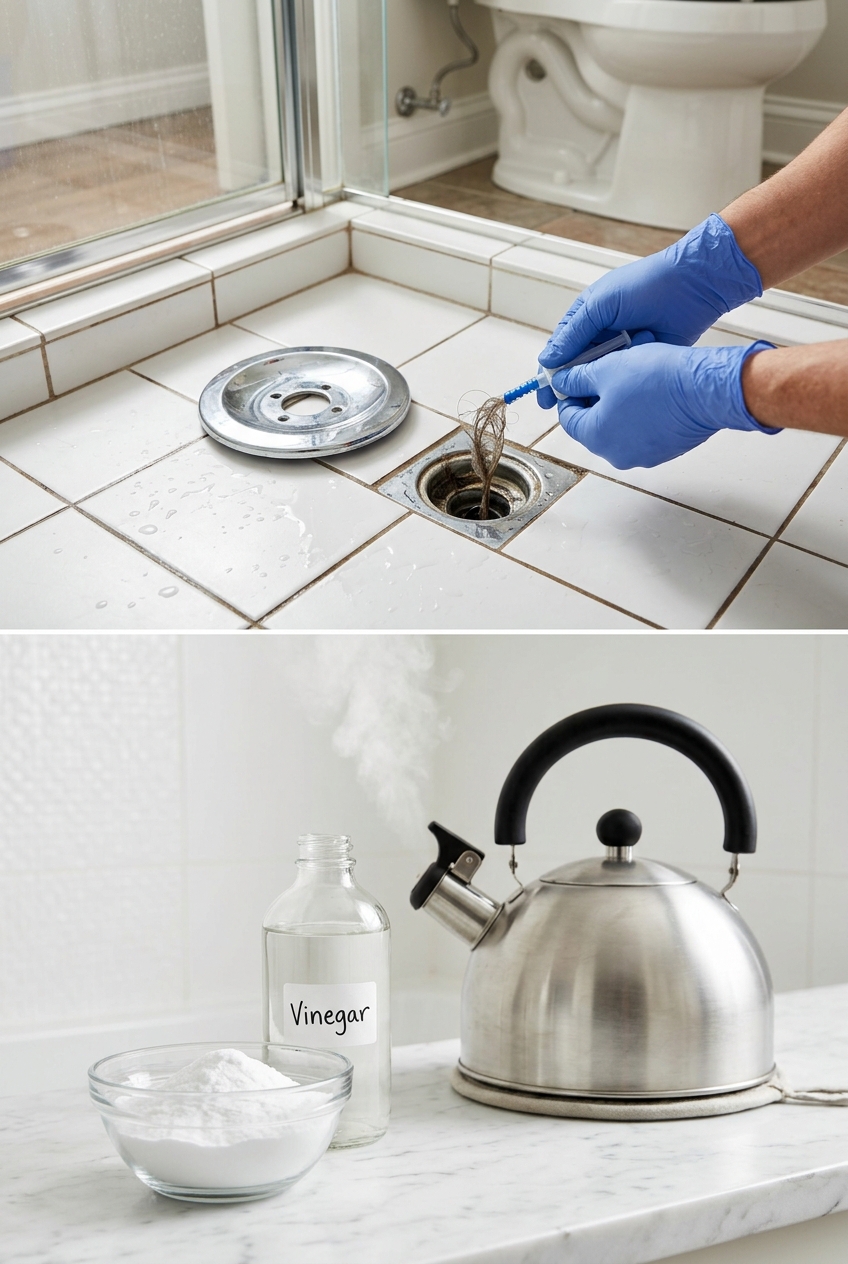
To permanently extract a dense hair and soap scum shower drain clog without chemical drain cleaners: First, remove the strainer plate and insert a 20-inch plastic barbed drain snake (Zip-It) to mechanically retrieve the hair wad. Second, flush the trap with 1 cup of sodium bicarbonate followed by 1 cup of distilled white vinegar, seal for 20 minutes, and chase with 1 gallon of near-boiling (200°F) water to emulsify remaining body oils and soap binding agents.
Stop pouring caustic lye into standing water. Learn the mechanical barbed extraction technique and hot citric thermodynamic flush that dissolves hair mats without melting PVC pipes or silicone seals. Below is the exact, step-by-step field guide tested and verified by the TidyUp Daily laboratory team.
📋 Required Materials, Tools & Reagents
-
✓
20-inch flexible plastic barbed drain snake (Zip-It tool) -
✓
1 cup food-grade sodium bicarbonate (baking soda) -
✓
1 cup 5% distilled white cleaning vinegar -
✓
1 gallon near-boiling water (approx. 200°F / 93°C) -
✓
Nitrile cleaning gloves and eye protection -
✓
Needle-nose pliers and old terry cloth rag -
✓
Screwdriver (Phillips or flathead, depending on drain strainer)
⚠️ Plumbing Pipe Safety: Why You Must Never Mix Chemical Drain Cleaners
If you previously poured commercial drain cleaner (sodium hydroxide or sulfuric acid) into the standing water, DO NOT insert tools or pour boiling water. Commercial lye releases violent exothermic heat (over 212°F) that softens thin PVC pipes, melts rubber trap gaskets, and can splash caustic acid into your eyes. Plunge or bail out chemical standing water completely before physical extraction.
The Step-by-Step Field-Tested Protocol
Remove the Drain Grate or Pop-Up Stopper
Inspect the shower drain strainer. Most modern brass or chrome grates are held by two #2 Phillips screws, while snap-in grates have a pry notch around the rim. Unscrew or gently pry the plate free using a flathead screwdriver wrapped in tape to prevent scratching the shower pan. Place screws inside a cup so they cannot tumble down the pipe. Wipe away top-layer hair and debris from the brass lip using a paper towel.
Deploy the Barbed Zip-It Snake to Extract the Keratin Core
Insert the flexible 20-inch plastic barbed snake straight down past the drain crosshairs into the P-trap (the U-shaped pipe reservoir below the floor). Push down gently until you feel resistance where the hair mat resides. Slowly twist the snake 360 degrees two or three times to engage the reversed nylon barbs into the interwoven hair strands. Pull upward with steady, constant tension. Do not yank violently. Deposit the extracted hair wad onto paper towels and repeat at 45-degree angles until the tool emerges clean.
Introduce the Sodium Bicarbonate Dry Scouring Charge
Even after extracting the hair matrix, shower pipe walls remain coated in a sticky biofilm of saponified tallow, conditioner silicones, and dead skin cells. Pour 1 cup of dry baking soda directly into the open drain hole. Use the handle of an old spoon or wooden dowel to push the dry powder down past the trap inlet so it rests directly on the pipe bend rather than sitting on the shower floor.
Trigger the Acetic Acid Effervescent Reaction
Pour 1 cup of warmed distilled white vinegar (heated in microwave to 130°F) immediately over the baking soda. The reaction produces rapid carbon dioxide (CO2) micro-bubbles and sodium acetate. Cover the drain opening tightly with a damp washcloth or rubber stopper to force the pressurized effervescence downward through the P-trap rather than escaping back up into the bathroom. Allow the foaming slurry to digest organic binding oils for 25 to 30 minutes.
Execute the High-Temperature Thermodynamic Flush
Bring a large teakettle of tap water to 200°F (just under a rolling boil to protect PVC pipe joints rated for 140°F–180°F). Remove the drain cover cloth and pour the hot water in a steady, high-velocity stream directly down the drain center. The combined heat and surfactant action liquefies softened soap scum and carries loosened particles into the 3-inch main sewer stack. Run hot shower water for 2 minutes to confirm instantaneous vortex drainage.
🔬 The Chemistry of Shower Clogs: Keratin Cross-Linking vs. Fatty Acid Matrices
Human hair consists of fibrous keratin proteins reinforced by dense disulfide cystine covalent bonds. Keratin is exceptionally resistant to organic acids and weak alkalis. What actually creates an impenetrable shower clog is not hair alone, but hair acting as a structural rebar inside a matrix of insoluble calcium stearate (soap scum) and sebum lipids. When body wash, bar soap, and conditioner rinse down the drain, fatty acids react with hard water magnesium and calcium ions to create sticky lime soaps. These soaps coat individual hair strands, binding them into an expanding felt-like plug. Mechanical barbed snaking breaks the structural tensile strength of the hair rebar, while the subsequent baking soda and hot water thermal shock saponifies and carries away the fatty lipid glue.
Master 85+ Non-Toxic Repairs & Save Over $4,000 in Service Calls
This protocol is excerpted from The Home Rescue Bible (2026 Edition). Get instant access to full chemistry formulas, appliance diagnostic wire schematics, and plumbing bypass trees.
Frequently Asked Questions
Why does baking soda and vinegar work if they neutralize each other?
The cleaning mechanism is not the neutral end product (salt water and carbon dioxide), but the active mechanical agitation during the effervescent phase. Thousands of pressurized CO2 micro-bubbles physically dislodge sticky soap film from pipe walls, while the subsequent hot water flush sweeps away liquefied fats.
Can boiling water melt or damage modern PVC shower plumbing?
Standard Schedule 40 PVC has a maximum service temperature of 140°F (60°C), though it can withstand short exposure up to 180°F. Pouring water at 190°F–200°F into a trap containing standing room-temperature water cools rapidly on contact to safe levels while still melting soap fats. Never pour rolling boiling water into cold porcelain toilets, but shower PVC traps with standing water handle hot teakettle water safely.
How can I prevent hair from clogging the shower drain in the future?
Install a stainless steel or silicone mesh mushroom drain protector (such as a TubShroom) that sits inside the drain throat. It captures shed hair strands around an interior core before they enter the horizontal pipe run, requiring only a quick wipe after each shower.
📌 Pin This Field Guide to Your Home Board